Oct 3, 2026 | Concentration Camps

The Sachsenhausen Shoe-Testing Track: Why Prisoners Were Forced to March for Miles

by

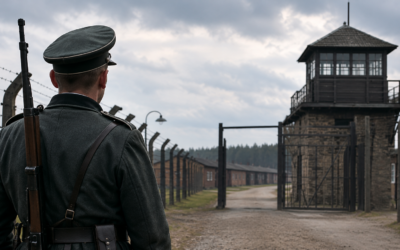
Picture yourself receiving a pair of shoes that don’t fit, carrying a heavy pack, and being told to walk in circles until the sun sets. There would be no destination and no obvious purpose. Instead, you’d move along a route where the ground changed texture every few meters, and guards decided whether you could stop.

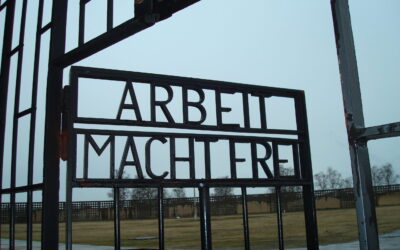
That was daily life for the men assigned to the shoe testing track at Sachsenhausen, a concentration camp just north of Berlin. If you have ever wondered why anyone would design such a thing, the answer is both simpler and more disturbing than most people expect.

What the Track Actually Was

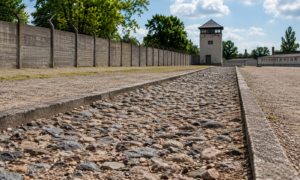
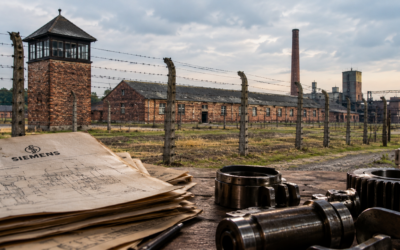
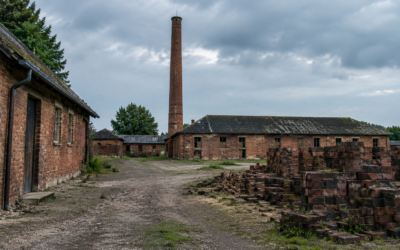
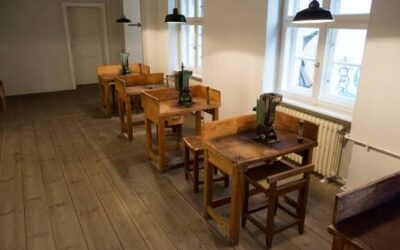
The shoe-testing track was a looping route within the camp and included a variety of surfaces, including gravel, cinder, sand, asphalt, and cobblestone. Because wartime shortages drove German shoe manufacturers to use substitute materials, they wanted to see how well the new soles and materials performed under severe use; records indicate the established companies used the camp as a free laboratory.

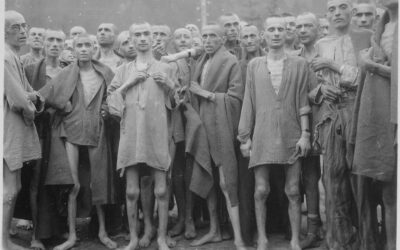
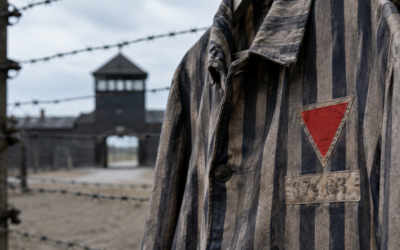
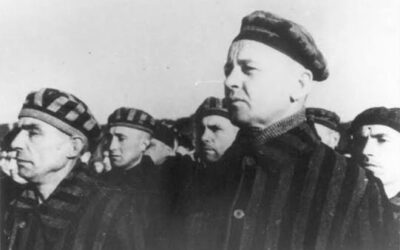
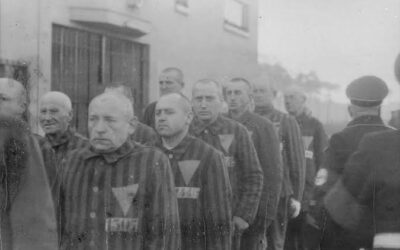
Because the camp needed test subjects, it kept thousands of people it regarded as disposable. The prisoners assigned to the shoe detail were made to walk for hours at a fast pace, sometimes covering thirty kilometers or more each day and often carrying heavy packs. According to survivor accounts, their feet were blistered and bleeding, men collapsed, and the guards saw any slowing down as a violation. Prisoners were frequently given this duty as punishment, meaning the work was meant to cause pain as much as it was meant to measure performance.

Therefore, the truthful answer to the question in the headline is that the march had two objectives at once. In theory, it was intended as a means of testing products; in reality, it was a way of killing people by exhausting them, providing the murder with an industrial justification.

Why “Pointless” Exercise Was Part of the System

The shoe print may seem oddly familiar since harsh and pointless physical work is carried out all over the camp. At Mauthausen, the guards made prisoners do tiring drills and even humiliating games such as leapfrog. Both survivors and historians have described how the guards made people run in circles until they were no longer able to go on, and those who fell were then chosen for the gas chamber or the firing squad. Those prisoners who still met the required standard would survive another day in the quarries or on other forms of forced labor.

That point sheds a great deal of light on the situation. Exercise in these camps served to sort the prisoners; it humiliated them, amused the guards, and quietly revealed who was weakening. The same principle applied to the Sachsenhausen track with one additional twist: it presented the cruelty as research.

A story from another former prisoner illustrates how this pattern continues whenever power goes unchecked. At the Yugoslav island prison Goli Otok, known as the naked island, it is said that the prisoners were made to take rocks from one side of the island to the other and then carry them back again; in a different regime, in a different decade, the same harsh principle was followed. Forced labor with no objective is a method of breaking people’s minds.

Want to understand more about daily life at Sachsenhausen? Read our blog on What Happened on Sachsenhausen’s Roll-Call Square? to learn about the significance of this central area of the camp.

The Part Nobody Warns You About: What Happened After

Many visitors assume the story ends in 1945. At Sachsenhausen, it does not.

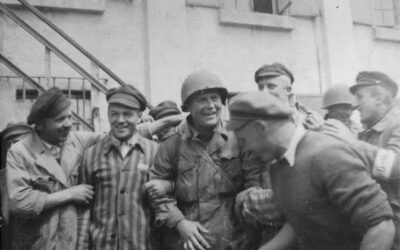
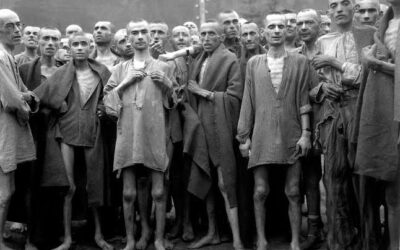
On April 22, 1945, Soviet forces reached the camp and found only about 3,400 prisoners still there. Just a day earlier, roughly 33,000 prisoners had been sent out on a death march, and thousands never survived it. In total, around 30,000 people died at Sachsenhausen under the Nazis.

The camp then acquired a second phase of existence. The Soviet NKVD used the place up to 1950, and about 12,000 additional people died at the site during that time. This is one of the most misinterpreted aspects of the location. A large number of the individuals put under Soviet control were Nazi officers and other Nazi prisoners, although some were anti-communist Russians, and the situation becomes very complicated soon after. Historians and readers still debate how to describe it. Some highlight the fact that Soviet soldiers who had been prisoners of war were themselves imprisoned for having surrendered. Others emphasize that people were also detained for serious crimes. The most reasonable conclusion is that the site has multiple layers of suffering which cannot be captured by a single simple label, and a proper visit should allow for this complexity.

Why the Guards Never Seemed to Own It

A question that bothers almost everyone who studies the camps: why did so many guards deny everything at trial?

The short version is that it was often a legal strategy, not naivety. The defendants and their lawyers were working inside German legal categories that separated murder, driven by motive and bloodlust, from a broader category closer to manslaughter, and separated perpetrators from accomplices. Admitting to beating prisoners could imply bloodlust. Presenting yourself as an administrator or a cog in a machine could mean a lighter sentence.

Josef Kramer, the commandant of Birkenau, tried exactly this, describing himself as little more than a camp administrator who could not give orders to other departments. Irma Grese and Elisabeth Volkenrath flatly denied seeing or knowing about beatings and selections. Those three were executed because early Allied tribunals did not accept the defense. But when West German courts took over in later decades, the accomplice defense worked far more often. One trial for a mass killing involving thousands of murders produced a fifteen-year sentence for the lead defendant. At the first Treblinka trial in 1964 and 1965, only three of eleven defendants received life sentences for murder, and one was acquitted.

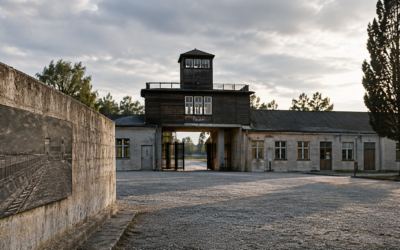
For anyone standing on the old track, this is relevant. The system that caused prisoners to walk until they collapsed also resulted in people who later stated that they had never seen anything.

How to Visit and What to Expect

If you plan to visit, here are a few honest, practical notes.

Give yourself a full day. The property is extensive, and the emotional impact grows stronger. Going through it quickly diminishes the impression you form.

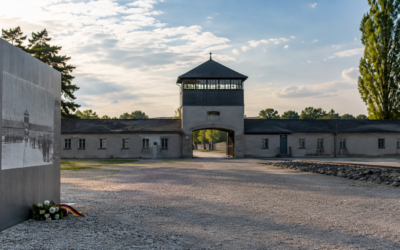
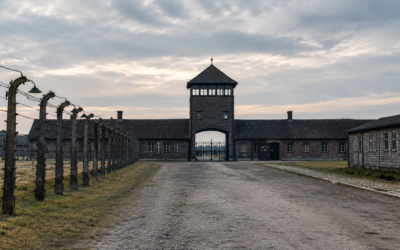
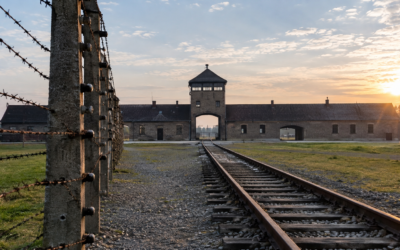
Go in person if you can. A visitor to Auschwitz explained that the preserved hair, shoes, and personal belongings, along with the walls covered in faces, ages, and occupations, made it impossible to keep the history abstract. Another person stated that pictures and videos have limitations too. The same applies at Sachsenhausen, since walking along the ground where the track used to be changes how you feel about the numbers.

Prepare yourself with context. Many people find it helpful to read the books in advance. In Primo Levi’s The Drowned and the Saved, the way morality broke down is examined for both prisoners and guards. Gitta Sereny’s Into That Darkness, based on her interviews with Franz Stangl, shows how perpetrators justify their actions. Although these books are not comfortable, they make you more aware of what you notice when you are actually there.

Treat the visit with respect. Silence and seriousness are usual. People have been shocked when someone has disturbed the memorial gatherings at these places, and that is entirely justified.

Want to see what remains of the camp today? Read our blog on Sachsenhausen’s Barracks: What Is Original and What Has Been Reconstructed? to understand which parts are original and which have been reconstructed.

Why This Story Still Matters

Mass atrocity is rarely shown in an obvious form of evil; instead, it is often hidden in paperwork, schedules, and plausible justifications like product testing, administrative procedures, or simply obeying orders. The shoe-testing track is a frightening example of how ordinary commercial aims can connect to cruelty and how quickly human beings can become mere material.

Understanding it is not about morbid curiosity. It is about recognizing the pattern early enough to refuse it.

Frequently Asked Questions

  1. Why were prisoners forced to do pointless exercise in camps like Sachsenhausen and Mauthausen?

It had a number of purposes: it was used for humiliating prisoners, for entertaining the guards, for wearing people down, and for identifying those who were weak enough to be chosen for murder. At Sachsenhausen, the shoe print provided a commercial reason for the cruelty.

  1. What happened to prisoners who could not keep up during forced exercise?

At Mauthausen, those who collapsed could be sent to the gas chambers or the firing squad, while those who remained fit enough might survive another day in the quarries or other forced labor.

  1. What happened at Sachsenhausen after liberation?

On April 22, 1945, the Soviet forces discovered approximately 3,400 prisoners, and the NKVD continued to operate the camp until 1950, when about 12,000 additional people died while under Soviet control.

  1. Why did SS guards deny responsibility at their trials?

It was often a legal tactic; under German law there was a distinction made between murder and less serious offenses, as well as between the perpetrators and the accomplices, which meant that presenting oneself as a mere administrator or as just one link in the chain could result in a lighter sentence. Although the early Allied tribunals rejected this argument, later courts in West Germany generally accepted it.

  1. Is it worth visiting a former camp in person instead of learning online?

Many visitors say yes. People who have walked these grounds describe a level of understanding that photographs and videos cannot deliver, especially when preserved belongings and personal records are part of the experience.

Stolpersteine: The Small Memorials

Stolpersteine: The Small Memorials

On your way to the bakery, thinking about nothing in particular, you notice a small piece of brass embedded in the pavement. Next to it, someone has left a tealight. There are no signs and no crowd, merely a name, a birth year, and a date that causes your stomach to...

read more
New Synagogue: What Survived

New Synagogue: What Survived

Anyone standing on Oranienburger Straße and looking at that golden dome naturally asks the same question: how did this building survive Nazi Germany and the bombs? The common explanation is that it was simply too beautiful to destroy. Although this is a pleasant...

read more
Sachsenhausen Concentration Camp  How to Get There and Visit from Berlin

Sachsenhausen Concentration Camp How to Get There and Visit from Berlin

Sachsenhausen Concentration Camp is one of Germany’s most significant memorials. Located just outside Berlin, it draws thousands of visitors each year who come to learn about Nazi Germany, the people imprisoned there, and why remembrance matters today.Many people search for Sachsenhausen’s address before their trip. Others want to know the easiest way to get there from Berlin, whether guided tours are available, and what to expect during their visit.

read more
What are the Visitors’ Requirements for the Berlin Concentration Camp Memorial?

What are the Visitors’ Requirements for the Berlin Concentration Camp Memorial?

Many visitors look for the “Berlin Concentration Camp,” but the memorial most people mean is the Sachsenhausen Memorial and Museum in Oranienburg, just outside Berlin.Sachsenhausen is not just another museum. It was a Nazi concentration camp and is now a memorial and place of remembrance. Before you visit, it helps to know the entry requirements, what to wear, how to behave, whether you need tickets, and what to expect emotionally.

read more
What Was the Concentration Camp at Potsdam?

What Was the Concentration Camp at Potsdam?

The Truth about Potsdam and the Nazi Camp System. Many people looking for information about a “Potsdam Concentration Camp” are surprised to find out that there was no large Nazi concentration camp in Potsdam itself. Unlike Auschwitz, Dachau, Buchenwald, or Sachsenhausen, Potsdam did not have its own camp.

read more
Falkensee Concentration Camp: History, Prisoners, Forced Labor & Memorial Site

Falkensee Concentration Camp: History, Prisoners, Forced Labor & Memorial Site

Explore the harrowing truth of the Falkensee Concentration Camp. Explore its brutal conditions, prisoners’ suffering, and WWII liberation.Many people who look up information about the Falkensee Concentration Camp ask if it really existed or if it is just a myth. The answer is straightforward: the camp was real, but it was not an independent concentration camp like Auschwitz, Dachau, or Sachsenhausen.

read more
Sachsenhausen Berlin Map Guide: Must-See Locations at the Memorial

Sachsenhausen Berlin Map Guide: Must-See Locations at the Memorial

Are you planning to visit the Sachsenhausen Memorial and Museum in Berlin? Looking at the Sachsenhausen Berlin map in advance can help you get more out of your visit. The site is large, quiet, and deeply moving, with many important places spread throughout the former camp.Today, the Sachsenhausen Memorial map shows visitors where important places are, such as the entrance, Tower A, the roll-call square, prisoner barracks, punishment cells, watchtowers, museum exhibitions, and Station Z.

read more
Concentration Camp Tour What to Expect, How to Prepare & Important Etiquette

Concentration Camp Tour What to Expect, How to Prepare & Important Etiquette

Visiting a concentration camp memorial is very different from a typical tourist activity. It is a serious, emotional, and educational experience. These sites are preserved to help people learn, remember the victims, and understand how hatred, discrimination, and dictatorship can cause immense suffering and loss of life. For many people, reading about the Holocaust is not the same as standing at the actual site. Visiting can be challenging, but it is often a meaningful experience. This guide will help you know what to expect, how to get ready, how to show respect during your visit, and how to reflect afterward.

read more
What Should You Know Before Planning a Day Trip to Auschwitz from Berlin?

What Should You Know Before Planning a Day Trip to Auschwitz from Berlin?

If you’re in Berlin and thinking about a day trip to Auschwitz, planning ahead is key. This post will walk you through what you need to know before you go.You can also travel by train from Berlin Hauptbahnhof to Oswiecim. The journey takes about 6 hours and includes a few connections. Once you arrive in Oswiecim, you can take a taxi for about 15 kilometers or catch bus 302, which will bring you to the entrance of the Auschwitz memorial.

read more
Thinking about taking the train to Sachsenhausen? We’re here to help you plan your trip.

Thinking about taking the train to Sachsenhausen? We’re here to help you plan your trip.

Start your journey at one of Berlin’s main train stations: Berlin Hauptbahnhof, Alexanderplatz, or Friedrichstraße. Each of these stations offers a direct connection to Sachsenhausen.Sachsenhausen is in Oranienburg, and regional trains run between Oranienburg and Berlin every hour. Look for trains labeled RB (Regionalbahn) or RE (Regional Express). You can check train times on the Deutsche Bahn website or on electronic boards at the stations.

read more
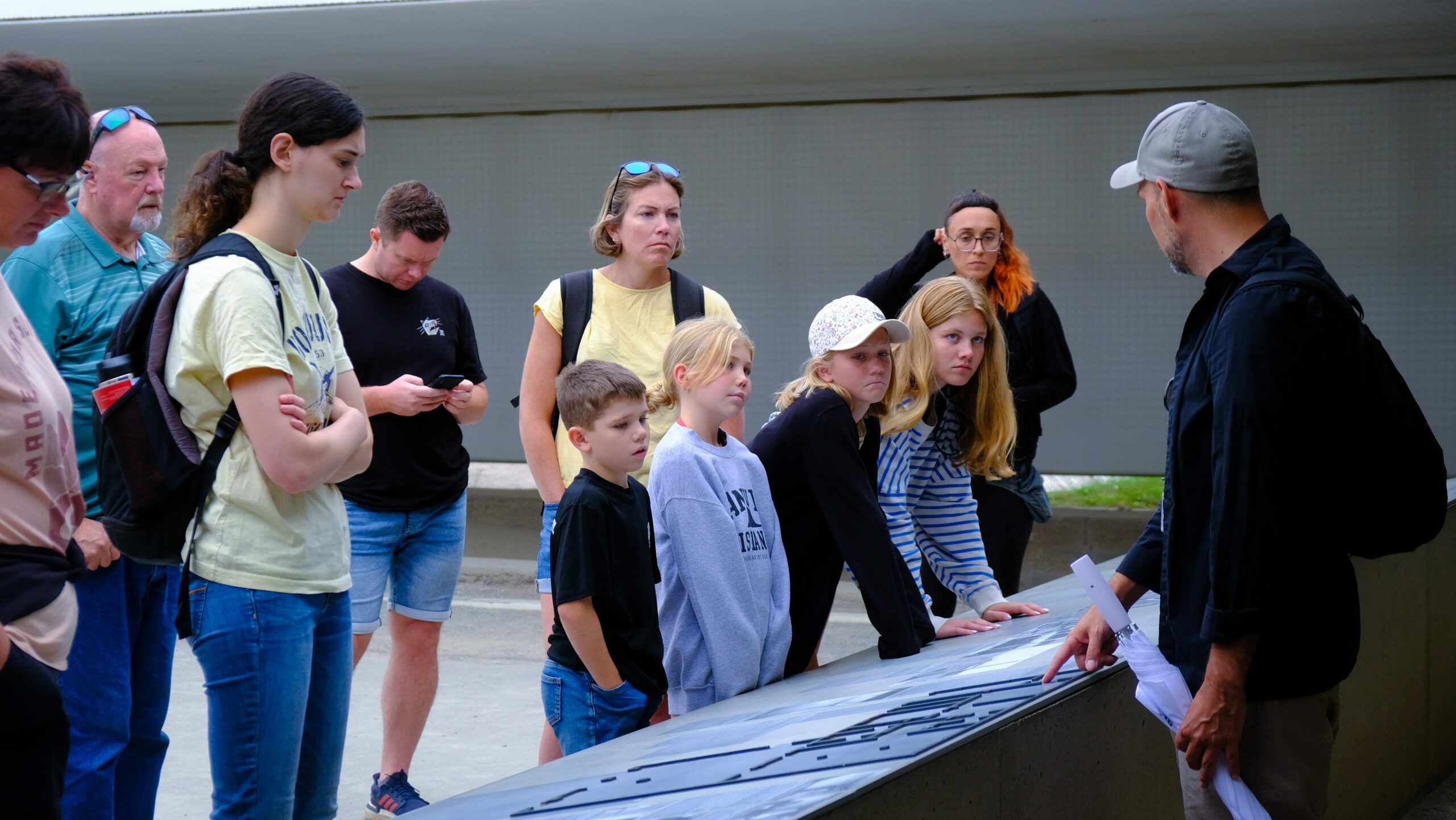
a group of visitors, including adults and children, on a guided tour of the Sachsenhausen Concentration Camp

Group Booking Request

Planning a group visit to the Sachsenhausen Concentration Camp Memorial from Berlin? Fill out the form below to request a private or group tour. Our team will get back to you with availability and pricing options. Experience a guided tour tailored to your group’s needs.

You have Successfully Subscribed!

Pin It on Pinterest