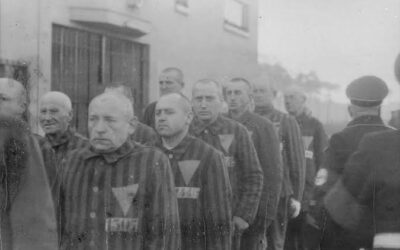
Si vous vous trouvez aujourd'hui à Berlin et que vous vous demandez ce qu'il est advenu des personnes qui formaient autrefois l'une des communautés juives les plus dynamiques d'Europe, la réponse, en toute honnêteté, se compose de trois parties. La plupart ont été expulsés, beaucoup ont été assassinés, et un petit nombre est resté caché, protégé par des papiers, la chance ou un arbre généalogique très particulier. La ville que vous visite La vie actuelle repose sur cette histoire et elle façonne encore aujourd'hui le quotidien des Juifs ici.
Les Juifs de Berlin n'étaient pas ceux que la plupart des gens imaginent.
Au moment de l'arrivée au pouvoir d'Hitler en 1933, Berlin comptait environ 160 000 Juifs, soit la plus importante communauté juive d'Allemagne. Il est fréquent, même dans les représentations actuelles, de les dépeindre comme tous pauvres ou tous riches, une erreur courante. En réalité, aucune de ces descriptions n'est exacte.
De nombreuses familles étaient profondément intégrées et jouissaient d'une situation confortable. Elles possédaient des commerces, occupaient des emplois qualifiés, vivaient dans de spacieux appartements et se considéraient avant tout comme Allemandes. Les descendants de réfugiés soulignent souvent que la richesse et l'intégration étaient plus importantes que ce que les films laissent généralement paraître. D'autres vivaient modestement, et certaines familles orthodoxes de la ville, pratiquant une religion stricte, disposaient de peu de moyens. Quiconque a vu le film « Berlin Alexanderplatz » de Fassbinder se souvient des scènes se déroulant parmi les Juifs religieux les plus pauvres. Ces deux réalités coexistaient, ce qui explique précisément pourquoi la persécution qui suivit toucha toutes les couches de la société.
Les gens sont aussi souvent induits en erreur par de petits détails. Par exemple, une famille prenant un repas le vendredi soir devait réciter la bénédiction sur le vin, et une famille respectueuse des traditions ne jouait pas du piano le jour du sabbat. Ceux qui connaissent ces coutumes remarquent immédiatement les erreurs, ce qui nous rappelle qu'il s'agissait d'une communauté vivant selon ses propres habitudes, et non d'un simple contexte.
Vous voulez comprendre les origines de l'histoire juive de Berlin ? Consultez notre blog sur Quartier juif : pourquoi l'histoire commence à Berlin explorer les racines de la communauté juive de la ville.
La pression : comment la vie a été bouleversée étape par étape
La destruction ne s'est pas produite du jour au lendemain. Elle s'est faite par étapes.
D’abord, l’exclusion du travail, de l’école et de la vie publique. Puis vint le système de classification raciale, aussi complexe et dénué de fondement scientifique. Les règles nazies classaient les individus en Juifs à part entière, à moitié juifs, à un quart juif, etc., utilisant le terme allemand « Mischlinge » pour désigner les personnes d’ascendance mixte. Chaque catégorie était traitée différemment, et les règles ont évolué au fil des ans.
Cette confusion eut des conséquences bien réelles : Hermann Göring décida qui devait être considéré comme juif, une décision qui illustre le caractère arbitraire du raisonnement. Si certaines personnes obtinrent des exemptions écrites, d’autres, se trouvant dans des situations similaires, n’en bénéficièrent pas.
Le chapitre le plus étrange : les soldats juifs dans l'armée d'Hitler
L'une des questions les plus surprenantes que l'on se pose concerne le sort des hommes juifs servant déjà dans l'armée allemande lors de l'arrivée au pouvoir des nazis. La réponse est simple : les Juifs n'ont jamais été enrôlés de force. L'armée avait été réduite à 100 000 hommes sous la République de Weimar, et lors de sa reconstitution, le régime n'a pas convoqué de Juifs. Il n'y a donc pas eu de purge massive de leurs camarades, puisqu'ils n'ont jamais été là pour être exclus.
Ceux qui ont servi étaient en grande majorité des hommes d'ascendance mixte, représentant environ 90 % des effectifs juifs dans les forces armées. Nombre d'entre eux étaient des vétérans de la Première Guerre mondiale, et certains étaient officiers. L'historien Bryan Mark Rigg a recueilli leurs témoignages dans Les soldats juifs d'HitlerEt la psychologie qu'il décrit est troublante. Nombreux étaient ceux qui se sentaient tiraillés entre le désir d'appartenance et la conscience que servir revenait à servir Hitler. Le service militaire a protégé certains de la Gestapo, du moins durant les premières années de la guerre. Certains ont tenté de prouver qu'ils n'étaient pas les « Juifs lâches » de la propagande, et une vingtaine d'entre eux ont reçu la Croix de Chevalier. Le frère d'un soldat a déclaré qu'il avait combattu avec bravoure précisément parce qu'il craignait cette étiquette. Un autre aurait affirmé que sans sa mère juive, il aurait rejoint le Parti et la SS.
C'est une ironie tragique. Des hommes ont risqué leur vie pour un régime qui considérait leurs familles comme superflues.
Pourquoi les nazis ne se sont pas arrêtés aux frontières de l'Allemagne
On se demande souvent pourquoi la persécution s'est étendue au-delà de l'Allemagne. La logique était expansionniste. Le régime voulait un vaste empire bâti autour de l'idée de Espace vital, or living space, and considered conquered territory part of that empire. Jews were treated as an enemy that had to be removed from all of it, not just from Germany. Antisemitism was also a convenient political tool. Blaming a scapegoat had worked for centuries across Europe, and stirring up local hatred in occupied countries was not difficult.
Vous voulez savoir comment Berlin commémore aujourd'hui les victimes juives ? Consultez notre blog sur Stolpersteine : les petits monuments commémoratifs pour découvrir les petits monuments commémoratifs disséminés dans toute la ville.
Les ghettos et les choix impossibles
Les Juifs qui a vécu à Berlin La plupart furent déportés directement, mais le cas plus général des ghettos en Pologne occupée illustre comment le système plaçait les victimes face à des choix impossibles. Les conseils de ghetto, appelés Judenräte, étaient composés de personnes dont les nazis attendaient la coopération. Si l'obéissance offrait un répit temporaire, elle ne garantissait pas la survie. Presque tous ces dirigeants furent finalement assassinés, et certains se suicidèrent.
Deux exemples illustrent l'horreur morale de ces atrocités. À Łódź, Chaim Rumkowski était convaincu que la coopération permettrait de sauver le plus grand nombre. En septembre 1942, il s'adressa aux habitants du ghetto et demanda aux parents de livrer leurs enfants. L'opération Sperre qui s'ensuivit causa la mort d'environ 15 000 personnes, dont près de 6 000 enfants. Rumkowski fut assassiné plus tard à Auschwitz avec sa famille. À Varsovie, Adam Czerniakow refusa de livrer les noms des déportés. Le 22 juillet 1942, lorsqu'on lui demanda de livrer 6 000 personnes par jour, il s'y efforça, mais ne parvint même pas à sauver les orphelins de Janusz Korczak et se suicida au cyanure le lendemain.
Ce qui s'est passé ensuite : vivre aux côtés des agresseurs
On continue de s'interroger, tant les gens que les historiens, sur la possibilité de vivre aux côtés de voisins qui, quelques années auparavant, souhaitaient leur élimination. La réponse est simple : cela n'a jamais été facile, et de nombreux survivants évoquent des silences douloureux. Bien que la campagne de dénazification de l'Allemagne d'après-guerre soit un sujet distinct, ce qui importe pour un visiteur, c'est que la vie juive à Berlin perdure : certains sont revenus, d'autres sont venus ; une communauté entièrement nouvelle s'est constituée, avec de nombreux Israéliens travaillant dans les secteurs créatifs et technologiques.
Berlin aujourd'hui : ce que l'on ressent vraiment
Voici une vue au niveau du sol pour toute personne s'installant dans la ville ou la visitant.
Juifs de Berlin On y décrit des vies parfaitement normales. Environ 63 % des Berlinois sont athées et globalement indifférents à toute religion, et avec seulement 9 500 Juifs organisés, la plupart des gens n'y pensent pas. Dans les milieux universitaires et artistiques, cela ne surprend guère.
Cependant, les visiteurs doivent être conscients de certaines réalités : de nombreuses écoles juives, synagogues, et même de petits cafés et librairies bénéficient d’une protection policière toute la nuit. Certains habitants s’interrogent sur la manière dont on peut identifier un café ou une librairie végane comme étant juifs, ce qui illustre à quel point la nécessité d’une telle protection est troublante.
Les conseils concernant le quartier sont fréquemment évoqués. Friedrichshain est le quartier où s'installent de nombreux nouveaux arrivants, notamment des Israéliens venus travailler dans les secteurs de la musique et des technologies. Quant à Kreuzberg, Neukölln et Wedding, les avis divergent. Certains déconseillent complètement Neukölln. D'autres soulignent que c'est dans ces quartiers que se retrouvent de nombreux Juifs laïcs. À Mitte, des manifestations sont parfois organisées pour déconseiller de parler hébreu à voix haute. Or, parler hébreu est le signe le plus courant, et certains parents israéliens apprennent à leurs enfants à parler anglais en public pour éviter les conflits. On conseille également de bien réfléchir à la façon dont son nom de famille apparaîtra sur une sonnette.
Les menaces proviennent de diverses sources : préjugés allemands traditionnels, extrémistes de droite, certaines attitudes islamistes et militants antisionistes hostiles. Des agressions contre des personnes portant la kippa ont également été recensées. Parallèlement, de nombreuses personnes se disent en sécurité et une importante communauté israélienne considère Berlin comme une ville où il fait bon vivre malgré les risques.
Foire aux questions
- Est-il sûr de vivre à Berlin en tant qu'Israélien ou Juif sans porter de symboles religieux ?
Beaucoup le font sans problème. Le signe le plus révélateur est l'hébreu parlé, car certains arabophones le reconnaissent. La plupart des gens disent se sentir en sécurité parmi les Allemands de souche et dans les milieux cultivés, mais s'attendent à des actes d'hostilité occasionnels, surtout dans certains quartiers.
- Dans quels quartiers de Berlin conseille-t-on d'être prudent ?
Kreuzberg, Neukölln et Wedding sont les quartiers les plus souvent cités, Neukölln étant le plus fréquemment mentionné. Mitte est évoqué pour les manifestations. D'autres soulignent que ces quartiers abritent également de nombreux Juifs laïcs, ce qui explique la diversité des expériences vécues.
- Est-il facile pour un Israélien de trouver du travail et d'intégrer un groupe de musique à Berlin ?
Il existe une importante communauté israélienne dans les secteurs créatifs et technologiques. Les musiciens doivent s'attendre à rencontrer des opinions anti-israéliennes dans certains milieux progressistes, opinions que certains jugent plus agaçantes que dangereuses.
- Pourquoi les institutions juives de Berlin ont-elles besoin de protection policière ?
Les synagogues, les écoles et de nombreux petits commerces juifs sont gardés 24h/24 car, sans cela, ils sont rapidement vandalisés. Parmi les vandales figurent des néonazis originaires des anciennes banlieues est-berlinoises.
- Qu’est-il arrivé aux soldats juifs de l’armée allemande lorsque les nazis ont pris le pouvoir ?
Les Juifs de souche n'étaient pas enrôlés lors de la reconstruction de l'armée. Ceux qui servirent étaient pour la plupart des hommes d'ascendance mixte, souvent des vétérans de la Première Guerre mondiale, et certains furent décorés pour avoir prouvé leur loyauté. L'ouvrage de Rigg est la référence incontournable pour approfondir le sujet.