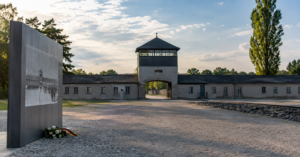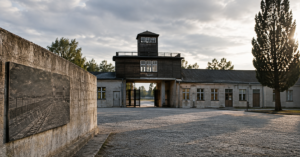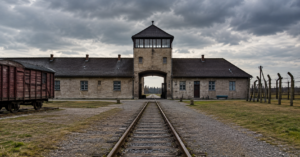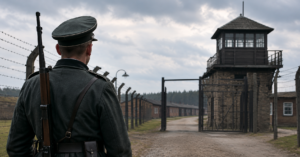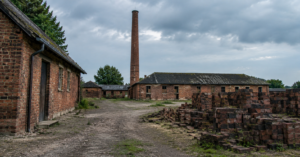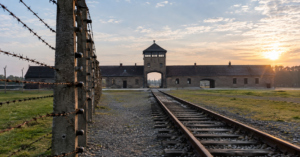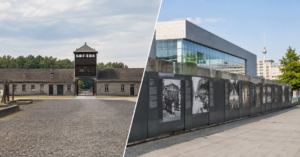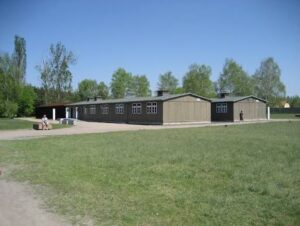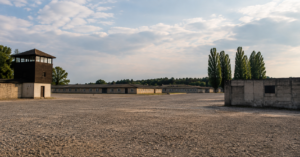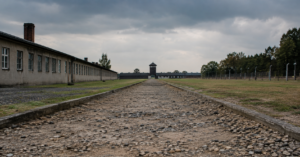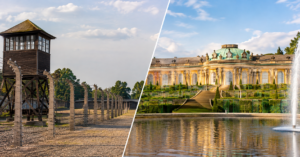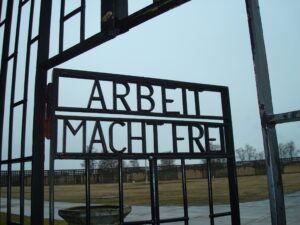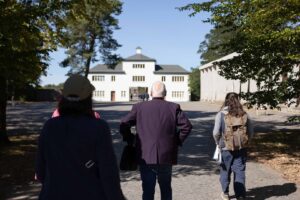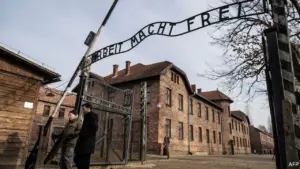
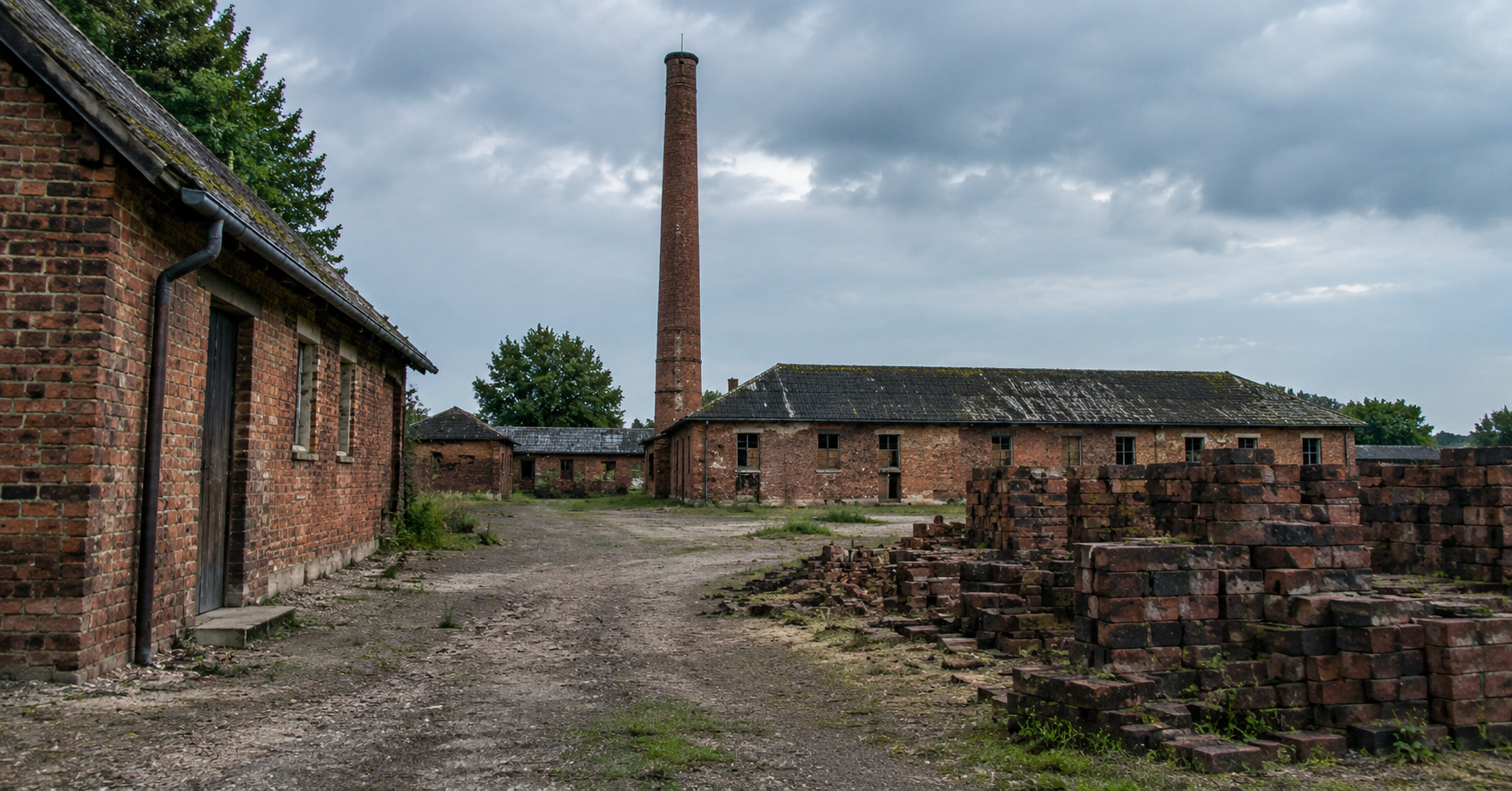
La plupart visiteurs à Sachsenhausen Ils franchissent le portail principal, photographient l'inscription en fer forgé, font le tour de l'esplanade triangulaire où se déroulait l'appel, et repartent persuadés d'avoir vu le camp. Ils se trompent. À l'écart du site principal, près du canal non loin d'Oranienburg, se trouve l'endroit que les prisonniers redoutaient le plus : la briqueterie du camp.
Ce guide explique ce qu'était le Klinkerwerk, pourquoi une mission sur place était perçue comme une condamnation à mort, et comment visiter le site avec respect.
Pourquoi le Klinkerwerk a été créé
The Klinkerwerk grew out of Nazi building ambitions. Hitler’s plans for a remodeled Berlin, which Albert Speer was to carry out, demanded enormous quantities of brick, stone and cement. In April 1938, the SS founded its own company to supply them, the Deutsche Erd- und Steinwerke GmbH (DEST). The brickworks was set up that summer as a showpiece enterprise with modern tunnel kilns and dry-pressing plants. Prisoners began building the brickworks that August, and it was equipped with modern technology. The aim was to make the SS a major supplier of building materials while using concentration camp prisoners as a labor force that cost almost nothing.
Où c'était : À l'extérieur du camp principal
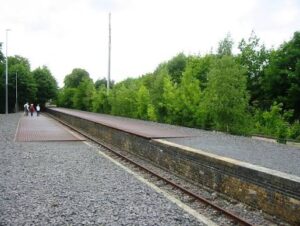
La briqueterie se trouvait bien à l'extérieur du camp de prisonniers principal. Les prisonniers furent affectés à sa construction en août 1938, près d'une écluse au nord de Lehnitz, non loin d'Oranienburg. Elle était située sur le canal car les briques étaient destinées à… voyager par bateau jusqu'à BerlinLe mémorial qui s'y trouve encore montre le bassin portuaire et le quai où des grues chargeaient autrefois les briques sur les navires. L'argile provenait d'une carrière située à proximité, à Zehlendorf.
Production de briques et lien avec Berlin
The Klinkerwerk was supposed to be the largest clinker brickworks in the world, with its output intended for the great buildings planned for Berlin. In reality, the project failed. Even though it had modern equipment, the prisoners were forced to use primitive tools and worked under inhuman conditions, and the SS soon realized that the plant was a failure of planning. It never lived up to the vision of those who set it up. What it did manage to produce, however, was death.
Quels prisonniers ont été envoyés là-bas
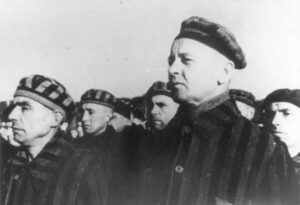
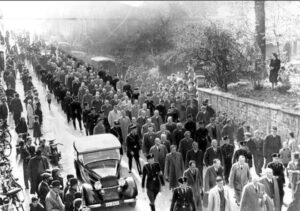
At first the workforce came daily from the main camp. Hundreds of prisoners marched each day to the wooded site to build the huge workshop halls, lay out the docks and put up the factory buildings and housing. Later, the SS drove up to 2,000 prisoners a day to the site.
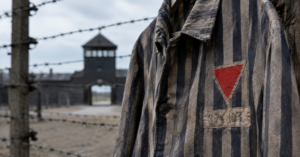
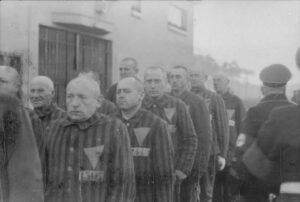
Political prisoners, Jewish prisoners, and men persecuted as “asocial” all worked under SS control. Gay men, marked with the pink triangle, were often placed in punishment commandos with harsher conditions. This included the Klinkerwerk, where in 1942 they became the target of a mass-murder operation (see the timeline below).
Les compagnies pénales et le « détachement de la mort »
Assignment to the Klinkerwerk outside detail was feared as a punishment and even a death sentence. The memorial describes the penal commando as one of the La plupart terrible places where people were destroyed by other people, and historians call the site the killing ground of Sachsenhausen. At a Soviet military tribunal in 1947, the former commander of the penal company testified that in summer 1942 between 12 and 15 of its 70 to 80 men died every day.
The SS used cover terms for this violence. Driving prisoners to exhaustion was called “Sport treiben” (doing sport), and the penal unit was officially a “Sonderkommando” (special detail). Whenever you come across the term ‘work detail’ in the records, remember the language was meant to hide its true meaning.
Working Conditions and Why Mortality Was So High
Mortality at the Klinkerwerk had several causes that reinforced each other:
- Un travail épuisant avec des outils rudimentaires. Les travaux de creusement, de transport et de chargement se poursuivaient à un rythme que les corps des prisonniers ne pouvaient pas supporter.
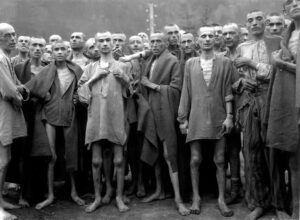
- Faim et épuisement. De nombreux prisonniers sont morts de malnutrition et d'épuisement.
- Violence délibérée. Les gardiens battaient et tuaient des prisonniers, mettaient en scène des « accidents » et abattaient des prisonniers pour de prétendues tentatives d'évasion.
Thousands of prisoners were forced to work at the site. Le nombre exact de prisonniers et de morts est inconnu.
Autres cas de travail forcé sur le site
La production de briques n'était pas la seule activité. Le port de Klinkerwerk en faisait une plaque tournante pour la manutention des matériaux. À partir de 1942, le détachement dit Speer démantelait le matériel récupéré, comme les câbles et les mines, dans les pays occupés et chargeait sur les navires les métaux précieux récupérés, d'importance militaire. site également directement served the war economy. In 1942 and 1943, the brickworks was partly converted to arms production, and from 1943 prisoners there produced grenades.
Comment le Klinkerwerk s'est développé pendant la guerre
- 1938 : Construction begins. Prisoners march out daily from the main camp to build the works and the harbour.
- 1941 : In April, with the barracks finished, Le camp de Klinkerwerk devient un sous-camp indépendant de Sachsenhausen, doté de sa propre administration. Les prisonniers sont logés dans des baraquements sur le site.
- 1942 : In the summer, the SS carried out a targeted killing operation against gay men at the subcamp. The figures differ par source. The Sachsenhausen Memorial records more than 100 prisoners with the pink triangle dead between June and September 1942, through abuse, staged accidents, or shootings during alleged escape attempts. The Sachsenhausen Memorial, Brandenburg state government, and LSVD cite approximately 200 victims of the 1942 killing operation.
- 1942 à 1943 : L'activité se réoriente en partie vers la production d'armements.
Want to Explorer how forced labor at Sachsenhausen benefited German industry? Read Comment les entreprises allemandes ont profité du travail forcé des prisonniers de Sachsenhausen pour découvrir comment les entreprises ont utilisé les prisonniers comme main-d'œuvre forcée.
La fin de la guerre
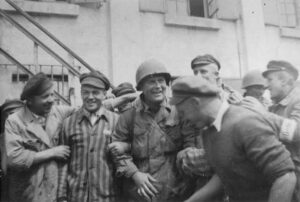
On 10 April 1945, an Allied bombing raid almost completely destroyed the Klinkerwerk subcamp and killed numerous prisoners. The SS then dissolved the subcamp and moved the prisoners back to the main camp. The main camp itself was evacuated on forced marches days later and liberated par Soviet and Polish troops on 22 April. The brickworks site remains a burial ground, with victims’ remains still present in the soil and adjacent canal.
What You Can See Today
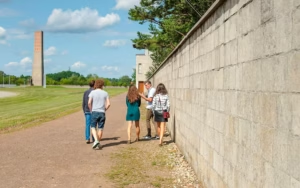
The Klinkerwerk is not a polished museum, and that is part of how it should be understood. The site now has an accessible open-air exhibition near the Lehnitz lock. An open-air exhibition covering about 700 square metres opened in December 2011. Check the memorial’s website for current access information before you go. Expect:
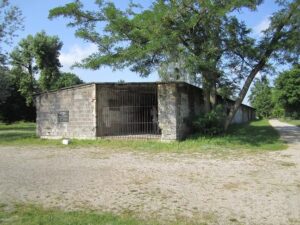
- Ruines et contours. La majeure partie de l'usine a été détruite en 1945, vous verrez donc des vestiges érodés et l'aménagement du terrain plutôt que des bâtiments intacts.
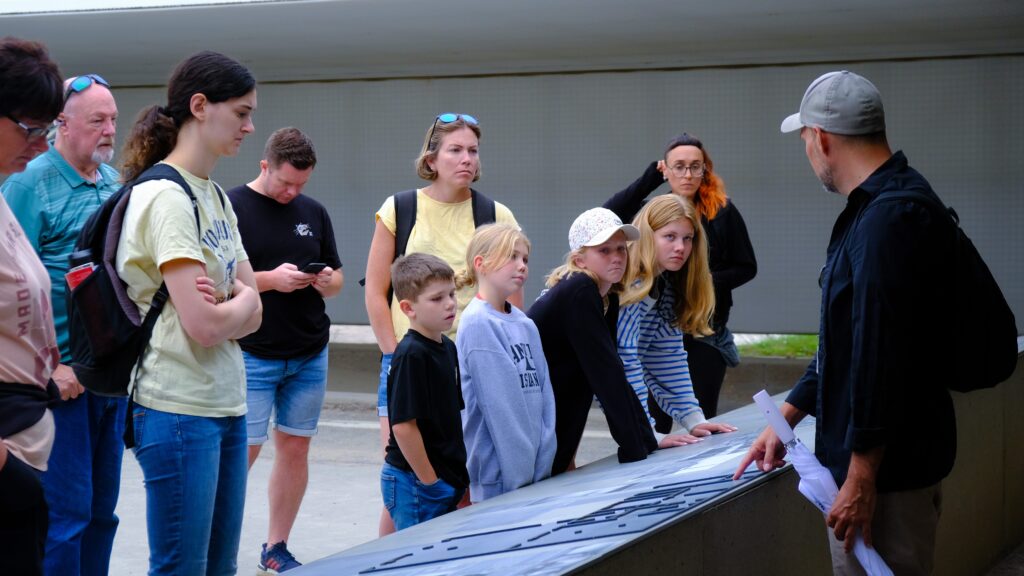
- Information boards and a model. The exhibition includes a 2 x 3 metre concrete relief, at a scale of 1:750, showing the largely destroyed works.
- Le mémorial du port. Dörte Eggert-Heerdegen and Kamel Louafi designed a memorial inaugurated on 20 April 2015 at the old quay. Its Corten steel walls rise from the far side of the quay wall, as if from the water.
- Un lieu de sépulture. Treat the whole site as a grave.
You can reach it from Berlin par train to Oranienburg, then par bus, bike or on foot toward the Lehnitz lock on the B273. Allow time, since La plupart visitors spend far less here than at the main memorial. Cycling and pushing bicycles are prohibited within the Sachsenhausen Memorial grounds, so leave your bike at the designated stands when visiting the main memorial. Allow time, since La plupart visitors spend far less here than at the main memorial.
La question que se pose chaque visiteur
Si vous y restez assez longtemps, quelqu'un finira par se demander comment des gens ordinaires ont pu commettre un tel acte. Les historiens évoquent la déshumanisation, la lente dégradation sociale et le recours à un jargon bureaucratique qui dissimulait le meurtre sous des formules administratives. L'usine de Klinkerwerk illustre une économie de la cruauté orchestrée par des employés, des ingénieurs et des administrateurs qui considéraient les êtres humains comme de la matière première.
Foire aux questions
- Le travail forcé dans les camps était-il productif ou simplement une punition ?
Le même principe s'appliquait : la briqueterie était censée répondre aux besoins des programmes de construction du régime, mais l'augmentation de la production n'était jamais le seul objectif. En réalité, le travail était souvent organisé dans le but d'épuiser et de tuer les prisonniers ; productivité et cruauté faisaient donc partie intégrante du même système.
- Pourquoi le Klinkerwerk était-il craint plus que les autres travaux de chantier ?
Les conditions de détention étaient plus dures, la surveillance plus brutale et le temps disponible pour survivre plus court. Les prisonniers savaient qu'une peine infligée dans ces conditions pouvait s'avérer fatale.
- Le Klinkerwerk fait-il partie du mémorial principal de Sachsenhausen ?
Il s'agit d'un site distinct, situé à l'extérieur du camp principal et géré comme faisant partie du site commémoratif. Prévoyez une visite séparée.
- L'usine Klinkerwerk servait-elle à autre chose qu'à la fabrication de briques ?
Oui. À partir de 1942, il a servi au démantèlement et à l'expédition de matériel pillé, et il a été partiellement converti à la production d'armements.
- Qui était visé au Klinkerwerk en 1942 ?
Gay men were deliberately placed there and murdered in large numbers that summer, with estimates ranging from more than 100 to about 200 or more, an episode now commemorated annually.