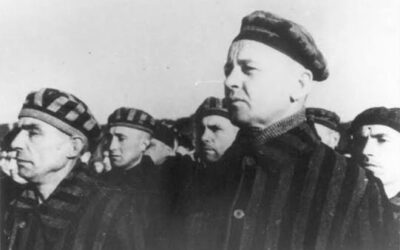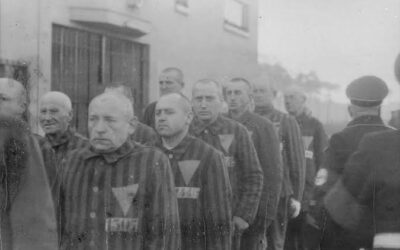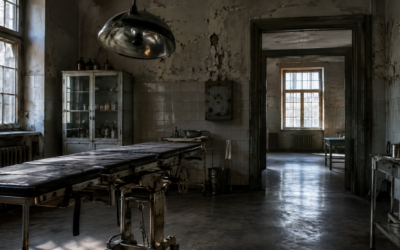
When you get off the train in Oranienburg, you see bakeries, a castle, and a quiet stretch of river. It does not look like the place where an entire country’s system of terror was administered. Yet from 1938, the camps de concentration Inspectorate, which administered and controlled the concentration camp system, was headquartered in the T-building near Sachsenhausen. This guide explains what that office, the camps de concentration Inspectorate (Inspektion der Konzentrationslager, IKL), actually controlled, why it was moved to Oranienburg, how it changed during the war, and what visitors can understand of the site today.
Qu'était l'Inspection générale ?
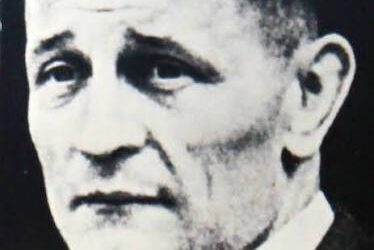
The Inspectorate was established as a result of the SS’s reorganization of the camps in 1934. Theodor Eicke, who had previously been in charge of Dachau and had established its system of strict discipline and punishment, was named the first Inspector of camps de concentration; his role was to transform what had been a collection of sporadically arranged and locally managed camps into a unified system controlled from the center by the SS.
Eicke occupa ce poste jusqu'en 1939, date à laquelle il prit le commandement de la division SS Tête de Mort. Son chef d'état-major, Richard Glücks, lui succéda et dirigea l'Inspection générale jusqu'à la fin de l'ère nazie. Eicke était l'architecte et le garant du système ; Glücks en fut l'administrateur de longue date. Là où Eicke avait bâti le modèle, Glücks le mit en œuvre durant l'expansion de la guerre et resta à la tête de l'Inspection jusqu'à l'effondrement du régime en 1945.
Ce que l'Inspection générale contrôlait
L'Inspection générale n'était pas un siège symbolique. Son autorité couvrait la plupart des éléments qui permettaient aux camps de fonctionner comme un système :
- Administration du camp : organisation, budgets et gestion quotidienne des principaux camps.
- Règlements: des règles, des punitions et des routines standardisées, basées sur l'ordre disciplinaire qu'Eicke avait mis en place à Dachau.
- Personnel: dotation en personnel et affectation des commandants et des unités de garde.
- Politique et discipline des détenus : comment les différentes catégories de prisonniers étaient traitées et comment les peines étaient appliquées.
- Transferts : le déplacement des prisonniers entre les camps.
- Travail: le déploiement des prisonniers au travail, qui a pris une importance croissante.
- Coordination: maintenir le fonctionnement des différents camps selon un modèle commun, par le biais de correspondances, d'inspections et de conférences de commandants.
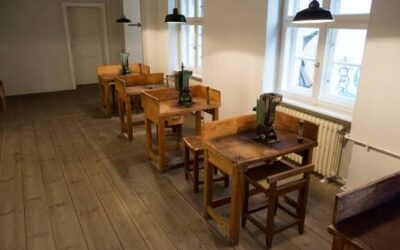
Une grande partie de ce travail s'effectuait sur papier. Ordres, retours, registres et rapports circulaient entre Oranienburg et les camps, et des employés de bureau, des dactylographes et des opératrices téléphoniques traitaient chaque document. C'est là l'aspect le plus troublant de l'Inspection générale : le système de terreur reposait sur des tâches administratives ordinaires. L'album Höcker illustre ce même point inquiétant : des photographies de membres du personnel SS se détendant près d'Auschwitz en 1944.
Pourquoi le siège social a-t-il été transféré à Oranienburg ?
Les bureaux de l'Inspection étaient dans la région de Berlin avant 1938 ; le déménagement à Oranienburg, annoncé dans le cadre de la consolidation du système, était fondé sur plusieurs considérations pratiques.
- Proximité de Berlin : Oranienburg se situe à environ 35 kilomètres au nord de la capitale, suffisamment près pour rester en contact avec la direction SS d'Himmler et l'appareil d'État central.
- Liaisons ferroviaires et routières : La ville était bien reliée à Berlin et au reste du Reich.
- Un camp existant juste à côté : Le camp de Sachsenhausen, ouvert en 1936, était déjà opérationnel en périphérie de la ville, et la SS y disposait d'espace et d'infrastructures.
- Unités d'entraînement et de garde SS : Le site était lié à l'entraînement des formations de gardes SS qui animaient les camps.
En résumé, l'Inspection générale fut implantée à un endroit lui permettant de superviser un camp opérationnel, de recruter du personnel SS et de rester à proximité de Berlin. Le rôle de Sachsenhausen comme camp de démonstration et d'entraînement est traité dans un autre article de cette série ; le présent article ne l'aborde donc que brièvement.
La relation physique avec le camp
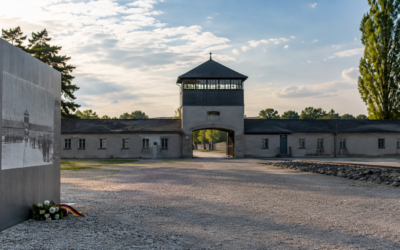
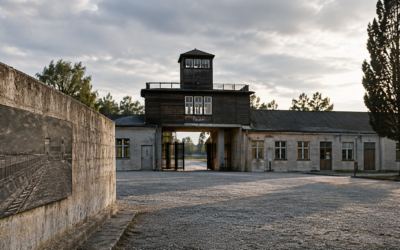
Les bâtiments administratifs de l'Inspection générale étaient directement à proximité de SachsenhausenSituée à l'extérieur de l'enceinte des prisonniers, mais toujours à portée de vue et à distance de marche de l'entrée du camp, la tour A occupait une place stratégique : elle surplombait le lieu de l'appel, tandis que les zones administratives et les quartiers des troupes SS se trouvaient hors du périmètre.
Cela signifiait que les deux mondes étaient extrêmement proches : un prisonnier à la porte et un haut fonctionnaire examinant des rapports provenant de dizaines d’autres camps se trouvaient à quelques centaines de mètres seulement l’un de l’autre. Sachsenhausen fonctionnait comme un camp de travail, mais il était aussi suffisamment proche pour que l’Inspection puisse observer, tester et uniformiser les pratiques.
L'Inspection générale pendant la guerre
Lorsque l'Allemagne conquit et occupa de nouveaux territoires, le système concentrationnaire s'étendit considérablement. Plusieurs nouveaux camps principaux furent créés, de nombreux camps secondaires virent le jour et le nombre de prisonniers augmenta fortement. L'Inspection générale dut alors coordonner cette expansion.
The war also changed its structure. In March 1942, the Inspectorate was incorporated into the SS Economic-Administrative Main Office (WVHA) under Oswald Pohl, where it became Office Group D. Glücks stayed in charge, and the Oranienburg offices remained the camp system’s working center. The merger reflected the SS’s growing emphasis on forced labor for armaments and industry. The Inspectorate’s tasks became increasingly bound up with the economic exploitation of prisoners, alongside their persecution and murder.
Les bureaux chargés des mutations et l'utilisation de la main-d'œuvre also took responsibility for the camps in occupied Europe, such as Auschwitz and Majdanek, where mass killings occurred. Although the Inspectorate was not the only agency involved in the Holocaust, it was a key element of the broader Nazi system, working alongside other SS agencies that organized deportations and mass murder.
Les voisins étaient-ils au courant ?
La question de ce que les Allemands ordinaires savaient est vaste et ne sera pas abordée ici. En résumé, des historiens comme Nikolaus Wachsmann ont démontré que les premiers camps se situaient dans ou près des villes, étaient largement connus et faisaient l'objet de discussions. Oranienburg en est un exemple frappant : un camp, un quartier général SS et un complexe administratif ont fait partie intégrante de la vie de cette petite ville pendant des années. L'idée que personne n'était au courant est en grande partie une forme de réconfort propre à l'après-guerre. Ce qui était en revanche bien plus soigneusement dissimulé, c'était l'ampleur industrielle des massacres perpétrés dans les centres d'extermination de la Pologne occupée.
Ce que les visiteurs peuvent voir et comprendre aujourd'hui
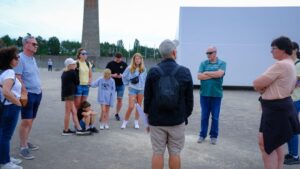
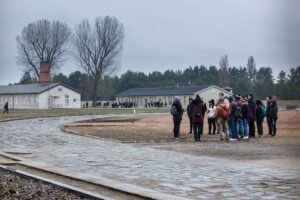
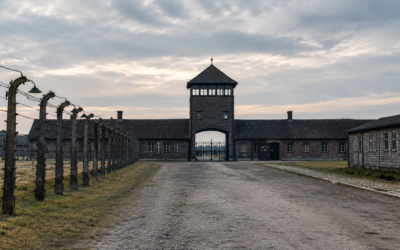
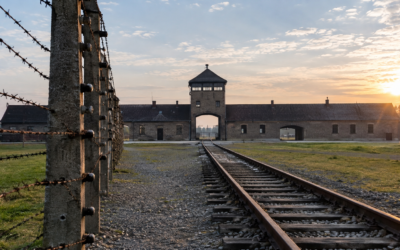
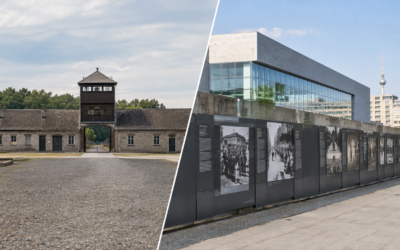
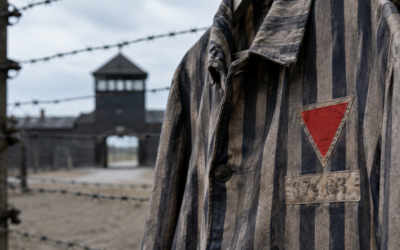
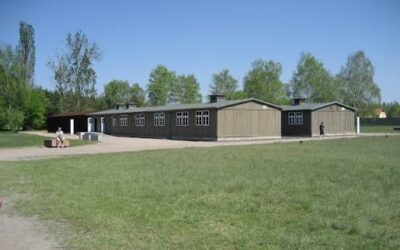
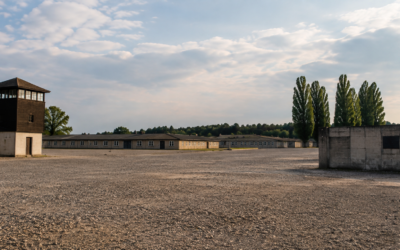
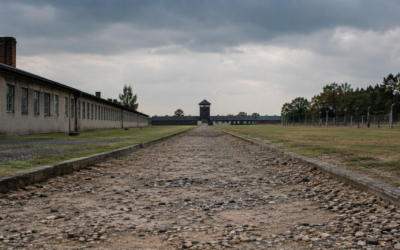
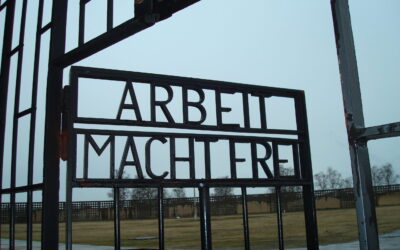
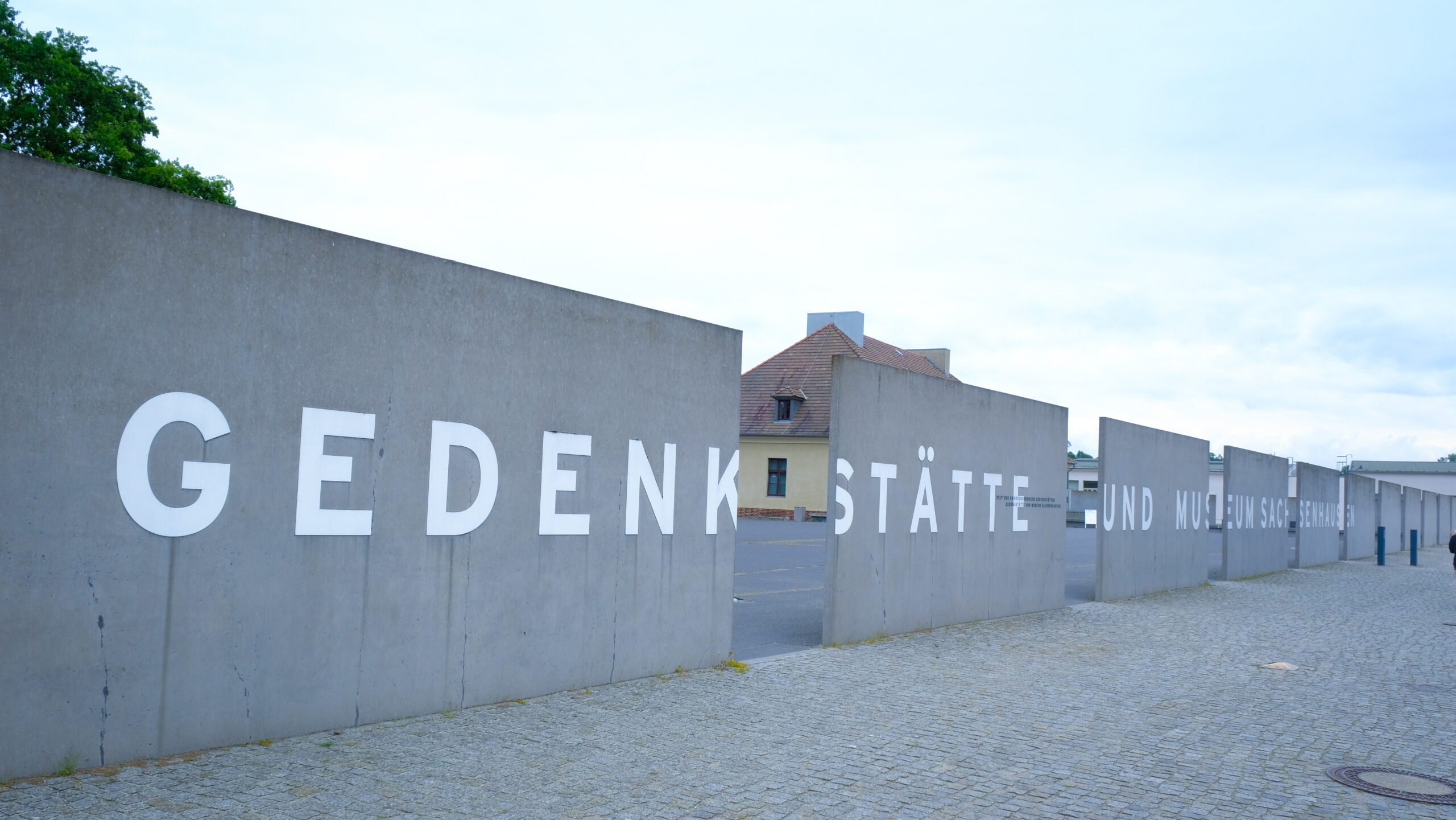
Les visiteurs du mémorial de Sachsenhausen peuvent encore observer l'organisation du site et comprendre comment le camp et sa structure de commandement étaient liés. La tour A, le bâtiment de la porte et les vestiges du camp triangulaire témoignent de la manière dont les SS organisaient les mouvements et la surveillance. Outside the area occupied by the prisoners, the former SS buildings indicate that the camp was part of a bigger administrative and military complex. For a broader understanding of Berlin’s Nazi-era history, visitors can also explore related historical sites on a free Berlin walking tour
Les anciens bâtiments de l'Inspection sont moins visibles que la zone réservée aux prisonniers. Ils se situent en dehors du cœur du site commémoratif, et certaines parties de ce dernier ont été réaffectées, notamment à des centres de formation de la police. De ce fait, le complexe administratif est plus difficile à appréhender que la caserne et la porte d'entrée. Renseignez-vous au point d'information du mémorial ou consultez son site web avant votre visite pour savoir ce qui est actuellement accessible et comment les expositions abordent l'Inspection et l'administration SS.
Pendant votre visite du site, essayez de visualiser non seulement les barbelés, mais aussi les bureaux, les dactylographes, les registres, les lignes téléphoniques et les ordres de virement. connected Oranienburg with all the other camps. For visitors interested in exploring this history in greater depth, private historical tours offer a more personalized way to discover Berlin’s Nazi-era sites.
Foire aux questions
- Qu'était-ce que l'Inspection des camps de concentration ?
Le bureau SS était responsable de l'administration des camps de concentration : règlement intérieur, personnel, discipline, transfert des prisonniers et travail. Depuis 1938, il était situé à Oranienburg, près de Sachsenhausen.
- Qui dirigeait l'Inspection générale ?
Theodor Eicke fut le premier inspecteur, de 1934 à 1939. Richard Glücks lui succéda et dirigea le bureau jusqu'en 1945.
- Pourquoi l'Inspection générale a-t-elle été transférée à Oranienburg ?
La ville était proche de Berlin et bien desservie, et elle disposait déjà de Sachsenhausen ainsi que d'installations de gardes et d'entraînement SS, ce qui permettait à l'Inspection de travailler à proximité d'un camp opérationnel.
- Qu’est-il arrivé à l’Inspection générale pendant la guerre ?
En 1942, l'organisation fut intégrée au Bureau principal économico-administratif SS en tant que groupe de bureaux D, reflétant l'importance croissante accordée au travail forcé ; Glücks en resta responsable.
- Puis-je visiter les bâtiments de l'Inspection aujourd'hui ?
La zone administrative se situe en grande partie à l'extérieur du site principal du mémorial, et son accès est variable. Renseignez-vous auprès du Mémorial de Sachsenhausen avant votre visite. Le bâtiment de la porte et l'agencement du camp sont les éléments les plus révélateurs de l'organisation du site.