Si vous avez déjà été dans un endroit calme street in Berlin Si vous vous êtes demandé comment une ville moderne et cosmopolite a pu se retrouver ainsi entourée de ses voisins, vous posez la bonne question. La réponse, aussi simple soit-elle, est déplaisante : cela ne s’est pas fait d’un coup, mais par petites étapes bureaucratiques, chacune rendant la suivante plus naturelle.
Ce guide décrit cette escalade de la manière dont un habitant du coin l'expliquerait à un ami, avec les dates, les lieux et les malentendus courants que les gens évoquent dans la conversation.
Tout a commencé par de la paperasse, pas par de la violence.
In 1933, the number of Jews in Berlin was about 160,000, which was more than in any other city in Germany. Many were doctors, shopkeepers, lawyers, teachers, and civil servants. They were not outsiders but neighbors in the flats above.
At first, the actions seemed like mere administrative measures. On April 1, 1933, the regime organized a boycott of Jewish businesses, having uniformed men stationed outside the shops. A few days later, a law relating to the civil service forced Jewish people and those who were politically undesirable out of public sector jobs. In May, students and officials burned books at Opernplatz, the square which is now known as Bebelplatz. Today, a glass panel set into the pavement depicts an empty underground library, a quiet memorial to the books that were destroyed.
The pattern is important: people were first excluded from work, then from public life, and then from Légal protection. At each stage it was presented as a measure intended to maintain order, not as an act of cruelty.
The Immigration Question Everyone Gets Wrong
One of the most common questions visitors and history readers ask is what the regime’s stance on immigration actually was between 1933 and 1939. The answer has two sides, and mixing them up causes endless confusion.
For ethnic Germans living abroad, the policy was welcoming. Under the banner of Heim ins Reich, meaning “return to the Reich,” people of German descent in far-flung communities across Eastern and Southeastern Europe were encouraged to relocate into the German sphere. This was about expanding the national body, not about open borders.
For Jewish Germans, the pressure acted in the opposite way. Although the regime wanted to get rid of them, it first demanded that their wealth be taken away. Those who tried to emigrate had to pay heavy taxes, watch their property sold under forced conditions for only a small part of its value, and navigate a complicated series of permits. At the same time, other countries shut their doors, so many people who wanted to leave could not find a country willing to take them. Queues at the Berlin consulates stretched around the block. This situation being driven out yet having no place to go is essential to understanding what happened next.
1935 : Quand la discrimination est devenue loi
In 1935, the Nuremberg Laws turned prejudice into law by depriving Jewish Germans of their citizenship and prohibiting them from marrying or having relationships with other Germans; these laws established a Légal criterion for deciding who was regarded as Jewish on the basis of ancestry and also covered people who had converted or had never practiced a religion.
À Berlin, cela se traduisait par des humiliations quotidiennes. Bancs publics, piscines et cinémas arboraient des panneaux d'interdiction. Puis vinrent les Jeux olympiques de 1936. Pendant quelques semaines, la ville retira discrètement certains des panneaux les plus visibles afin d'impressionner les visiteurs étrangers. Une fois les caméras parties, les panneaux furent remis en place. Voilà un exemple flagrant de la mise en scène dont faisait preuve le régime.
Nuit de Cristal : La nuit où la ville a montré sa main
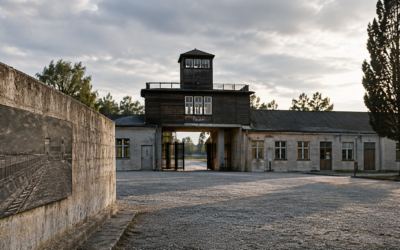
On November 9 and 10, 1938, synagogues were set on fire all over Germany, Berlin being no different. The shop windows were broken, which gave the night its Nom, although many historians now prefer to call it the November Pogrom, since the broken glass was by no means the only issue. Approximately 30,000 Jewish men were arrested throughout the country and sent to camps such as Sachsenhausen, which is situated just north of Berlin, Buchenwald, and Dachau.
What a great many people fail to realize is that the consequences were just as revealing as the violence itself. The Jewish communities were fined a total of one billion Reichsmarks for the damage, and the insurance payments were taken. The victims were charged for the crime carried out against them. par then, emigration had ceased to be a pressure tactic and had become a race for survival.
Envie de découvrir une histoire de résistance face aux persécutions nazies ? Consultez notre blog sur L'atelier d'Otto Weidt pour les aveugles : une histoire de résistance dans le Berlin juif pour en savoir plus sur ses efforts pour protéger les travailleurs juifs.
From Exclusion to Deportation
Once war began in 1939, options narrowed further. Jewish Berliners were forced into designated housing, required to wear a yellow star from September 1941, and banned from using most public transport. Then came the step that turned persecution into removal.
Le 18 octobre 1941, le premier train de déportation quitta la gare de Grunewald à Berlin, transportant des résidents juifs vers le ghetto de Łódź. Au cours des années suivantes, les autorités déportèrent environ 50 000 Berlinois. vous pouvez marcher le long À la gare Gleis 17 de Grunewald, des plaques d'acier, le long du quai, listent chaque transport, avec sa date, sa destination et le nombre de passagers. C'est l'un des endroits les plus austères de la ville, précisément par sa simplicité.
In January 1942, officials met at a lakeside villa in Wannsee to coordinate what they called the “final solution.” The meeting lasted about ninety minutes. The villa is now a museum, and the documents on display make clear how much of the machinery was ordinary administration.
One act of resistance deserves mention. In February and March 1943, non Jewish wives and relatives gathered for days on Rosenstrasse to demand the release of their Jewish husbands held after a roundup. Most of the men were freed. It is a rare and remarkable moment of public protest, and it complicates the lazy idea that nothing could have been done.
Pourquoi la responsabilité fait encore les gros titres
The story did not end in 1945, and neither did the arguments about it. A recent case brought the issue back into public view: a 95 year old man living in Tennessee, Friedrich Karl Berger, was removed to Germany after authorities found he had served as an armed guard at the Neuengamme camp system in 1945. The U.S. Justice Department said the removal showed America would not be a haven for people who took part in Nazi persecution.
The responses followed well-known patterns. A large number of Germans agree that the Légal proceedings should continue regardless of how much time has passed, on the grounds that genocide does not lapse. On the other hand, some people doubt whether it makes sense to prosecute individuals in their nineties for actions they took when they were young. Critics also pointed to the inconsistent record of the postwar period, noting that some much older people were hired for their expertise rather than punished. That is a valid criticism, but it must be understood in the context that the United States, the Soviet Union, and Britain all employed German scientists and engineers after the war, and none of those schemes successfully distinguished the innocent from the guilty.
Un dernier mot sur un mythe tenace. Des histoires circulent concernant des élevages sélectifs gérés par la SS pour une « race supérieure ». Le programme Lebensborn a bel et bien existé ; il s’agissait d’un projet sinistre de la SS qui encourageait les naissances de parents agréés et qui, en Pologne occupée, impliquait l’enlèvement d’enfants jugés conformes aux critères raciaux. Mais l’idée de simples élevages sélectifs est une exagération qui rend la réalité historique plus difficile à prendre au sérieux. Les faits avérés sont déjà suffisamment troublants.
Want to understand the broader impact of Nazi persecution on Berlin’s Jewish community? Read our Blog on Qu'est-il arrivé à la communauté juive de Berlin sous les nazis ? for a closer look at what happened during this period.
FAQ
- What was the Nazi regime’s stance on immigration between 1933 and 1939?
It depended on who you were. Ethnic Germans abroad were encouraged to move into the Reich under Heim ins Reich. Jewish Germans were pushed to leave, but only after losing most of their assets, and they found few countries willing to accept them.
- Does Germany still cover and pursue cases against elderly Nazi-era suspects?
Oui, les affaires impliquant d'anciens membres du personnel des camps font toujours la une des journaux, et certains gardiens âgés ont été condamnés ces dernières années. De nombreux Allemands soutiennent ces poursuites, arguant que le temps n'exonère pas de toute responsabilité, même si certains estiment que juger des personnes nonagénaires n'a guère d'intérêt pratique.
- Do other countries besides the United States deport former Nazi participants?
Oui. Des expulsions ou des dénonciations de citoyenneté ont été engagées dans plusieurs pays, dont le Canada, et des personnes ont également été renvoyées du Brésil et d'Argentine. L'Allemagne engage également des poursuites judiciaires à l'encontre des personnes renvoyées.
- Les pays ont-ils réellement recruté des personnalités de l'époque nazie après la guerre ?
Certainly, it was not just one country that did so; the United States carried out Operation Paperclip, the Soviet Union carried out Operation Osoaviakhim, and Britain had similar programs. It is pointed out par critics that some of the people recruited had connections with forced labour operations, which is the reason why these programs are still controversial.
- Was Friedrich Karl Berger tried for war crimes before being deported?
No. He was removed for taking part in Nazi sponsored persecution as a guard at Neuengamme in 1945. At the time of his removal, no trial was waiting for him in Germany. They expected to question him rather than prosecute him immediately.