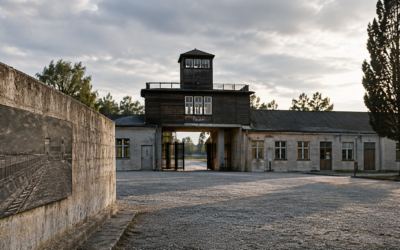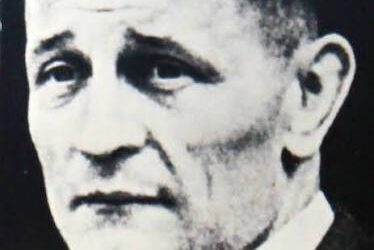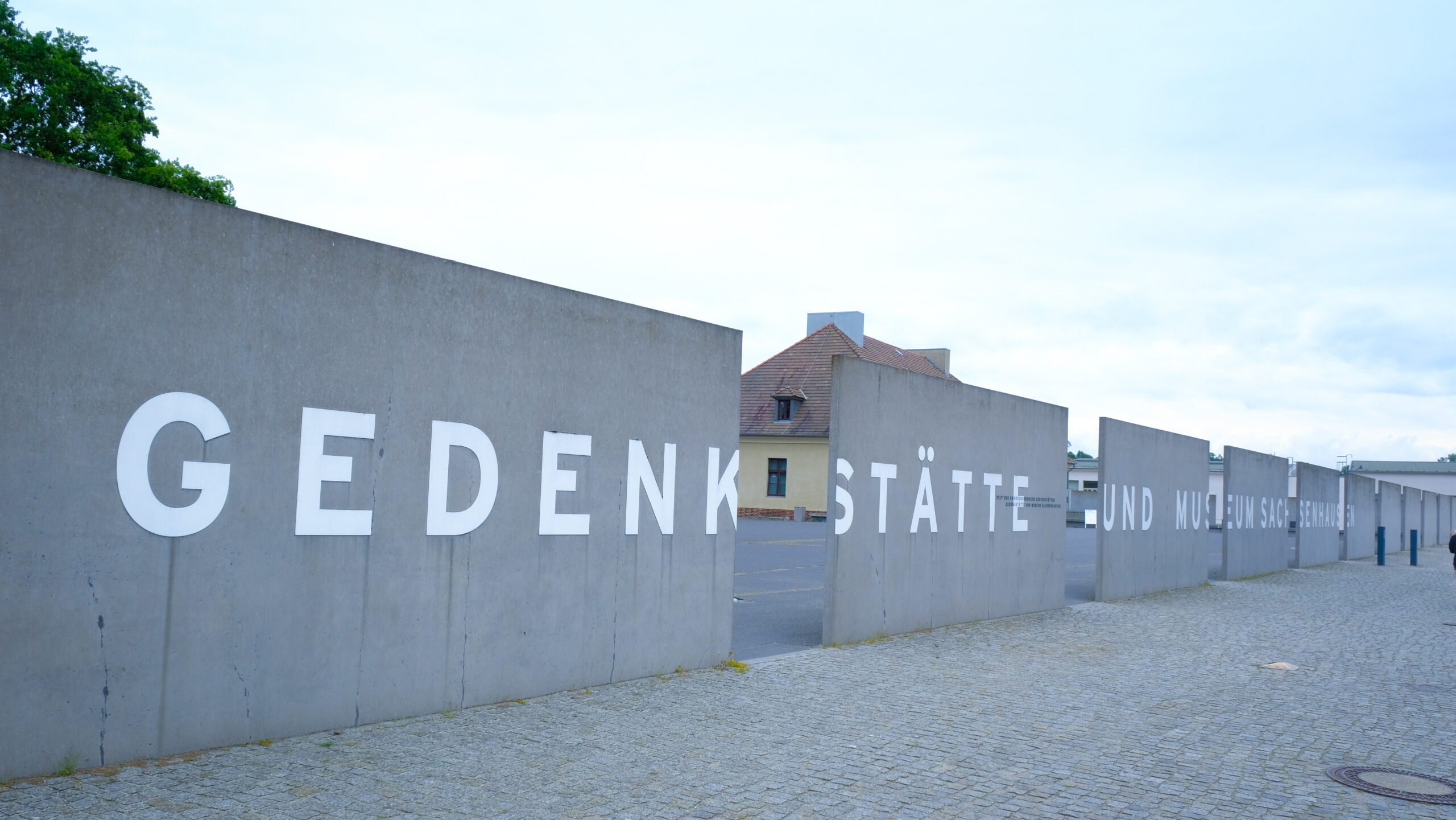
Here is the question that hangs over every photo of Yakov Dzhugashvili: Did Joseph Stalin really let his own son die rather than make a trade? The short answer is that Yakov died on April 14, 1943, at Sachsenhausen, and the rumor that his father could have saved him is only half the story. The other half is more uncomfortable, and it explains why people still argue about it more than eighty years later.
The Man in the Greatcoat
Start with the picture everyone shares: a young man in a heavy Red Army coat, looking tired, surrounded by German soldiers. This is Senior Lieutenant Yakov Dzhugashvili, battery commander in the 14th Howitzer Regiment. German troops captured him on July 16, 1941, near the Belarusian town of Liozno, around the Surazh airfield, during the chaos of the Smolensk fighting.
That coat deserves a mention, because viewers always notice it. Soviet soldiers wore the greatcoat year-round. In hot weather they rolled it up and carried it over the shoulder, and in winter they were issued a quilted cotton jacket on top. It is a small detail, but it shows the photo captures an ordinary soldier in an ordinary uniform, not a prince in disguise.
German propagandists understood the value of the image immediately. Leaflets showed Yakov with the taunting caption asking whether you knew who this was. The message to Soviet troops was simple: even the leader’s own son has given up. Yakov, by most accounts, refused to cooperate and resisted every attempt to make him defect.
Who Was Yakov, Really?
Born in 1907, Yakov was Stalin’s eldest son and the only one whose mother shared his father’s Georgian roots. After his mother died, relatives raised him far from his father. He grew into a gentle, introverted man who wanted two things: a normal life and some sign of approval from the most powerful man in the country. What he got instead, according to those who studied the family, was gossip, cold disdain, and a humiliating end in a Nazi camp.
His brothers lived very different lives. Konstantin Kuzakov, born in 1911 to a young widow who had taken Stalin in as a lodger during his northern exile, stayed careful and quiet, worked in Soviet radio and television, and died in 1996. Alexander Davydov, born to a teenage villager in Siberia, grew up poor, served in World War II, reached the rank of major, and died in 1987. Both were summoned to the NKVD in the late 1930s and made to sign nondisclosure agreements about their parentage. Vasily, the youngest, born in 1921 to Stalin’s second wife, was charismatic and spoiled, drank heavily, abused his privileges, and was imprisoned after Stalin’s death. He died in 1962.
Of all the children, Yakov’s story is the one that turns up whenever people debate whether Stalin was capable of any fatherly feeling at all.
The Prisoner Swap Everyone Talks About
Here is where the legend lives. After the German defeat at Stalingrad in early 1943, the story goes, Berlin offered to exchange Yakov for Field Marshal Friedrich Paulus, the commander who had surrendered there. Stalin refused.
The most widely repeated version of his reply is powerful: you hold not only my son Yakov but millions of my sons, so either free them all or my son will share their fate. Another popular version has him dismissing the deal in military terms: why would he trade a general, or a field marshal, for a lieutenant? A third, more brutal line, “I have no son,” gets quoted constantly.
Be careful with all of these. They are traditions attached to the story, not documents anyone can wave around. They survive because they sound like Stalin, and because they fit what many people already believe.
A second exchange story is worth knowing. When Soviet forces captured Leo Raubal Jr., Hitler’s nephew, at Stalingrad, the Germans reportedly proposed trading him for Yakov as well. Stalin refused again. Yakov died at Sachsenhausen, while Raubal survived the war and was released in 1955.
Want to learn about another notable prisoner held at Sachsenhausen who opposed Hitler? Read Georg Elser at Sachsenhausen: The Man Who Nearly Assassinated Hitler to discover the story of his assassination attempt and imprisonment under the Nazi regime.
Was Refusing the Deal the “Right” Call?
This is where the debate gets heated, and the strongest arguments come from people trying to be fair to a man almost nobody wants to defend.
The case for his decision goes like this. By 1943, the Soviet Union was losing men at a catastrophic rate, and morale was fragile. If the supreme leader had traded a field marshal to rescue his own child while millions of other fathers’ sons rotted in camps, the damage to the army could have been severe. One view holds that it triggered unrest in the ranks. Another pointed out that he would have had to make the same choice even if it had been his favorite son. A nation’s leader, in this reading, cannot play favorites in a fight for survival.
There is also the argument that Stalin showed consistency, whatever you think of his other choices. Many people note that other Soviet prisoners’ families suffered for the captivity of their relatives, since they lost welfare and state assistance and faced other persecution, while the Dzhugashvili family largely escaped that treatment. Vasily, serving in the air force, notably did not get a free pass because of his surname, at least in the early war years.
The case against is emotional rather than strategic. Critics argue that you can accept the military logic and still say the man was cold to his own child long before the war, treating Yakov as a disappointment from a relationship he never valued. Others say that using this one episode to condemn him is the wrong target. Stalin is guilty of enough documented crimes that this decision, whatever its moral weight, is not his strongest charge. Plenty of people have made exactly that point: it is the one choice in his life that was arguably correct.
Did Soviet Prisoners Really Get Sent to the Gulag?
The Yakov story drags in a broader question that many readers search for: what happened to Soviet soldiers who survived German captivity?
The popular belief is that they were all punished the moment they came home. The numbers say otherwise. Most freed prisoners went straight back into the Red Army. Others spent brief periods in filtration camps, which were not gulags. Of the Soviet prisoners of war liberated by 1946, about 14 percent went to filtration camps, and only a portion of those were then imprisoned in the gulag system. A smaller group, estimated at roughly 5 to 10 percent, was sent to prison for accusations such as desertion or cowardice. That is still hundreds of thousands of people, but it is far from universal treatment.
At certain moments in the war, one in every three reinforcements the Red Army received was a freed prisoner. A grim comparison has been made: roughly 10 percent of gulag prisoners died while incarcerated, versus about 30 percent of Soviet service members during the war.
Order 270, issued in 1941, is the document people usually cite. It branded surrender as treason, which is why the idea of “I have no son” carries such weight. Yet Yakov’s own family, unlike many others, was reportedly spared the usual consequences.
How Did Yakov Actually Die?
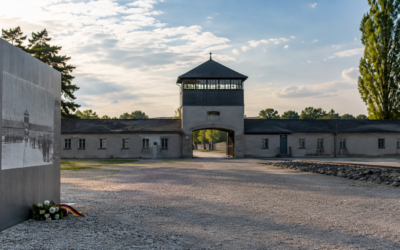
The official account, repeated in Russian sources, says Yakov was shot on April 14, 1943, while trying to escape from Sachsenhausen. He is said to have thrown himself at the barbed wire fence, and seconds later a guard shot him in the head.
Plenty of readers find that account strange, and the skepticism is reasonable. Why would a man jump at an electrified or barbed fence with a guard standing nearby? To many, it looks less like an escape attempt and more like a deliberate act of despair. One account, attributed to a Russian cellmate, claims the news that his father had refused to ransom him is what pushed Yakov into that final act.
Whether it was an escape or a suicide, the end is the same: a gentle, lonely man died in a camp, far from home, after a lifetime of trying to be noticed by his father.
Frequently Asked Questions
- Did the Germans really offer to swap Yakov for Field Marshal Paulus?
That is the story most often told, and it is widely repeated. Treat the exact wording of Stalin’s reply as tradition, since the dramatic quotes vary from teller to teller.
- Did Stalin really say “I have no son”?
It is attributed to him often, but several different versions of his response circulate. The one about millions of sons is the most quoted. The wording differs depending on who tells it.
- Was Yakov also offered in exchange for Hitler’s nephew?
According to the account, yes. Leo Raubal Jr. was captured at Stalingrad, and the Germans reportedly suggested trading him for Yakov. Stalin refused, Yakov died in 1943, and Raubal was released in 1955.
- Were Soviet prisoners of war automatically sent to the gulag after returning home?
No. Most were sent back into the army or released into civilian life. About 14 percent of those liberated by 1946 went through filtration camps, and a smaller share ended up imprisoned.
- How did Yakov Dzhugashvili die at Sachsenhausen?
The Russian account says he was shot on April 14, 1943, while trying to escape by throwing himself at the barbed wire fence. Some find it more consistent with a suicidal act than a real escape attempt.