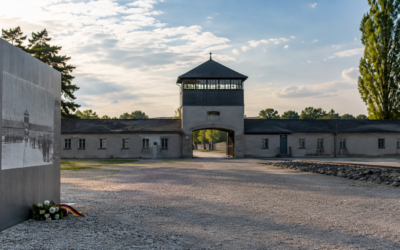
You step off the S1 at the end of the line with a ticket in your pocket and a question you probably will not say out loud: the camp was right here, so how could the townspeople not have known?
Here is the honest answer, with the streets, stops, and local history you need to see it for yourself.
The short answer
They knew. Not everything, and not in the same way, but enough that “we didn’t know” does not hold up. Historians have largely settled on this after decades of debate. What is still argued over is how much people knew about each layer of the system, and how willing they were to look.
What a local could see
Think about what a town this size absorbs over a decade:
- Prisoners marched through streets to work details, and the camp supplied labor to local industry.
- SS personnel living, shopping, and drinking in the area.
- Trains, trucks, deliveries, and construction.
- Rumor, which moved through workplaces and kitchens faster than any official notice.
The industry part is documented. Heinkel used between 6,000 and 8,000 Sachsenhausen prisoners to build its He 177 bomber, and AEG was among other firms that used the camp’s labor. A subcamp was also attached to the Auer Werke arms plant in town. From July 1943 to March 1945, women from Ravensbrück and men from Sachsenhausen did forced labor there. The factory had originally belonged to a Jewish owner who was dispossessed. When your town’s factories run on prisoners, you do not need a briefing to know where they come from.
The Auer site shows how they handled that history afterward. A housing estate was built where the subcamp stood, and a boulder with a plaque at Lehnitzstraße and Lindenring remembers it. The details there are painful. When Allied bombers hit Oranienburg on March 15, 1945, the women were not allowed to leave their workplace and had no shelters, and many died.
The part that really was a secret
Here is the nuance careful historians insist on and casual arguments flatten.
Knowledge of labor camps and prisoner abuse was close to universal. Extermination camps were a different matter. They were a tightly guarded secret, never as secret as the SS wanted but guarded all the same, and loose talk could be punished by death even for committed Nazis. The historian Nikolaus Wachsmann notes that most Germans only learned the name Auschwitz after the war. Detailed knowledge of the genocide sat mostly with well connected people in the military and civil service.
But not knowing the name Auschwitz is not the same as not knowing Jews were being murdered. Consider the evidence on the other side:
- Jews were driven from their homes before the war, and their belongings were redistributed among neighbors.
- Trains full of people left in plain view, and ghettos were emptied afterward.
- Soldiers came home on leave with stories.
- Nazi leaders spoke publicly about it. Hitler threatened the annihilation of European Jews in January 1939, Goebbels said in late 1941 that the threat was being carried out, and Hitler returned to it in late 1942.
- Friedrich Kellner, a German who opposed the regime, kept a diary that recorded rumors that proved accurate.
- The White Rose resistance group wrote in a 1942 leaflet that hundreds of thousands of Jews had been murdered in Poland. They did not try to prove it, because they assumed readers already knew.
Why “I didn’t believe it” is complicated
It was truly unbelievable. Numerous people, such as the soldiers, could not conceive of the extent of it, and the regime’s propaganda made great efforts to discredit the reports that came out. Anyone who has seen documented events dismissed in modern times will know how easy it is to create disbelief.
There was fear too. Acknowledging the truth could mean sharing the victims’ fate if you acted on it. Wachsmann argues that people who heard little more than rumor deserve some benefit of the doubt.
A family journal from the period shows how this worked in practice. A teenage conscript wrote about finding hidden Jews, reporting them, and feeling uneasy. He soothed himself with the idea that they would get a fair trial, go to a work camp, and be deported after the war. He was no ideologue. He filled the gap between what he suspected and what he could bear to know with a comfortable story. Repeated by millions, that mental move may be the most honest picture of what “knowing” meant.
How did the local memory of Sachsenhausen change after the war? Read How East Germany Turned Sachsenhausen Into a National Memorial to discover how the GDR reshaped the former concentration camp into a site of remembrance and how its history was presented to the public.
Walking it yourself: the route and what to look for
The route from the station is part of the lesson.
Getting there. Take the S1 toward Oranienburg, about 45 minutes from Friedrichstraße, with trains roughly every 20 minutes. Do not try to save money with a short trip or an ordinary AB ticket. The ABC fare applies, and cafes, bakeries, and small markets are outside Oranienburg station. Food isn’t available at the memorial, so eat before you go in.
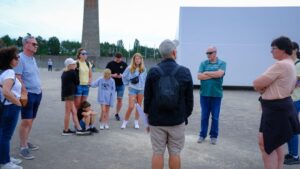
Walk or ride. From the station, it is about a 20-minute walk southeast along Straße der Nationen, or you can take bus 804 or 821 to the stop “Sachsenhausen, Gedenkstätte”. I would walk if the weather allows. You pass bakeries, a supermarket, and residential streets, an ordinary German town. That ordinariness is exactly what your question is about.
A plaque you might walk past. On the way there is a memorial plaque to the victims at the corner of Straße der Einheit and Straße der Nationen. Stop for it. The street leading from the rcenter of Oranienburg towards the camp is also named after Hans von Dohnányi, a prisoner and Dietrich Bonhoeffer’s brother-in-law.
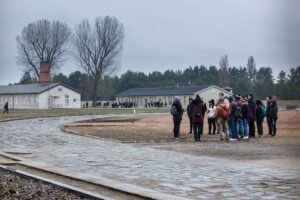
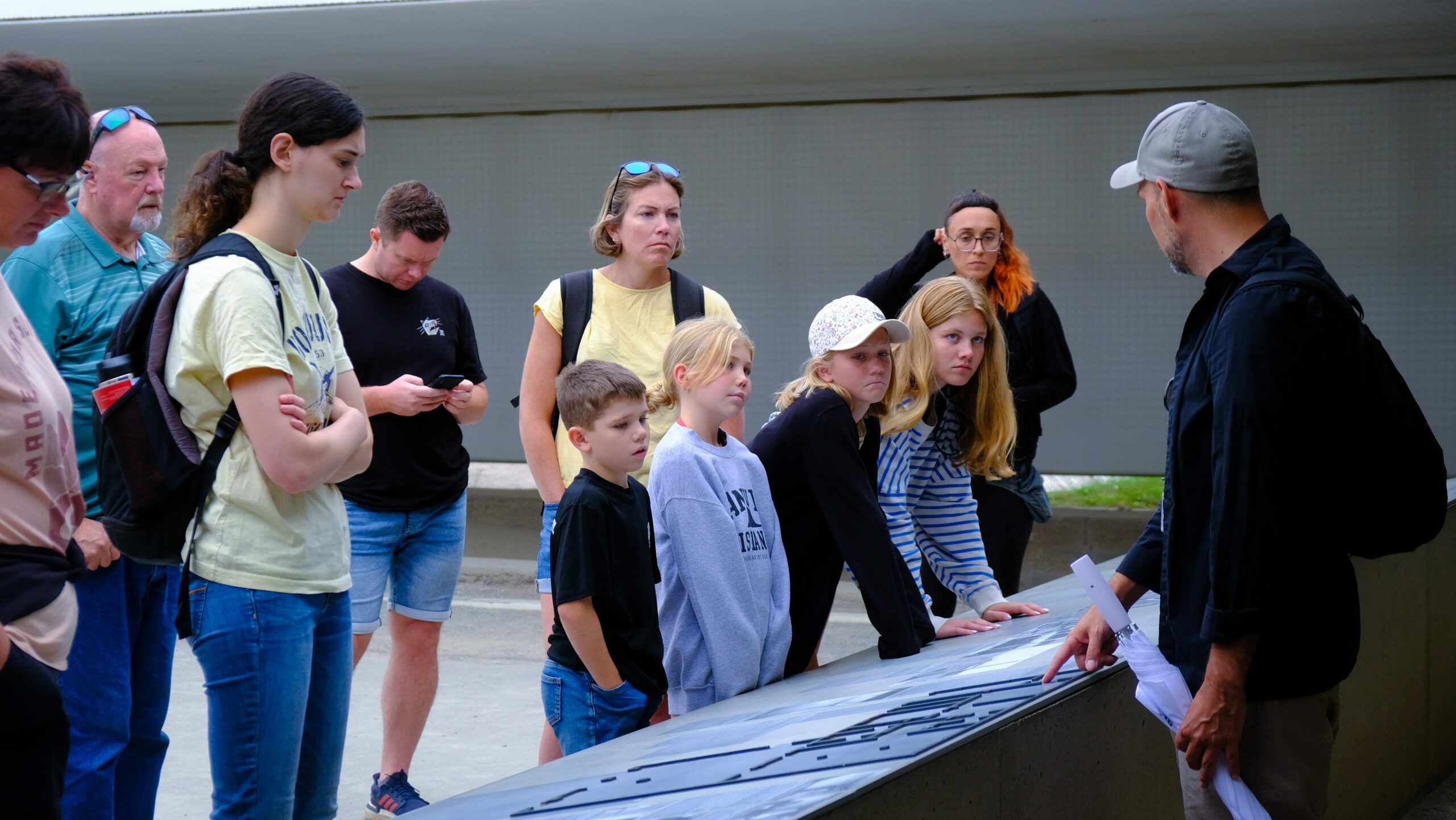
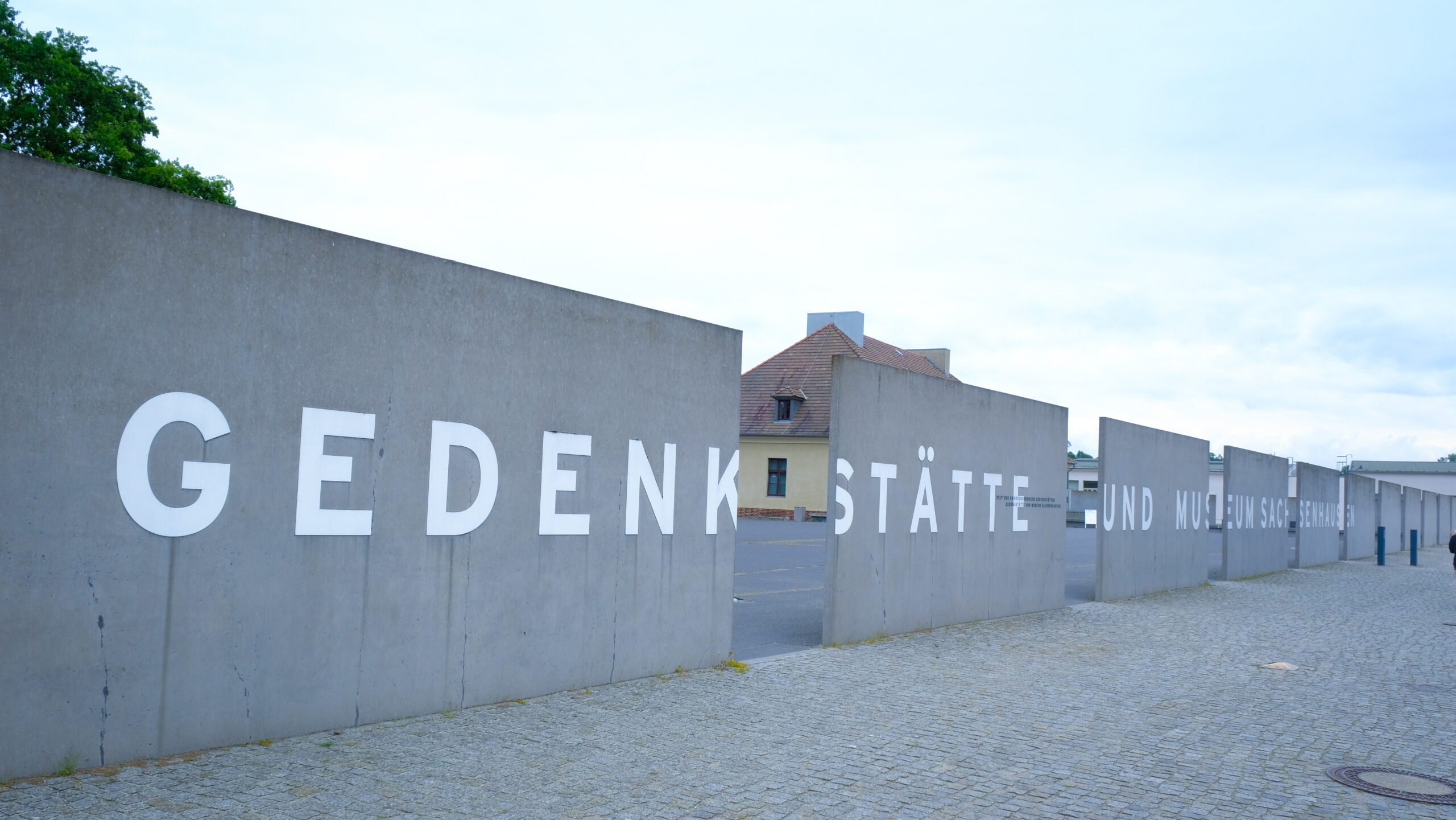
Inside. The address is Straße der Nationen 22, 16515 Oranienburg. Just beyond the perimeter, the Neues Museum covers the earlier Oranienburg camp and the memorial’s history in the East German era. That is the exhibit that speaks most directly to your question. The grounds also hold Station Z, the execution and extermination area, and the preserved sites of the Soviet special camp that ran here after the war.
A strange footnote about the town: Oranienburg was so heavily bombed that it is called the most dangerous town in Germany, and in one case 12,000 residents had to be evacuated. That is why there is so little old fabric to see on the walk.
How it ended in the streets
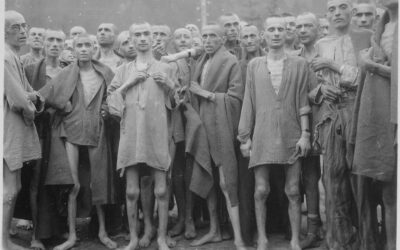
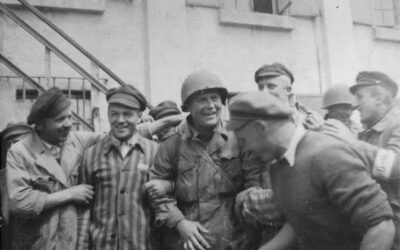
The most public reply to the question of local knowledge came in the spring of 1945. On the 20th and 21st of April the SS forced 33,000 prisoners to carry out a forced march; thousands of them did not make it and those who fell were machine-gunned. The other 3,000 prisoners, among them 1,400 women, were set free on the 22nd of April by the Red Army and the Polish 2nd Infantry Division. A death march cannot be concealed; it takes place on the roads.
Could ordinary people have stopped it?
Opinions divide. One historian told an interviewer there was little ordinary Germans could do, pointing to the executed White Rose students. Others note that public protest, backed by the Catholic Church, did halt the killing of disabled people. Both are true. Be suspicious of anyone who claims a settled answer.
FAQs
- How did ordinary Germans know about the camps?
Through what they saw. Labor camps were everywhere, and Sachsenhausen sat in a working town where early prisoners did public work. Prisoners were used in local industry, and rumors spread. Knowledge of the extermination sites was more limited, but historians say society as a whole knew far more than postwar claims suggest.
- Did people believe the rumors or dismiss them as propaganda?
Both. Disbelief was common because the scale seemed unimaginable, and the regime worked to discredit accounts. Many rumors proved accurate, and some Germans wrote them down at the time.
- Could ordinary people have done anything to stop it?
Experts disagree. Resistance groups like the White Rose were crushed, yet public protest backed by church support did stop the killing of disabled people.
- How much did the Allies know during the war?
Allied leaders had a general sense of what was happening by 1943 and 1944. Many ordinary soldiers heard rumors but did not believe them until they entered the camps. Bombing the camps would likely have killed prisoners without stopping the killing.
- Is the idea that civilians thought camps were temporary “pleasant homes” accurate?
It was a comforting story some people told themselves, and a few believed it, but historians find it hard to credit as a general belief. Deportations, emptied ghettos, and open threats from Nazi leaders made the truth hard to avoid.