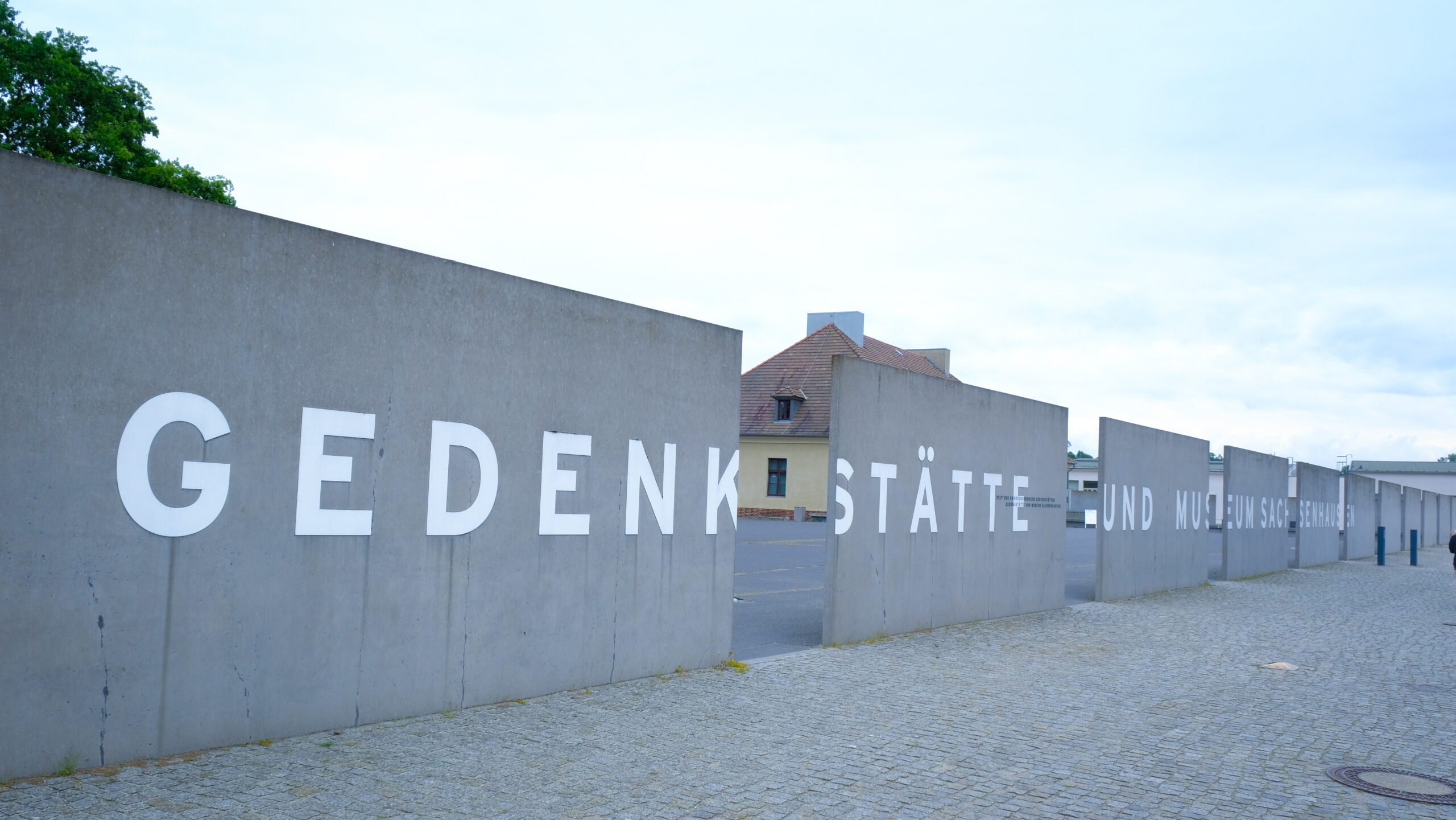
Can you imagine being on a cold street in Berlin in late February 1943, with your husband stuck inside a building which you can see but not go into? For ten years, your government has told you that to object is dangerous. Should you go back home and wait, or should you remain there?
Hundreds of women stayed. That decision is why the Rosenstraße protest is still debated more than eighty years later, and why a simple question sits at its center: what does it really prove?
What actually happened on Rosenstraße
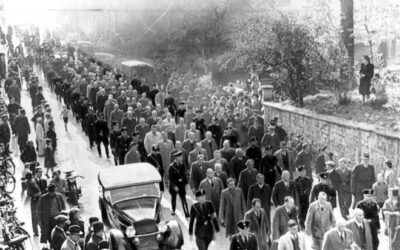
In the last days of February 1943, the regime rounded up Jews still working in Berlin’s war industries in a sweep that came to be called the Factory Action. Most were deported quickly. But a group of roughly 1,800 Jewish men, many of them married to non-Jewish women, were separated and held at a Jewish community office building on Rosenstraße in central Berlin.
Word spread through the city’s networks of wives, mothers and relatives. They began to gather outside, first in small clusters and then in larger crowds. They asked for news and for their husbands to be returned. When police pushed them off the street, they returned. The demonstration lasted about a week, and by its end most of the men were released.
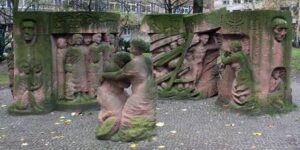
The danger should be noted. These were not people marching in a free society, but ordinary women who stood in front of armed authorities in a country which regarded dissent as treason. It is said that this was the only large-scale public demonstration by non-Jewish Germans against the deportation of the Jews during the Nazi period, the demonstration having been started and maintained by the wives and relatives of Jewish men and of those whom the regime had classified as Mischlinge.
The claim that goes too far
The most common way this story gets told online is as proof that every German knew about the extermination of Jews. It is an understandable leap, and it is wrong.
What the protest shows is narrower and, in some ways, more human. These women knew their husbands were being taken. They understood that deportation meant separation and probably worse. They did not need a complete picture of the death camps to know they wanted their families home.
Knowing about deportations is not the same as knowing about industrialized murder. Victor Klemperer, who survived the war in Dresden partly because he was married to a non Jewish woman, lived inside exactly this gray zone. He and other Jews in mixed marriages were forced into designated houses. They watched neighbors get deported and never return. They understood something terrible was happening. Yet even for people that close to events, the full scale was hard to grasp, and the bombing of Dresden in 1945 ended up giving Klemperer and his wife a chance to escape west.
For the general public the situation was even more unclear. Accounts of mass killings were passed around as just rumors, and the government had a ready-made term for them: Greuelpropaganda, that is, atrocity propaganda from the Allies. Simply repeating this phrase could amount to a crime. The camps were also open to outside inspectors, including teams from the Red Cross, during carefully arranged visits that produced satisfactory reports. When your newspaper quotes an international organization praising the conditions in a camp and your neighbor whispers that millions are being killed, whom do you think you should believe? Many people decided not to ask. That is not a sign of innocence, but it does not mean they had full knowledge either.
Want to explore another way Berlin remembers those persecuted under the Nazi regime? Read our blog on Stolpersteine: The Small Memorials to learn about the small memorials placed throughout the city.
Why the release matters, and why it is debated
A second, unpleasant point is that the regime might have been persuaded to change its mind. Since continuous public pressure had been sufficient to reverse its actions at Rosenstraße, it is all the more puzzling that so few Germans exerted any pressure when the people concerned were not their own relatives.
That is why some people say they hate this story. It shows that resistance was not always suicidal, and that indifference was therefore a choice for many.
Historians disagree about how significant the protest was in causing the release. Some believe the regime feared unrest and therefore gave in quietly. Others note that many of these men might never have been destined to meet the same fate as other Jews and that the authorities wished to prevent disruption during a tough period of the war. It is reported that a small number of men were sent to Auschwitz and then brought back, demonstrating how ad hoc and unpredictable the decisions were. The straightforward conclusion is that the protest and the release took place at the same time and that the protest very probably had an impact, but the exact contribution of each factor remains in dispute.
Why women, and why it may have mattered
Almost every account notes that the demonstrators were overwhelmingly women. Non-Jewish men did not gather in comparable numbers for their Jewish wives.
A reasonable explanation for how this could have worked exists. Men in a crowd might have been seen as a structured threat and therefore dealt with by force. A group of wives, on the other hand, could have been regarded as a nuisance, if not even as a sympathetic issue for a government that liked to say it was protecting German families. Women, to some extent, were easier to avoid shooting. A comparable situation occurred decades later in the Soviet Union, where the mothers of soldiers became one of the most effective groups to voice protest since the authorities were reluctant to take action against them.
It is speculation, and it should be labeled as such. But it helps explain why resistance sometimes took shapes that looked, on the surface, like private family loyalty rather than political defiance.
Other stories from the same shadow
The Rosenstraße women were not the only ones who were pushing the boundaries of the system. Certain families used papers and translators and kept pressing for their requests. In the case of one family in interwar and wartime Poland, a maternal aunt hired a German interpreter and then went to the local SS headquarters with documents proving her baptism, marriage, and political affiliations. Following a brief conversation, an officer agreed to set her husband free, and he came back a week later, having the appearance of a living skeleton, but did survive the war. The decisions to grant releases were based on the authorities’ own judgment, and the paperwork, the timing, and luck all had an impact.
The war’s end didn’t always bring about safety. In Czechoslovakia, Milada Horáková had survived her imprisonment by the Nazis only for later to be tried and executed by the communist government following the takeover. Because of the chaos, the loss of archives, the use of forged documents, and slow communication between offices, some people managed to blend into ordinary life, while others were not as fortunate.
A photograph across the Atlantic
Another image often placed beside the Rosenstraße story shows a Jewish man and his wife protesting at Ellis Island in 1936 against his deportation back to Germany. The couple is usually identified as Otto Richter. According to the account that accompanies the photo, he was sent to Belgium instead at his request, and there is no record of him after Germany invaded in 1940.
People looking at the picture are often surprised that ordinary civilians in America seemed to sense the danger so early, before Kristallnacht in 1938 and while Berlin was hosting the Olympics and softening its public image. The likely answer is that many Jews, inside and outside Germany, recognized hatred and legal persecution long before they could imagine genocide: most expected harassment, expulsion, or forced labor. The idea of systematic extermination was, for most, beyond imagination. The regime went to great lengths to hide it, including telling deportees to pack their belongings as though they were being resettled.
What to take from it
Rosenstraße is not the story of a heroic people, and it does not show that universal guilt exists; rather, it is an account of what a few hundred people did when their own families were in danger, and how a harsh regime reacted when the pressure was public, continuous, and personal. The most valuable interpretation contains several truths at once: some people took action, many did not, most knew less than we think and more than they have admitted, and the story has two sides.
Want to learn about the deportations of Berlin’s Jewish community? Read our blog on Gleis 17 Berlin: The Railway Memorial to Jewish Deportations to understand the history behind this important memorial site.
FAQs
- Did the Rosenstraße protest prove that all Germans knew about the Holocaust?
On the contrary, the evidence indicates that the women knew their husbands were being taken for deportation and had wished for their return. Although many Germans suspected something more serious, they believed the rumors were spread by the enemy; since spreading them could lead to punishment, most people chose not to ask too many questions.
- Did the protest actually get the men released?
Most of the roughly 1,800 men held at Rosenstraße were released after the week of demonstrations. Historians still debate how much the protest caused this versus other factors, and some men were reportedly sent to Auschwitz before being returned.
- Why were the protesters mostly women?
The men in custody were Jewish husbands and sons, and their non Jewish wives and relatives were the ones free to gather. It is also often suggested that authorities were less likely to use deadly force against women, though that is an interpretation rather than a documented rule.
- Does this mean the Nazis backed down whenever people resisted?
Not reliably, since there were instances of releases when the regime saw fit, and some people did manage to obtain their freedom through papers and persistence. At the same time, the state was capable of committing acts of extreme violence, and the Rosenstraße action was in fact unusual in that it was a large-scale public protest.
- Did the couple in the 1936 Ellis Island photograph stay in the United States?
According to the account that usually accompanies the image, the man, identified as Otto Richter, was deported to Belgium rather than Germany, and no record of him exists after the German invasion of 1940. Most assume he did not survive.