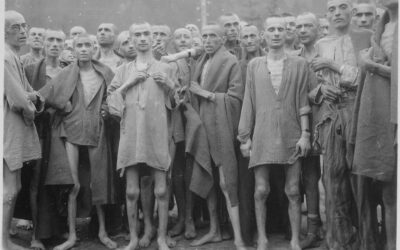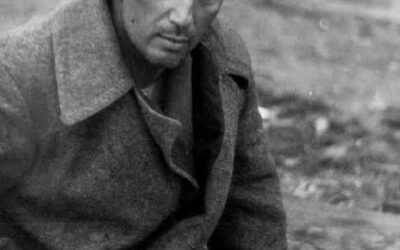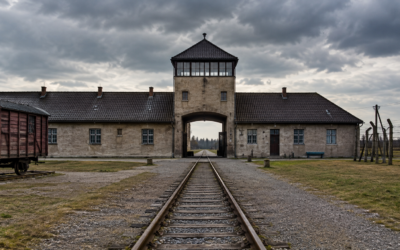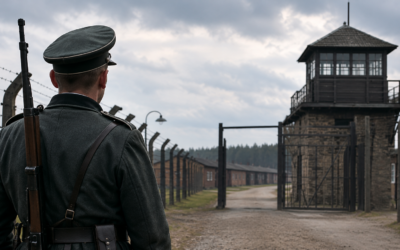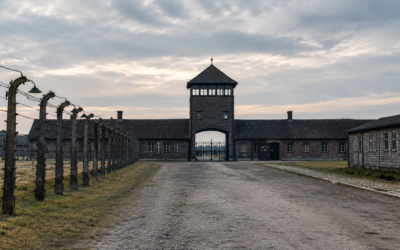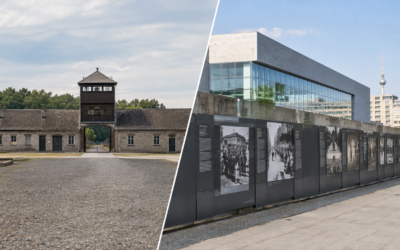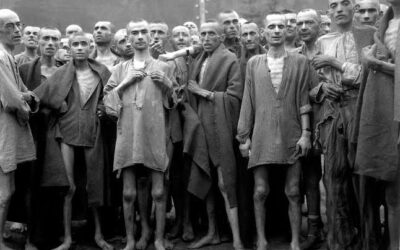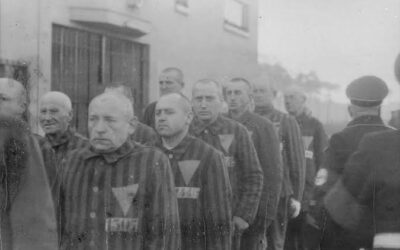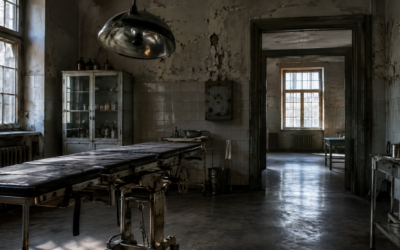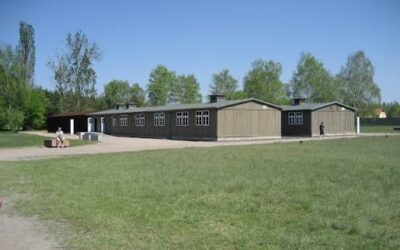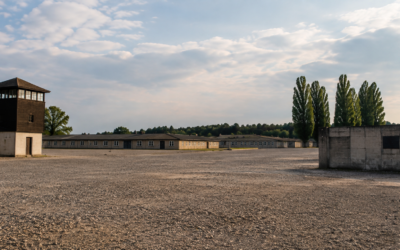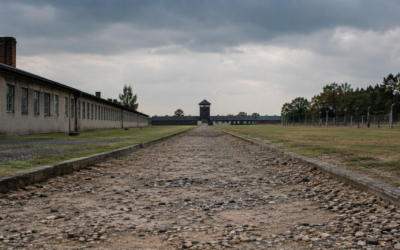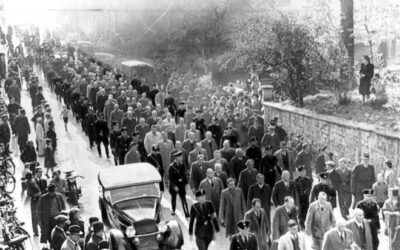
Anyone who has looked at a black-and-white picture of a camp prisoner and asked who he was, what beliefs he held, and why he was sent there has asked the right question. People often believe the camps were established for a single purpose and for one particular group. In fact, reality is more complicated, and Sachsenhausen is where this is clearest. The first people confined within its walls were not strangers to the regime; rather, they were neighbors, rivals, and at times former allies.
This guide explains who the political prisoners were, how the Nazis sorted them, and what to keep in mind if you want to understand this history rather than collect facts about it.
Why Sachsenhausen Started With Politics
The earliest wave of prisoners were people the Nazis considered political enemies at home: communists, social democrats, trade unionists, and outspoken clergy. Many had been in the German resistance or refused to cooperate. This pattern is the same as elsewhere. Mauthausen, for example, also began as a place where German political opponents of the Nazi Party were held, long before it became associated with the later mass deportations. The “political prisoner” label came first. The wider horror grew around it.
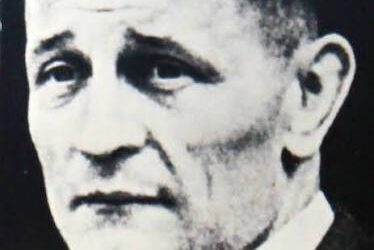
One person who lived this story and then spent decades fighting for justice was Hans Maršálek, a committed socialist active in resistance against the Nazis. The Nazis arrested him and sent him to Mauthausen. After the war, he helped track down and convict Nazi criminals. His life reminds us that surviving was not the end of the resistance. For many, testifying and documenting was the second chapter.
The Famous Names Behind the Barbed Wire
Not every political prisoner was an anonymous worker. Some were figures the regime wanted to break or control.
Yakov Dzhugashvili, Stalin’s own son, often called Jacob in English accounts. He was taken prisoner by the Germans on July 16, 1941, and died at Sachsenhausen in 1943.
Martin Niemöller, the Protestant pastor, was held at Sachsenhausen after openly criticizing the regime. He was treated as a special prisoner and survived the war, later becoming one of the most quoted voices on the cost of staying silent.
Kurt Schuschnigg, the former Austrian chancellor, was kept in a separate section of the camp. His story shows that opposition did not have to come from the left. A conservative politician who stood in the way of Austria’s takeover could end up in the same system as a communist printer.
Stefan Rowecki, the Polish resistance commander, was killed at Sachsenhausen in 1944. His case shows that the camp held captured leaders of entire resistance movements, not just individual dissenters.
Georg Elser, the carpenter who tried to assassinate Hitler with a bomb in 1939, was kept in the camp system as a special prisoner and executed near the end of the war.
The Prisoners Nobody Photographed
Here is the part many guides skip. Most political victims were not famous. They were ordinary soldiers and civilians, and Soviet prisoners of war were among the worst treated of all.
At Sachsenhausen, thousands of Soviet POWs were shot in 1941 in a purpose built killing installation. Other camps show the same pattern. At Mauthausen, after the Spanish Republicans who had fled Franco’s regime and been captured while serving in the French army, Soviet POWs became the next major group sent there. Non-French soldiers serving in the French army were treated far more harshly than French prisoners themselves, because the Nazis hoped for a future ally in France.
The cruelty didn’t stop with the liberation of all the people either. Soviet women who had been taken captive and were held at Ravensbrück continued to suffer afterward, experiencing abuse and being suspected at home. In some cases,, their own government regarded them as traitors. When people say the story of political prisoners is complicated, they mean exactly this. The same individual could have been a victim of the Nazis and then become a target of her own state.
Want to learn about another group persecuted and imprisoned at Sachsenhausen? Read our blog on Gay Prisoners at Sachsenhausen: The History of the Pink Triangle to explore their experiences and persecution.
Understanding the “Category” System Without Getting Lost
If you read about camps for even ten minutes, you will run into the categories. Mauthausen was placed in category III, reserved for prisoners the regime considered irredeemable and wanted to treat most harshly. Sachsenhausen was graded below that. Category I and II camps were mostly used for forced labor.
The practical point to draw is that the labels refer to the plan rather than to the actual conditions. Accounts given by survivors of camps in the lower categories mention hunger, overcrowding, and inadequate shelter, but in some cases also note a lesser degree of constant fear of being killed on a given day. This situation changed towards the end of the war. When the Nazis lost ground in the east, prisoners were forced to be evacuated from remote camps towards the center of Germany as a result of the evacuations, and thus the sorting system broke down. By 1945, with epidemics, starvation, forced labor, and deliberate violence occurring in all places, almost all of the major camps had become centers of mass death, this being true even of those located inside Germany. Moreover, the allocation of prisoners was often less clear-cut than the rules indicate. Inmates were often sent to the camp with space.
When Opponents Came From Inside the Movement
Many readers assume every Nazi opponent was an outsider. That is not quite true, and it is a common trap. Take the SA, the party’s street fighters. One SA commander clashed with Hitler during the late 1920s and early 1930s, and some call his faction “dissident.” Historians push back on that label. The SA was deeply committed to Nazi ideals and loyal to Hitler. Losing an internal power struggle, mostly to the SS, does not make a person a democrat or a resister. Another point raised in the discussion: Hitler eventually turned on the SA because it grew too radical for the conservative elites who had backed him.
When someone asks about Hitler’s opponents, it is necessary to divide them into different groups. Among them were those who resisted on principle, there were political rivals who had lost the power struggle, and then there were people who were simply in the wrong place when the system needed people. Seeing them all as a single group is the fastest way to get the history wrong.
Photographers, Witnesses, and the Fight to Be Remembered
Some of the best evidence we have came from prisoners who risked everything. At Mauthausen, a resistance network included the photography department. The Nazis pulled professional photographers from the inmate population to keep records and take pictures. Those prisoners smuggled logs and images out to a woman in a nearby village. Francesc Boix, known as the photographer of Mauthausen, is the name to look up if you want to see how one man’s courage helped build the historical record.
Those images were then used in the trials. In November 1945, forty defendants were tried at Dachau, in the camp itself, and were given number cards so that they could be identified. The group consisted of 36 SS men, three Kapos, and one civilian doctor, Claus Schilling, who was hanged because he had carried out deadly malaria experiments on prisoners. Holding the trials on site mattered because the buildings could be turned into courtrooms and cells, and the location had symbolic significance.
Justice was never clean or lasting, nevertheless. In 1950 and 1951, many people gathered outside Landsberg Prison to demand pardons for the war criminals. In 1951, about 4,000 protesters, some of whom were families with children, gathered, and the demonstration became violent, with antisemitic slogans being shouted. At the time, the press often showed sympathy for the condemned. It is a sobering reminder that remembering is a choice societies continually make.
How to Visit and Remember Responsibly
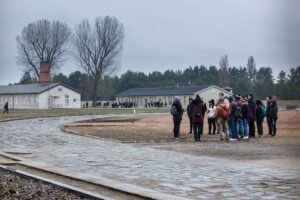
If you have the opportunity, visit the museum in person; a visitor to the Holocaust museum in Dallas said that when he was inside a boxcar which was used for transporting prisoners, the experience remained unforgettable. Another person has gone to Mauthausen three times and still finds the steps and rooms disturbing when you imagine them being full of people. Here are a few practical tips: first, read up on the particular camp, plan a slow day with no fixed timetable, and go with a question rather than a checklist.
Be careful about taking shortcuts on the internet. It’s not true that every comparison between the past and the present is valid, and not every reference to Hitler is a serious one. If you wish to evaluate a current political statement in the light of history, you should first read actual histories of real tyrannies.
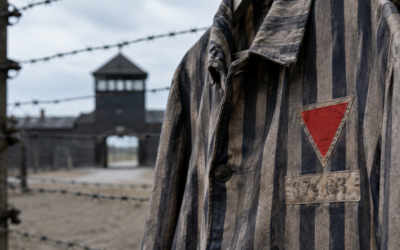
Wondering what the different prisoner markings meant? Read our blog on What Did the Colored Triangles on Sachsenhausen Prison Uniforms Mean? to understand the classification system used by the camp.
FAQs
- Who were the first prisoners held at Sachsenhausen?
The first prisoners were mostly Germans who were political opponents of the Nazis, such as communists, social democrats, and trade unionists, and other camps had a similar situation; for example, Mauthausen, which also started as a camp for political prisoners.
- Was Stalin’s son really held at Sachsenhausen, and how did he die?
Yes. Yakov Dzhugashvili was captured on July 16, 1941, and died at Sachsenhausen in 1943. Accounts say his father refused to arrange a deal for his release.
- Were political prisoners treated better than other prisoners?
Not reliably. The Nazis ranked camps by category, with Mauthausen in category III for the harshest treatment. Still, late in the war the system broke down as prisoners from many camps were crowded together, and nearly all major camps became places of mass death.
- Were members of the SA who clashed with Hitler true resisters?
Generally no. Although a faction is sometimes called dissident, the SA was loyal to Nazi ideals, and its leaders lost an internal power struggle rather than rejecting the regime.
- How can I learn more about what happened to the perpetrators?
Start with the Dachau trials of November 1945, where 40 defendants were tried at the former camp, including the physician Claus Schilling, who was hanged. Then read about the Landsberg protests of 1951 to see how quickly public sympathy shifted.