Oct 2, 2026 | Concentration Camps

Gleis 17 Berlin: The Railway Memorial to Jewish Deportations

by

The vast majority of the people who come to this page are after the same thing: they want a place in Berlin at which they can stand in silence, experience the heavy impact of what took place, and prevent themselves from being taken in by the tour groups, the selfie sticks, and the general noise. Although Gleis 17 is a place like this, it has a few simple drawbacks. The guide tells you how to reach it, what you will actually see, how you should behave, and how to link it with other sites related to Jewish history so your day stays coherent.

What Gleis 17 actually is

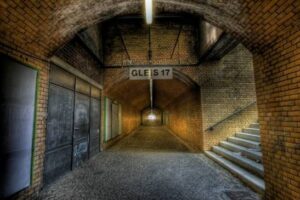
Gleis 17 is Platform 17, located at Grunewald station in a wealthy, wooded suburban district in southwest Berlin. More than fifty thousand Jews were deported from this one platform to ghettos and concentration camps, and those who stand here usually say the same thing: it is very sad, and it is very important.

Do not expect a grand monument. The memorial is the platform itself. Along its edge, cast metal plates record the date of each deportation, the number of people on the train, and the destination. The weeds growing between the tracks are part of the effect. Nothing has been dressed up. You walk along the edge, read the entries one after another, and watch the numbers pile up. That repetition is the whole point.

It is worth taking one traveller’s idea into consideration as you look at the plates. They asked themselves why no one had produced a map showing every single train that passed by, since the Nazis had been so thorough in their paperwork. The paperwork did exist, and that is why the entries in this case are so accurate. Each plate is a piece taken from that bureaucratic record and has been transformed into a place where you can stand. There is nothing quite like reading them in order to map the area.

Why this place feels different from the big Berlin memorials

Berlin has a famous memorial downtown: the Memorial to the Murdered Jews of Europe, designed by Peter Eisenman with the engineering firm Buro Happold. It covers about 19,000 square meters and holds 2,711 concrete slabs on a sloping grid. It is powerful, and it is also the source of most of the complaints you will hear from visitors.

Here is the honest, ground-level picture. One recent visitor, an architecture and landscape architecture graduate who came with her fiancé, left in tears of frustration. She described school groups running and shrieking along the rows, parents lifting small children onto the stones, a woman doing a full photoshoot, cigarette butts, bird droppings, and weeds. No attendant was in sight, and the information center was closed on a Monday. Her family lost relatives to the Nazis, and for her the place is a memorial to them.

Other visitors disagreed about whose fault that is. Some argue the abstract design practically invites this behavior, and recommend reading Simone Mangos and her critique titled Monumental Mockery. Others point out that Eisenman himself has said the field was not meant to prescribe how people use it. Both camps agree on one thing: you cannot count on that site for a hushed, meditative hour.

Gleis 17 offers something closer to most people’s wishes. It is in a remote location, demands a conscious journey, and the surroundings call for silence with not a single sign indicating it. If the downtown memorial disturbed you, or if you would rather avoid the crowds altogether, this is the place to go.

Want to learn about another important moment of resistance during the deportations? Read our blog on The Rosenstraße Protest: When Berliners Protested the Deportation of Jewish Family Members to explore this remarkable episode.

How to get there without wasting an hour

You can get to Grunewald station by S-Bahn; from central Berlin, it takesout thirty minutes, de,pending on your starting point. Before you set off, check the line and direction in your transit app since changes to Berlin’s rail network occur due to construction and weekend closures. When you get there, follow the signs to the memorial platform; entry is free, and no ticket or reservation is required.

It’s best to go in the morning or on a weekday if possible. Since the area around the site is residential and quiet, the only variable is how many other people are there. Bring a jacket, since the platform is exposed, and wear shoes suitable for uneven ground.

The etiquette that actually matters

A few habits will make your visit better for you and for everyone around you.

Don’t hop across anything, and don’t treat any memorial surface like a playground. A local who has been to the downtown memorial many times says tourists keep jumping across the blocks because it looks like fun, and security pulls them off quickly. The same rule of common sense applies everywhere in this city. If a space has a name like Memorial in it, behave as though you are standing in a cemetery.

Keep photos respectful. A German artist became famous by superimposing selfie takers and influencers into archival Holocaust photographs. The project, called Yolocaust, was created by the Israeli born, Berlin-based comedian Shahak Shapira. The reaction to it was loud and largely approving, and it still shapes how Berliners think about posing at these sites. Take a quiet photograph of a plate if you must, but skip the poses, the filters, and the group shots.

If you see a group behaving badly, consider speaking to them directly. One Berlin native says they ask people whether they know where they are and what the place means. According to them, about nine times out of ten the visitors apologize and stop. You do not have to do this, and you should use your own judgment about safety, but it often works better than glaring from a distance.

Building a full day around Jewish history

Gleis 17 deserves a half day at most, so pair it with other stops. Here is a sensible order.

Begin your visit at Grunewald in the morning, as it is then the quietest. Next, head back toward the city for lunch, then spend the afternoon at the Jewish Museum, which covers the full history of Jewish life in Germany, not just its destruction. The visitor mentioned earlier said she regretted omitting both the museum and the new synagogue because of nerves after a travel advisory. A Berlin resident who visited the synagogue and the memorial in December 2023 said security measures and fencing were in place and that she would probably be all right, and also noted that the synagogue might have a greater impact on her than the field of stones in the city center. Another local pointed to Hostage Square near Bebelplatz as proof of the vibrant, visible Jewish life in the city that tourists often fail to notice.

If you want to go deeper after the platform, it helps to understand where the people on those trains were headed. A caption on one widely shared photograph describes a young Jewish woman writing her last letter before boarding a train to the Chełmno extermination camp. Estimates for the dead there start at a minimum of 152,000, and records examined in the 1960s suggest a more likely figure around 180,000. Numbers like that are why the plates at Gleis 17 land so hard. Each line is one train, and each train held hundreds or thousands of people.

You may also want to look at the quieter, ongoing work of restitution. Berlin’s museums have returned artworks to the heirs of persecuted Jewish owners. Recently, the Prussian Cultural Heritage Foundation announced that works from the New National Gallery would go back to the heirs of the lawyer Ismar Littmann. The family then gifted one painting back to the museum. For a book that captures how exhausting that process can be for families, readers recommend The Orpheus Clock.

Want to discover how Berlin remembers Jewish victims across the city? Read our blog on Stolpersteine: The Small Memorials to learn about these small but significant memorials.

A word on safety and mood

A number of travelers have felt uneasy following a recommendation from the US State Department concerning Germany and in the wake of a series of protests. It is sensible to keep an eye on the situation, so check the latest travel advisories before you go and watch local news on the day in question. In reality, people living there state that major Jewish sites are secure. It’s a good idea to keep your plans flexible, stay aware of your surroundings, and don’t let your nerves talk you out of the trip altogether.

Also prepare yourself emotionally. People describe walking among the stones as depressing and heavy, and Gleis 17 can hit even harder because it is so plain. Leave time afterward to sit, walk, or have a coffee in the neighborhood before you jump back onto a crowded train.

​

FAQs

  1. How many concrete blocks are in the Memorial to the Murdered Jews of Europe?

There are 2,711 stelae. Early plans called for nearly 4,000, but after recalculation, that was the number that could legally fit on the site. None have been permanently removed since the 2005 opening, though sections are sometimes closed temporarily for maintenance.

  1. Is the main memorial for all Holocaust victims or only Jewish victims?

It is specifically for the Jewish victims. Other groups of victims have received less recognition in Germany’s remembrance culture, and visitors regularly raise questions about memorials for groups such as the millions of Soviets killed. Both points can be true at once, and neither means the Jewish memorials should be removed.

  1. Can I visit the information center on a Monday?

Plan on no. A recent visitor found it closed on a Monday, and with no attendant on the field, she had no one to turn to about the behavior she saw. Visit on another day if you want the exhibition.

  1. Is it okay to jump on the blocks or take posed photos?

No. Security tends to step in quickly when people hop across the stones, and posed influencer shoots have drawn public criticism for years. Treat every memorial like a cemetery.

  1. Is it still safe to visit Jewish sites in Berlin after a travel advisory?

Check the current advisory and local news before you go. Residents who have visited recently say the synagogue and other Jewish sites have security measures and fencing in place. Many suggest not skipping the Jewish Museum or the synagogue out of fear, since they are among the most meaningful stops in the city.

Stolpersteine: The Small Memorials

Stolpersteine: The Small Memorials

On your way to the bakery, thinking about nothing in particular, you notice a small piece of brass embedded in the pavement. Next to it, someone has left a tealight. There are no signs and no crowd, merely a name, a birth year, and a date that causes your stomach to...

read more
New Synagogue: What Survived

New Synagogue: What Survived

Anyone standing on Oranienburger Straße and looking at that golden dome naturally asks the same question: how did this building survive Nazi Germany and the bombs? The common explanation is that it was simply too beautiful to destroy. Although this is a pleasant...

read more
Sachsenhausen Concentration Camp  How to Get There and Visit from Berlin

Sachsenhausen Concentration Camp How to Get There and Visit from Berlin

Sachsenhausen Concentration Camp is one of Germany’s most significant memorials. Located just outside Berlin, it draws thousands of visitors each year who come to learn about Nazi Germany, the people imprisoned there, and why remembrance matters today.Many people search for Sachsenhausen’s address before their trip. Others want to know the easiest way to get there from Berlin, whether guided tours are available, and what to expect during their visit.

read more
What are the Visitors’ Requirements for the Berlin Concentration Camp Memorial?

What are the Visitors’ Requirements for the Berlin Concentration Camp Memorial?

Many visitors look for the “Berlin Concentration Camp,” but the memorial most people mean is the Sachsenhausen Memorial and Museum in Oranienburg, just outside Berlin.Sachsenhausen is not just another museum. It was a Nazi concentration camp and is now a memorial and place of remembrance. Before you visit, it helps to know the entry requirements, what to wear, how to behave, whether you need tickets, and what to expect emotionally.

read more
What Was the Concentration Camp at Potsdam?

What Was the Concentration Camp at Potsdam?

The Truth about Potsdam and the Nazi Camp System. Many people looking for information about a “Potsdam Concentration Camp” are surprised to find out that there was no large Nazi concentration camp in Potsdam itself. Unlike Auschwitz, Dachau, Buchenwald, or Sachsenhausen, Potsdam did not have its own camp.

read more
Falkensee Concentration Camp: History, Prisoners, Forced Labor & Memorial Site

Falkensee Concentration Camp: History, Prisoners, Forced Labor & Memorial Site

Explore the harrowing truth of the Falkensee Concentration Camp. Explore its brutal conditions, prisoners’ suffering, and WWII liberation.Many people who look up information about the Falkensee Concentration Camp ask if it really existed or if it is just a myth. The answer is straightforward: the camp was real, but it was not an independent concentration camp like Auschwitz, Dachau, or Sachsenhausen.

read more
Concentration Camp Tour What to Expect, How to Prepare & Important Etiquette

Concentration Camp Tour What to Expect, How to Prepare & Important Etiquette

Visiting a concentration camp memorial is very different from a typical tourist activity. It is a serious, emotional, and educational experience. These sites are preserved to help people learn, remember the victims, and understand how hatred, discrimination, and dictatorship can cause immense suffering and loss of life. For many people, reading about the Holocaust is not the same as standing at the actual site. Visiting can be challenging, but it is often a meaningful experience. This guide will help you know what to expect, how to get ready, how to show respect during your visit, and how to reflect afterward.

read more
Sachsenhausen Berlin Map Guide: Must-See Locations at the Memorial

Sachsenhausen Berlin Map Guide: Must-See Locations at the Memorial

Are you planning to visit the Sachsenhausen Memorial and Museum in Berlin? Looking at the Sachsenhausen Berlin map in advance can help you get more out of your visit. The site is large, quiet, and deeply moving, with many important places spread throughout the former camp.Today, the Sachsenhausen Memorial map shows visitors where important places are, such as the entrance, Tower A, the roll-call square, prisoner barracks, punishment cells, watchtowers, museum exhibitions, and Station Z.

read more
What Should You Know Before Planning a Day Trip to Auschwitz from Berlin?

What Should You Know Before Planning a Day Trip to Auschwitz from Berlin?

If you’re in Berlin and thinking about a day trip to Auschwitz, planning ahead is key. This post will walk you through what you need to know before you go.You can also travel by train from Berlin Hauptbahnhof to Oswiecim. The journey takes about 6 hours and includes a few connections. Once you arrive in Oswiecim, you can take a taxi for about 15 kilometers or catch bus 302, which will bring you to the entrance of the Auschwitz memorial.

read more
Thinking about taking the train to Sachsenhausen? We’re here to help you plan your trip.

Thinking about taking the train to Sachsenhausen? We’re here to help you plan your trip.

Start your journey at one of Berlin’s main train stations: Berlin Hauptbahnhof, Alexanderplatz, or Friedrichstraße. Each of these stations offers a direct connection to Sachsenhausen.Sachsenhausen is in Oranienburg, and regional trains run between Oranienburg and Berlin every hour. Look for trains labeled RB (Regionalbahn) or RE (Regional Express). You can check train times on the Deutsche Bahn website or on electronic boards at the stations.

read more
Sachsenhausen Concentration Camp Opening Hours

Sachsenhausen Concentration Camp Opening Hours

Sachsenhausen Concentration Camp opened in July of 1936 a few weeks before Berlin hosted the 1936 Olympics. The camp was in operation from July 1936 until the 22nd of April, 1945. Over 200,000 prisoners were forced through its gates and an estimated 35,000 were killed there and at the satellite camps affiliated to it.

read more
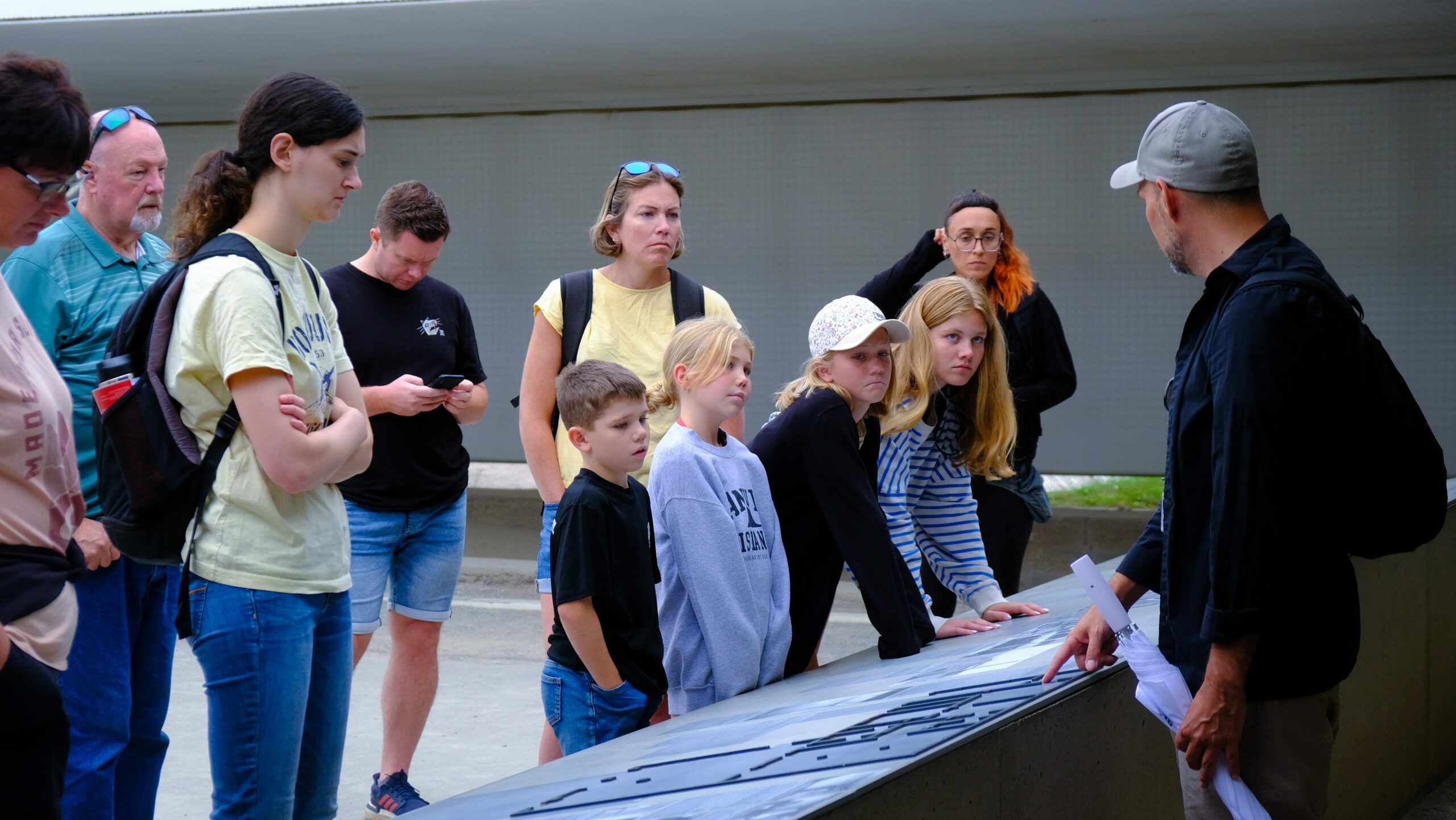
a group of visitors, including adults and children, on a guided tour of the Sachsenhausen Concentration Camp

Group Booking Request

Planning a group visit to the Sachsenhausen Concentration Camp Memorial from Berlin? Fill out the form below to request a private or group tour. Our team will get back to you with availability and pricing options. Experience a guided tour tailored to your group’s needs.

You have Successfully Subscribed!

Pin It on Pinterest