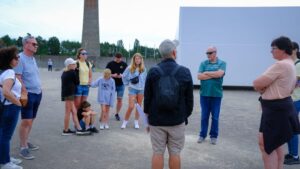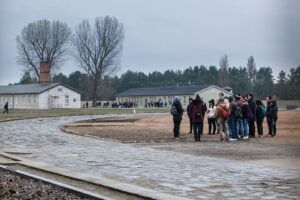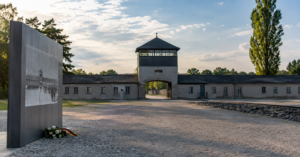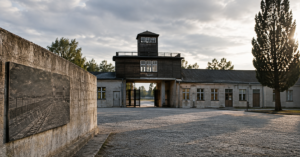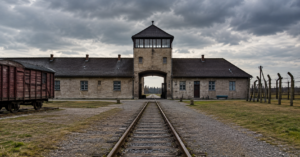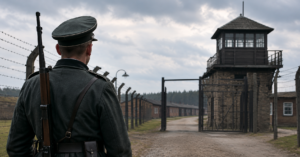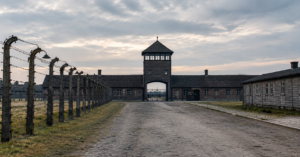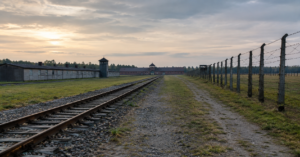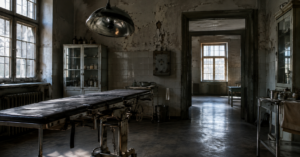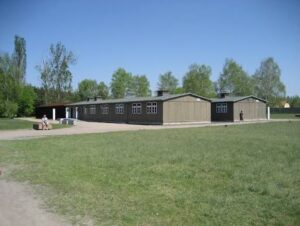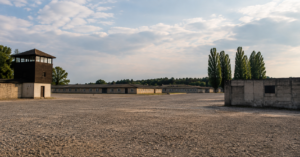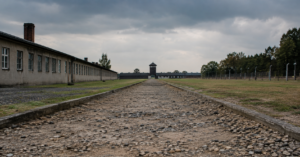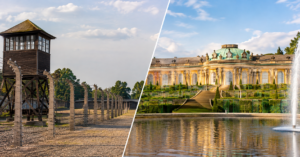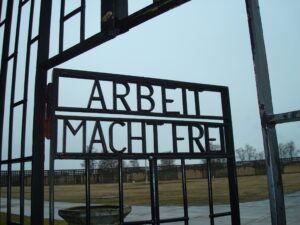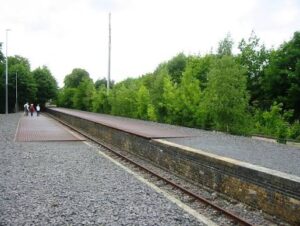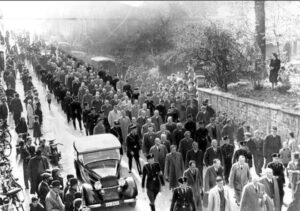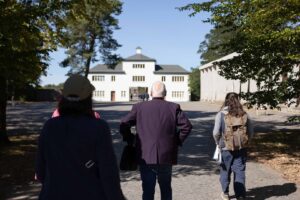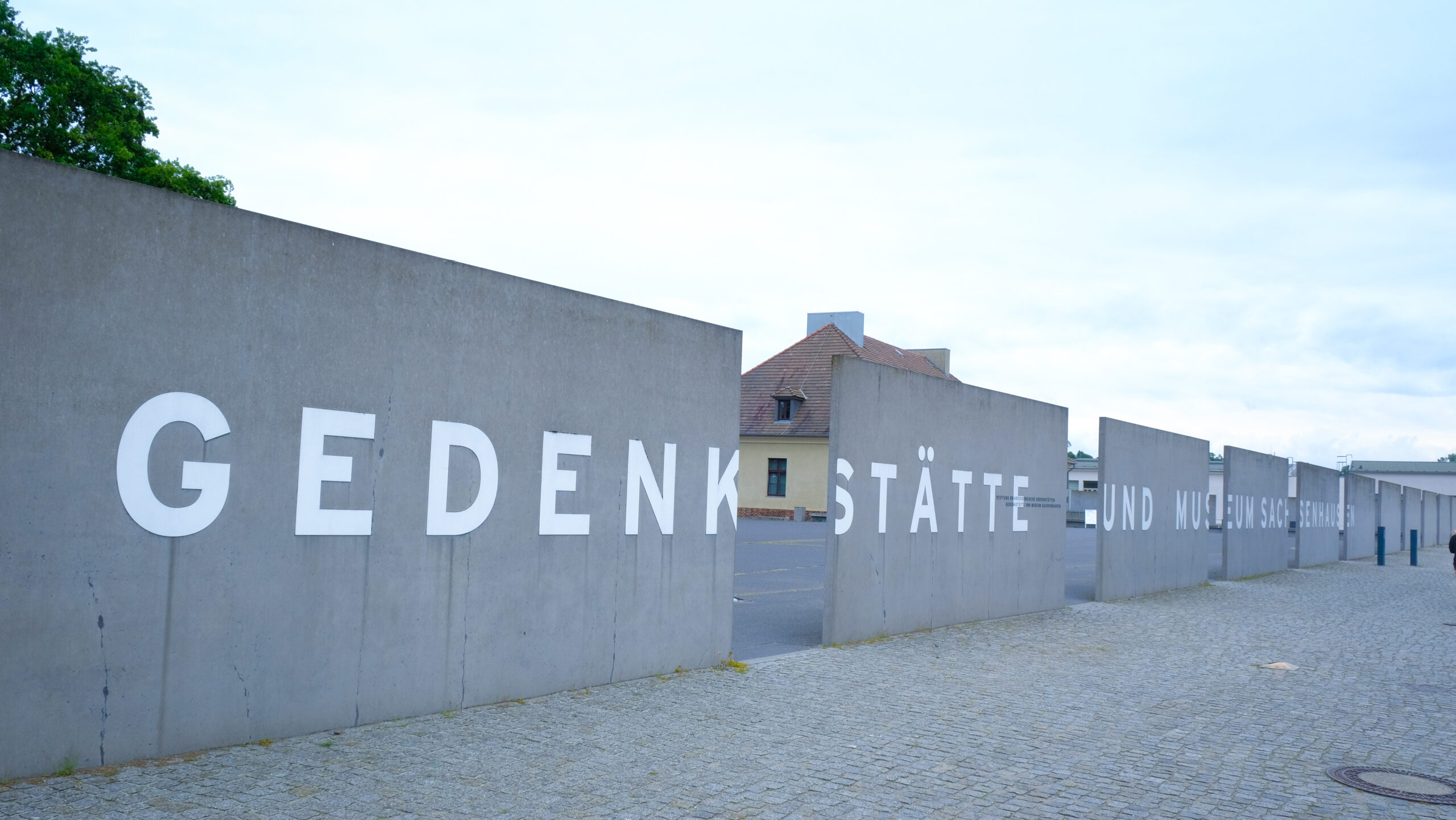
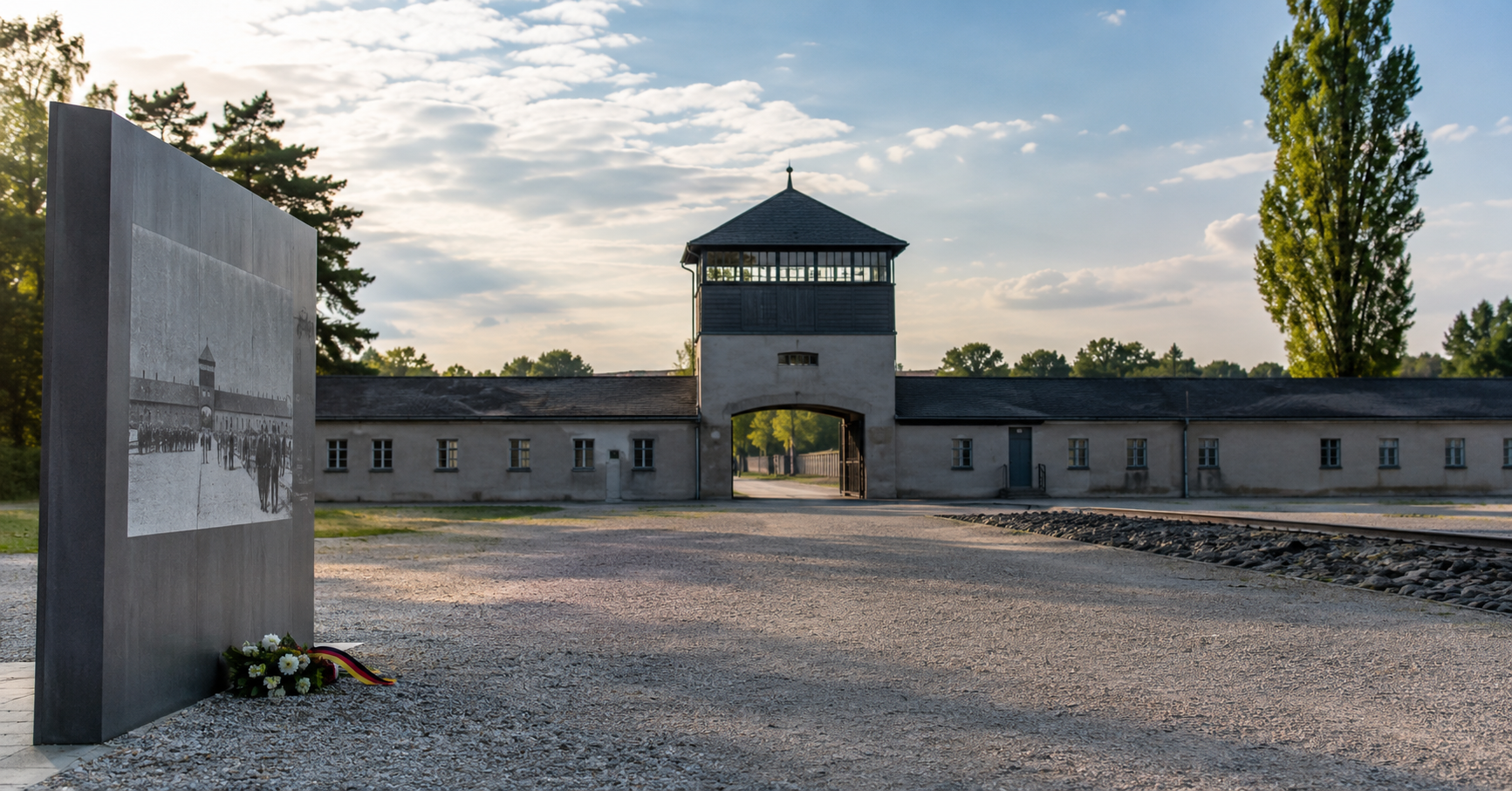
Al cruzar las puertas de un campo de concentración, uno espera una simple lección de historia. Pero entonces se topa con algo extraño: un obelisco de hormigón de 40 metros de altura se alza sobre el lugar, una estatua de un soldado soviético se vislumbra a lo lejos, y la mayoría de los barracones que uno imaginaba han desaparecido. ¿Adónde fueron, y por qué el lugar parece un decorado teatral?
La respuesta es que te encuentras dentro de dos capas de historia. Una es el campo en sí. La otra es lo que Alemania Oriental decidió que debía significar el campo. Para entenderlo Sajonia, tienes que leer ambos.
The Day the Camp Became a Monument
Walter Ulbricht, leader of the SED, opened Sajonia as a national memorial on April 23, 1961. If the site of a concentration camp were managed properly, it could act as evidence that the GDR had been on the correct side of history.
So the redesign served two purposes at once. It commemorated the people who suffered and died in the camp, and it presented the GDR’s official antifascist narrative. Planners built it as a national memorial and as a monument to what they called the “Triumph of Antifascism.” Visitors who study the layout will notice how commemoration and political messaging are intertwined: the site honors the dead while also making an argument about the present.
El obelisco y los triángulos rojos
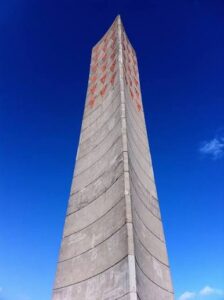
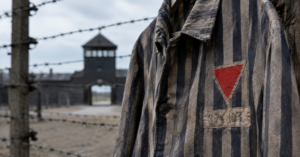
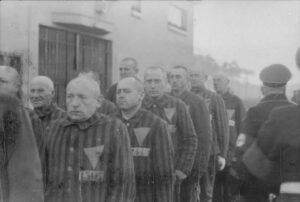
La pieza central de la remodelación de 1961 es un obelisco de hormigón de 40 metros. Luce 18 triángulos rojos, el emblema que los nazis obligaban a llevar a los prisioneros políticos. La elección de este símbolo lo dice todo sobre la historia que se narra.
La narrativa de la RDA situaba a la resistencia comunista en la cima de una jerarquía de víctimas. Los presos políticos, y los comunistas sobre todo, eran presentados como héroes cuya lucha culminó en victoria. Quienes eran perseguidos por ser quienes eran, y no por sus creencias, eran relegados a la marginalidad.
The record is more nuanced than it is often presented. Jewish victims were not absent in 1961: a Museum of the Resistance Struggle and the Sufferings of Jewish Citizens was set up in Barracks 38 shortly before the opening. But it sat within a framework that centered political and communist resistance, and Jewish persecution received comparatively limited space. Jehovah’s Witnesses and homosexual prisoners received little or no recognition in the state narrative, and Roma and Sinti were also largely absent from it.
El paisaje también fue reescrito.
La RDA hizo algo más que alterar los textos de las etiquetas; cambió los cimientos mismos. Algunos historiadores describen este cambio como equivalente a sustituir la «Geometría del Terror Total» por el «Triunfo del Antifascismo».
Esto es lo que eso significaba en el sitio:
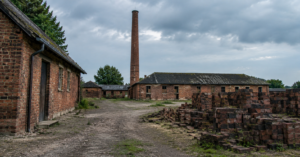
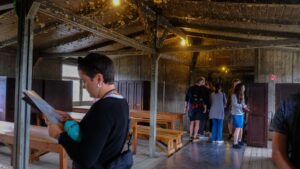
- La mayor parte de los barracones originales para prisioneros fueron demolidos.
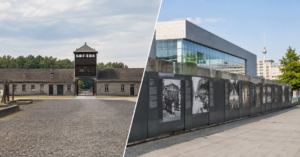
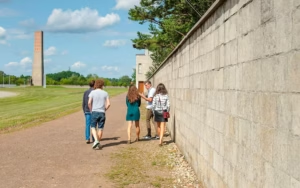
- Un muro de hormigón perforado rodeaba la zona abierta donde se pasaba lista, dirigiendo la mirada hacia el obelisco y la estatua de un soldado soviético liberador.
- The camp was deliberately reduced in size, leaving out the adjacent SS buildings.
Este último punto es fácil de pasar por alto. Al excluir la zona de las SS, el monumento evitó preguntarse quiénes eran los perpetradores y dónde vivían y trabajaban. El campo se convirtió en una historia sobre víctimas heroicas y un ejército liberador, en lugar de una historia sobre quienes lo dirigían.
El museo en la cocina
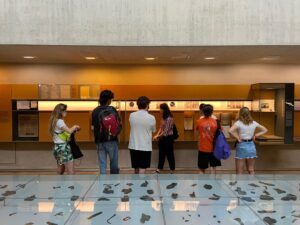
El museo del campo de concentración estaba ubicado en la antigua cocina de los reclusos, y sus exposiciones tenían una fuerte carga política. El terror y el genocidio nazis se presentaban principalmente como herramientas del capitalismo monopolista y de la industria en busca de beneficios. Las raíces más profundas del racismo y el antisemitismo nazis apenas se mencionaban.
Según esa lógica, el fascismo era producto del capitalismo, por lo que un estado socialista no podía producirlo. Como explica una de las visiones del mundo de la RDA, el estado se presentaba como una renovación de Alemania y, por definición, como un país antifascista que no tenía ninguna responsabilidad por el Tercer Reich. Este mismo razonamiento explica por qué el Muro de Berlín se denominó oficialmente «barrera antifascista» y por qué la RDA nunca participó en los esfuerzos de reparación como lo hizo Alemania Occidental.
The exhibitions also drew a hard line between East and West. West Germany was presented as the direct successor to National Socialism, full of unpunished perpetrators, while the GDR was the “new, humanist Germany” that had eradicated fascism for good.
El capítulo que fue borrado
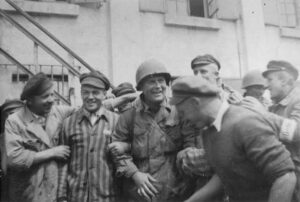
Esta es la parte que más sorprende a los visitantes. Entre 1945 y 1950, la Unión Soviética administró el lugar como el Campo Especial n.° 7/n.° 1 del NKVD. Miles de personas murieron allí de hambre y enfermedades, entre ellas prisioneros políticos, socialdemócratas y funcionarios nazis de bajo rango.
Esa historia no podía coexistir con la imagen de la Unión Soviética como libertadora pura e impecable. Por ello, fue censurada y eliminada de la presentación pública del monumento durante toda la época de la RDA. Un visitante en 1975 podía recorrer Sachsenhausen y jamás enterarse de que el campo siguió llenándose de prisioneros después de la liberación.
¿Realmente Alemania Oriental estaba libre de antiguos nazis?
Esta es la pregunta sobre la que más se debate, y la respuesta honesta es que es complicada.
On one side, the ruling party elite largely came from veterans of the prewar Communist Party of Germany, many of them exiles, resistance fighters, or outsiders. Soviet denazification was more rigid than the early West German approach, and in the highest ranks the GDR was arguably cleaner than the West.
On the other side, Cold War priorities did not stop at the Iron Curtain. The people who say denazification was done more rigorously in some respects are right, but the broader picture is that fighting the rival bloc often mattered more than punishing Nazis. Some people moved from Nazi institutions and secret services into GDR government work. Some former Wehrmacht officers were valued for their combat and management experience, and after rearmament, the National People’s Army included officers who had been “turned” in Soviet captivity.
More severe criticism focused on culture rather than individuals. Since the GDR insisted that it had no links at all with Nazi Germany, the topic was often neglected in schools. Although West Germany also had its shortcomings, a generation in 1968 wanted to know what their parents had done during the war. Some historians believe that the East never went through such a process of coming to terms with the past, and that this lack of reckoning, together with the economic shock of reunification, may have helped maintain conditions in which extremist politics developed.
What happened to the men who ran Sajonia after the Nazi regime fell? Read ¿Cómo fueron llevados ante la justicia los guardias de Sachsenhausen después de la guerra? Analizar los juicios, las investigaciones y los esfuerzos posteriores a la guerra para exigir responsabilidades a los antiguos guardias de los campos de concentración.
¿Qué cambió después de 1990?
After reunification, the site went through what historians call deideologization. In 1993, Sajonia was integrated into the newly founded Brandenburg Memorials Foundation, and the changes were big.
The Soviet camp era was finally included in a separate museum building that opened in December 2001 at the northern edge of the historic camp grounds. The separation reflects an effort to commemorate the victims of both regimes while maintaining the historical distinction between Nazi and Soviet crimes, without relativizing or downplaying either.
Se abolió el orden en que se habían presentado los diferentes grupos de víctimas. Hoy en día, las exposiciones permanentes incluyen a los prisioneros judíos, los sinti y los romaníes, los homosexuales y los testigos de Jehová, y el enfoque ha cambiado de las narrativas heroicas colectivas a las biografías individuales y los relatos de sufrimiento personal. El campo de tropas de las SS y cuartel general de mando, que la RDA había descuidado, ahora forman parte del programa educativo. Visitors interested in exploring the broader historical context can also join a Berlin historical walking tour to learn more about the city’s Nazi-era history and its lasting impact.
The most striking thing was the decision to omit certain details. The 1961 obelisk is still a historical artifact showing how the GDR handled its memory. Nowadays, the memorial not only informs you about the camp but also explains how a communist regime distorted history in the interest of the Cold War. You are given both the original account and the account of that original account. For those interested in exploring Berlin’s complex history beyond Sajonia, private group tours offer an opportunity to learn more about the city’s Nazi-era and Cold War past.
Preguntas frecuentes
- How did ordinary East Germans view former Nazis?
Dependía de la persona y de la década. Quienes creían en la doctrina del partido veían a los nazis como un problema de Alemania Occidental. Otros tenían opiniones más complejas, y estas cambiaron a lo largo de las décadas de 1950, 1970 y 1980. Los estudios fiables a gran escala sobre la opinión pública son escasos.
- ¿Es cierto que había muchos exnazis en el gobierno de la RDA?
En la cúpula, el liderazgo estaba compuesto principalmente por comunistas de antes de la guerra, exiliados y miembros de la resistencia. Debajo de ese nivel, se contrató a algunas personas con pasado nazi por sus habilidades, y antiguos oficiales de la Wehrmacht contribuyeron a la formación del ejército. Ambas afirmaciones tienen algo de cierto.
- ¿Por qué la RDA denominaba al Muro de Berlín una "barrera antifascista"?
Porque la doctrina estatal afirmaba que la RDA era antifascista por definición y que Occidente era el heredero del Tercer Reich. La etiqueta encajaba con esa narrativa.
- ¿Sachsenhausen sigue mostrando hoy en día el diseño de la RDA?
Sí. El obelisco de 1961 permanece como un ejemplo conservado de cómo Alemania Oriental gestionó su memoria, y la zona se ha reorientado en torno a los restos supervivientes del campo.
- ¿Cuándo se añadió la historia de los campos soviéticos y dónde puedo consultarla?
El campo de concentración del NKVD de la posguerra (1945-1950) se integró oficialmente después de 1993, y en 2001 se inauguró un edificio dedicado al museo fuera del área histórica central del campo.