Most people picture a concentration camp as a single walled site: a gate, a parade ground, rows of barracks. For Sachsenhausen, that picture covers only part of the story. By the end of the war, the camp at Oranienburg was the center of a regional network of sub-camps and work sites that reached into Berlin’s factories, Brandenburg’s construction sites, and fuel plants as far away as Lusatia. Visitors interested in exploring the region’s wider history can also consider private group tours in Berlin.
What a Satellite Camp Was
A satellite camp or sub-camp (German: Außenlager) was a smaller detention center which was administratively linked to a main concentration camp. Such camps were generally situated at or near a location where prisoner labor was required, for example at a factory, on a construction site, at a quarry or at a brickworks. The main camp was responsible for guards, keeping records, and transferring prisoners. Workers could be transferred from the main camp to a satellite camp or sent back when they were sick or exhausted.
Some outposts were small work details (Kommandos) that went out each day and returned at night. Others were full camps with their own barracks, fences, and guard units. According to the Sachsenhausen Memorial, more than 100 satellite camps and external work detachments were established from 1942 onward. Different sources give different counts because some include smaller work detachments alongside established satellite camps, while others count only separate camps or cover different periods. It is therefore important to distinguish between satellite camps and smaller prisoner work units when comparing figures.
Other camps worked the same way. Dachau had the Kaufering group, numbered I through XI, in southern Germany, and Auschwitz had a large cluster around Oświęcim.
Prisoner totals also depend on the date and on what is being counted. At the beginning of 1945, approximately 71,000 prisoners were held across Sachsenhausen and its satellite camps, including around 24,000 in the main camp itself, according to the Sachsenhausen Memorial. These figures show how many prisoners were held across the wider camp network rather than at Oranienburg alone.
Want to understand who benefited from the forced labor system at Sachsenhausen? Read How German Companies Profited From Sachsenhausen Prisoner Forced Labor to learn how companies used prisoners as a source of labor and profit.
Why Sachsenhausen Developed Them
Sachsenhausen sat about 35 kilometers (22 miles) north of Berlin. That position shaped everything.
- Administrative weight. Oranienburg also housed the SS office that supervised the whole concentration camp system, so the camp was closely tied to SS economic planning.
- Early construction labor. In the 1930s, prisoners were used to build the camp itself and to work in nearby SS enterprises such as the Oranienburg brickworks.
- The wartime labor shortage. As German men were drafted, Berlin’s armaments and aircraft industries needed workers. From about 1942, the SS shifted concentration camp labor toward war production and leased prisoners to private firms and state projects.
- Practicality. Rather than march thousands of men to distant factories each day, it was easier to build a small camp beside the workplace.
Where the Important Sites Were
The list below is a selection, not a full catalog, but it shows the geographic spread.
In Oranienburg itself
- The Klinkerwerk (brickworks). Built in the late 1930s on the canal near the camp, it was meant to supply bricks and stone for the monumental rebuilding of Berlin planned by Hitler and Albert Speer. Work there was brutal, and mortality was high. The history of the Klinkerwerk provides a closer look at the conditions prisoners faced there.
- The Heinkel aircraft works. From the early 1940s, prisoners were used at the Heinkel factory in Oranienburg, producing aircraft and components.
In and around Berlin
- Falkensee, west of the city, where prisoners worked in armaments production at the Deutsche Maschinenbau AG (DEMAG) factory, which manufactured military equipment.
- Genshagen and Ludwigsfelde, south of Berlin, where prisoners from the Genshagen satellite camp performed forced labor at the Daimler-Benz aircraft engine factory.
- Berlin districts such as Siemensstadt and Lichterfelde, where smaller camps or work details served industrial and SS facilities.
- Glau (Trebbin), south of Berlin, which became a sub-camp on October 23, 1942. That date is worth remembering: sub-camps opened, merged, and closed on definite timetables, and checking those dates is one of the quickest ways to spot a falsely captioned photograph.
Farther afield
- Lieberose (Jamlitz), in southeastern Brandenburg, where thousands of predominantly Jewish prisoners were forced to construct barracks, roads, and military facilities for the SS training ground known as “Kurmark.”
- Schwarzheide, in Lusatia, where prisoners performed forced labor at the Braunkohle-Benzin AG (BRABAG) plant, which produced synthetic fuel from lignite (brown coal).
What Work Prisoners Did
The work fell into several categories:
- Heavy construction and brickmaking, as at the Klinkerwerk and Lieberose.
- Aircraft and engine production, as at Heinkel and Genshagen.
- Armaments and vehicle manufacturing, as in Falkensee and Berlin.
- Fuel and chemical industry, as at Schwarzheide.
- Air-raid work. As Allied bombing intensified, prisoners were put to work clearing rubble, fighting fires, assisting in rescue operations, and defusing unexploded bombs. The last job was so dangerous that it was often assigned to SS men who had been convicted of crimes, who also served as guards on those squads.
Because many of these tasks took place in the middle of Berlin’s districts, passers-by could see the prisoners. Berliners nicknamed the men in striped uniforms “zebras.” The nickname is useful evidence of how routine the sight of forced labor had become.
How Prisoners Were Transported and Housed
The situation depended on the place and the time period. Those prisoners close to Oranienburg were marched to work each day, while other prisoners were transported by truck or rail when they were transferred from the main camp to a remote sub-camp. The farther the distance, the more likely a prisoner was to be lodged at the site. For visitors interested in exploring Berlin’s broader history, a free Berlin walking tour offers an introduction to the city’s historical landmarks and wartime past.
Typically, larger sub-camps included barracks close to the work site and were surrounded by fencing, with SS guards keeping watch. The accommodation was usually basic, crowded, and poorly heated. In smaller work details, prisoners sometimes slept in crude or makeshift quarters. Because records for different sites vary in quality, cross-reference any conclusions about a particular camp with sources specific to that camp.
How the Network Tied Sachsenhausen to Berlin and the Region
The satellite camp grew into more than a site; it became part of the regional economy. Businesses requested labor, the SS supplied it, and the main camp served as a center. Prisoners were sent to the factories and construction sites and, when they fell ill or were no longer useful, were sent back to the main camp. As the places of work were located all over Berlin and Brandenburg, the system integrated concentration camp labor into the normal industrial environment of the region.
Want to explore one of the most notorious satellite work sites connected to Sachsenhausen? Read The Klinkerwerk at Sachsenhausen: The Brickworks Prisoners Feared as a Death Detail to learn about the harsh conditions prisoners faced there.
Main Camp Versus Outside Work Sites
The evidence does not support a simple rule that sub-camps were better or worse.
- In some industrial sites, skilled workers could be valued by the company, and conditions might be marginally better than in the main camp, including slightly better food or work assignments, though still harsh and under SS control.
- At heavy labor sites such as brickworks and construction projects, conditions were often lethal.
- At Lieberose, conditions for the largely Jewish prisoner population were catastrophic.
- The main camp remained the place of ultimate control. It held the central administration, punishment and execution facilities, and the infirmary to which sick prisoners were often sent.
The SS and employers treated prisoners as expendable, so a “better” site meant only a lower chance of dying quickly, never safety.
The End of the System
As the Red Army advanced toward the Oder in early 1945, the SS began evacuating outlying camps and killing prisoners too weak to march. At Lieberose, the camp was cleared in early February 1945 and 1,342 sick prisoners left behind were shot. At Sachsenhausen itself, approximately 3,000 prisoners were murdered in February 1945 by an SS special unit led by Otto Moll, according to the Sachsenhausen Memorial. The victims included prisoners considered dangerous, those with military training, and those classified as unfit to march. At least 13,000 others were transferred to Mauthausen and Bergen-Belsen concentration camps.
What Can Be Visited or Identified Today
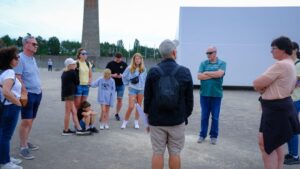
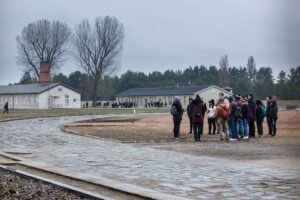
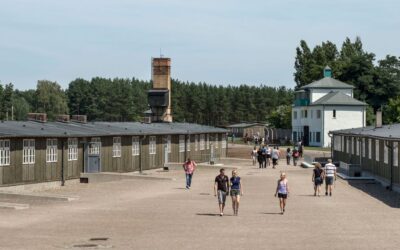
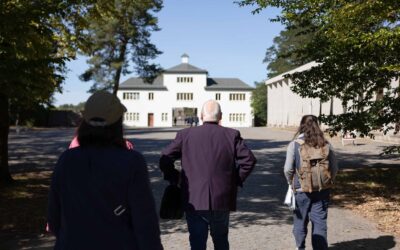
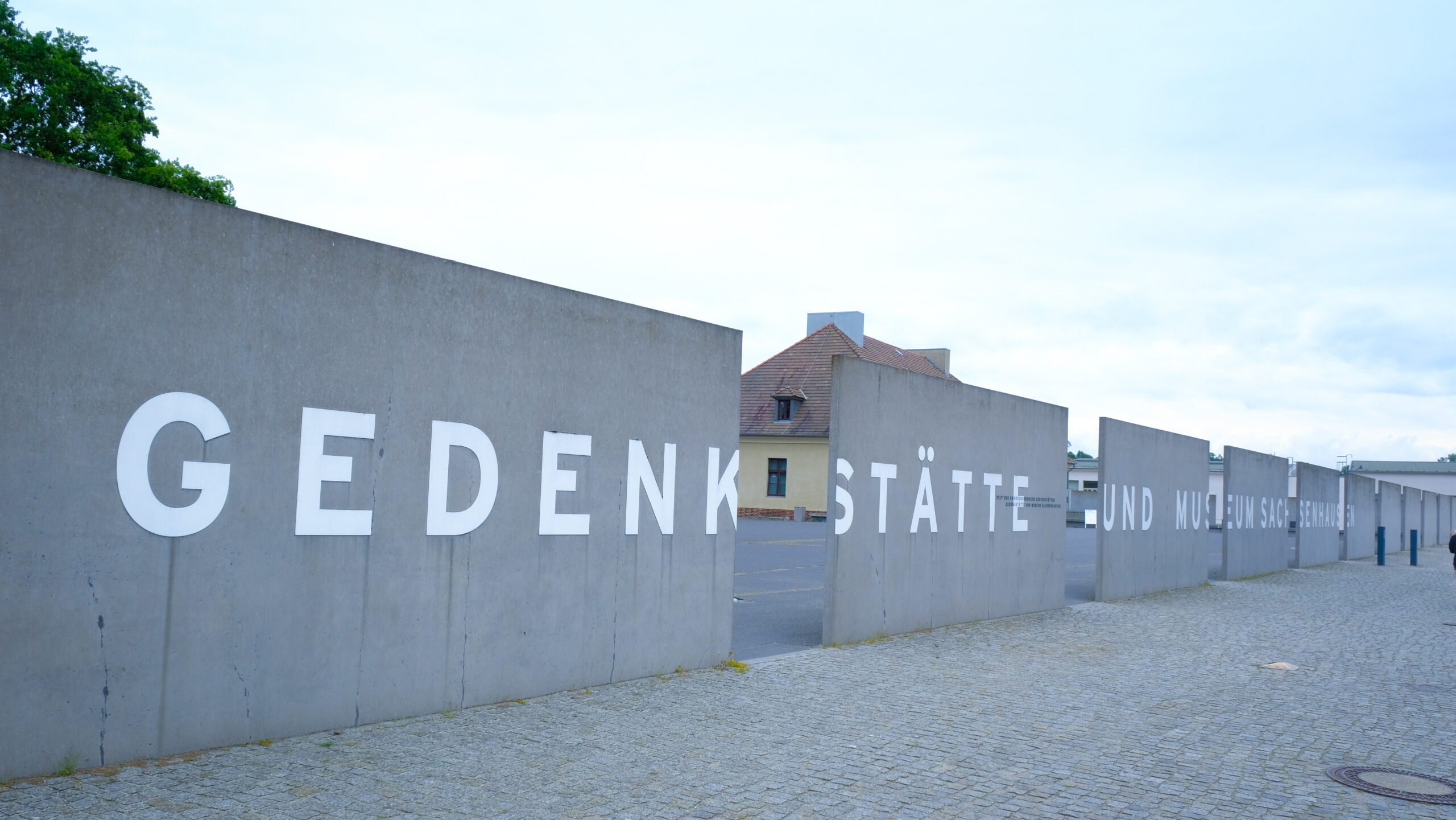
The Sachsenhausen Memorial and Museum in Oranienburg is the main site, and its exhibits and educational activities cover the wider camp network, including the brickworks and other outlying areas. Outside the main memorial, however, the situation is more diverse:
- Oranienburg. The memorial documents and discusses remains connected to the Klinkerwerk and the Heinkel works. Access to outlying remains can be limited, so check with the memorial before visiting.
- Lieberose/Jamlitz. A documentation center and memorial address the camp and its victims.
- Schwarzheide and Falkensee. Local memorials and commemorative markers exist, but they are generally modest compared with the main memorial.
- Belower Wald, near Wittstock, where death-march prisoners were forced to camp in April 1945, has a memorial exhibition.
- Berlin. Many former work sites are marked only by plaques or small memorials, and in some places little physical trace remains. The Documentation Center on Nazi Forced Labor in Berlin-Schöneweide is a separate site but helps explain the wider system of forced labor in the capital.
Why This History Matters
The satellite system shows that atrocities need not take place far away; they can be carried out through normal logistical procedures such as contracts, transport schedules, guard rosters, and factory-floor operations. The danger extends not just to the people who commit the crimes but also to the organizations and institutions which make such acts routine.
FAQs
- What was a satellite camp?
A smaller camp or work group which was connected with the main concentration camp, typically situated near a factory or construction site that made use of prisoner labor.
- How many sub-camps did Sachsenhausen have?
According to the Sachsenhausen Memorial, more than 100 satellite camps and external work detachments were established from 1942 onward. The exact number varies depending on whether smaller work units are included and which period is being counted. At the beginning of 1945, approximately 71,000 prisoners were held across the camp complex, including around 24,000 in the main camp.
- Where were the main Sachsenhausen satellite sites?
Notable sites included the Oranienburg brickworks and Heinkel factory. Other locations were Falkensee, Genshagen/Ludwigsfelde, parts of Berlin, Glau (Trebbin), Lieberose, and Schwarzheide.
- What work did prisoners do?
Prisoners made bricks, worked on construction projects, produced aircraft and engines, manufactured armaments, handled fuel and chemicals, and performed other tasks during air raids, such as clearing rubble and disposing of bombs.
- What happened to the satellite system at the end of the war?
Sites were evacuated in early 1945, with massacres at some locations, and the remaining prisoners were sent on death marches in April 1945.
- Can any sites be visited today?
Yes. The main memorial is in Oranienburg, and memorials or documentation centers exist at places such as Lieberose/Jamlitz and Belower Wald. Other sites are marked more modestly or only partly preserved.