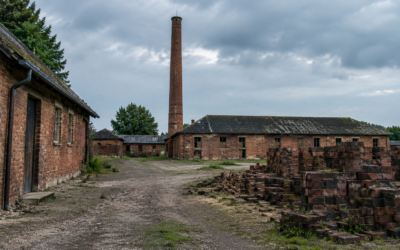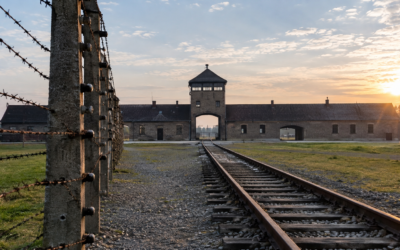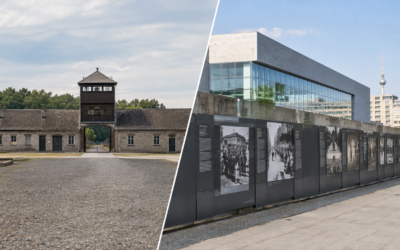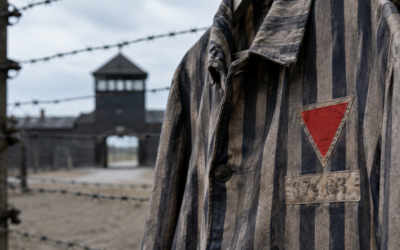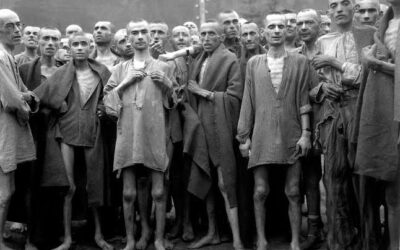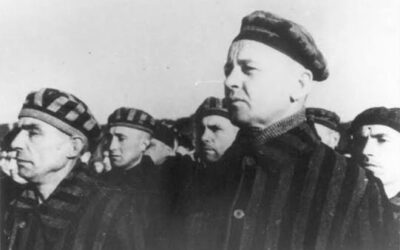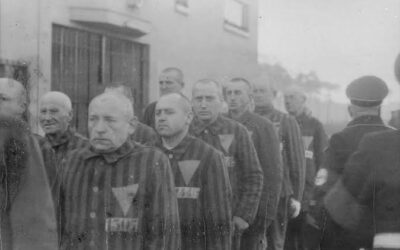
Anyone who has seen an intake photograph in a camp archive and wondered why a regime determined to destroy would record all this has already found the answer: Sachsenhausen was not just another camp; it was the standard model, and the documentation was integral to its design.
Esta guía explica qué significaba "campo modelo", por qué las SS eligieron este emplazamiento al norte de Berlín y qué encontrará realmente si visita hoy el monumento conmemorativo de Oranienburg.
Qué significaba realmente “campamento modelo”
Sachsenhausen was opened in 1936, and the prisoners who built it had been taken from earlier camps in the Emsland area. The SS did not regard it as a place where they could act arbitrarily. Instead, they saw it as an example of how a camp should be planned, managed, and administered, and then applied the lessons learned there to other camps.
Three things made it a model.
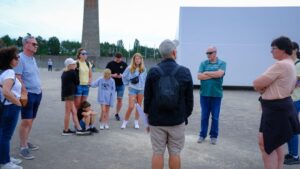
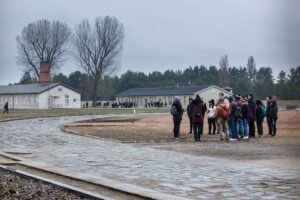
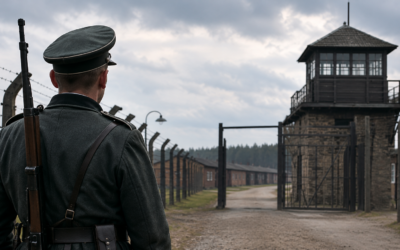
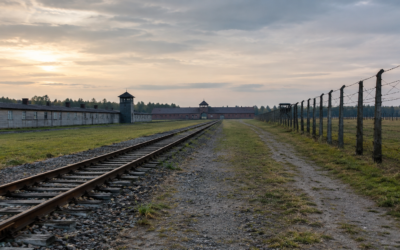
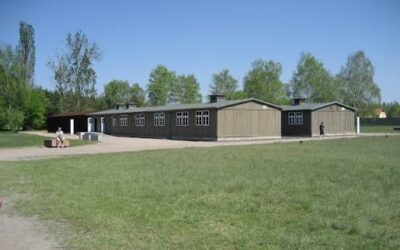
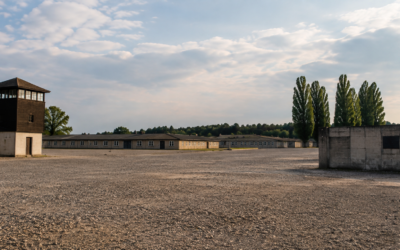
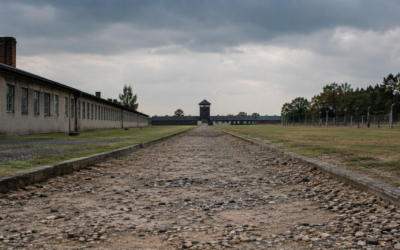
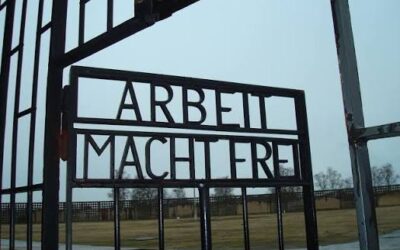
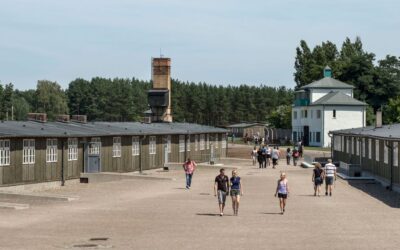
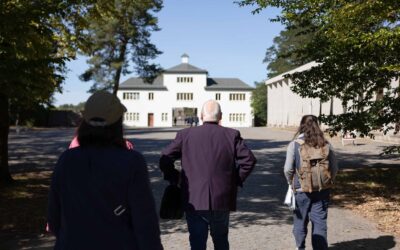
The layout. The camp was laid out as a triangle with a gatehouse at its apex, known as Tower A. The roll call ground was a wide half circle fanning out from that tower so that a single gun position could command the entire prisoner population. The architecture served as a control mechanism. When you stand on the roll call ground today and turn to face the gate, you are standing inside that calculation.
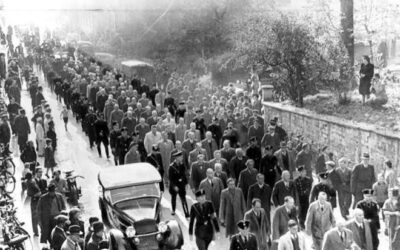
La proximidad al poder. Oranienburg se encuentra aproximadamente a 35 kilómetros de El corazón de BerlínEn 1938, la Inspección de Campos de Concentración, la oficina de las SS que supervisaba toda la red de campos, se trasladó a Oranienburg. Las órdenes, los suministros, el personal y las inspecciones circulaban por un lugar desde donde los altos funcionarios podían salir, inspeccionar el lugar y regresar a casa. Esa cercanía explica por qué los dignatarios visitantes y los oficiales inspectores eran fotografiados con tanta frecuencia allí.
El proceso de formación. Los guardias y los futuros comandantes adquirieron las habilidades necesarias en Sachsenhausen y llevaron sus métodos a otros campos. Un campo que forma a las personas responsables de dirigir otros campos es, en el sentido más literal, un modelo, porque difunde sus procedimientos.
La pregunta que todos se hacen sobre el registro de datos
Anyone who looks at the online pages of Holocaust museums will come across the same disturbing pattern: the prisoners were photographed when they were taken in, and details such as their numbers, occupations, and what happened to them. Why would a regime that knew it could be taken to court if it lost the war leave behind such a trail?
La respuesta más útil es también la menos emocionante: se trataba de una organización, y las organizaciones funcionan mediante papeleo. Cuando uno está a cargo de un sistema que abarca todo un país, debe saber quién está dónde, qué hacen, cuánto cuestan y qué producen. Sin registros, es imposible determinar si el plan está teniendo el efecto deseado. Una observación perspicaz es que el Reich necesitaba contadores, auditores, archivistas y personal de control de calidad, y muchos alemanes encontraron empleo estable en esta creciente burocracia. No todos podían ser soldados o obreros. La maquinaria burocrática empleaba a gente común, y esa es una de las razones por las que resulta tan aterradora.
This situation had another level. Prisoner labor served as an economic asset. They took over property, assigned tasks, and recorded it all in ledgers. As Hermann Göring’s case shows, he cared far more about confiscated property and forced labor than about ideological displays. The economic measures taken against the Jews were carried out through registration, inventories, and detailed notes. These same notes were later read out at Nuremberg to demonstrate knowledge and guilt. The bureaucracy that made the system work also generated the evidence used to convict its leaders.
Sachsenhausen, como centro administrativo, ocupa un lugar central en esta historia. Su estatus de centro modelo no se limitaba a murallas y torres de vigilancia, sino que se basaba en procedimientos estandarizados.
¿Quieres saber más sobre el personal de las SS que impuso el sistema de campos en Sachsenhausen? Lee ¿Quién custodiaba Sachsenhausen? Dentro del Batallón de la Guardia de las SS para comprender quién era el responsable de custodiar y controlar a los prisioneros.
What the camp was like as a working place
A photograph taken at the camp which is among the more revealing ones depicts an SS officer looking at the damage caused por flooding in 1941. It is a most unremarkable picture, and it is precisely for that reason that it is significant. The camp was regarded as infrastructure, and someone had to be in charge of carrying out repairs, clearing away water, keeping it in good condition, and preparing the necessary reports. Visitors often make dark jokes about pictures like this, since it is so difficult to grasp such ordinariness, but that very ordinariness teaches us a lesson: atrocity was carried out por people who submitted maintenance requests.
The camp later acquired a specially Instalación de matanza construida, comúnmente conocida como Estación Z, que incluía instalaciones de ejecución y crematorios. El hecho de que el campo hubiera evolucionado de un centro de detención estrictamente controlado a uno con capacidad de exterminio a escala industrial sirve como recordatorio de que el término "modelo" no significaba humano; simplemente significaba replicable.
Por qué la idea del “modelo” sigue siendo importante
The main point such a visit illustrates is that this was not a special case occurring only in Germany, nor one that could never happen in any other country. A common opinion, expressed por individuals whose grandfathers had lived through that period, holds that the lesson ought not to be “what Germany did” but rather “any society has the capacity to become cruel towards those whom it considers undesirable, so it is important to recognize the signs and resist them”. The eugenics laws did not disappear in 1945; for example, North Carolina maintained its eugenics board until 1977 and did not repeal its laws on forced sterilization until 2003. Systems which dehumanize people generally make use of the same elements: classification, paperwork, normalization, and a large number of people who believe that they are only carrying out their duties.
Eso es lo que realmente indica la palabra "modelo". Un modelo se puede copiar. Comprender cómo funcionaba este modelo es la clave para reconocer el patrón.
¿Quieres entender por qué Sachsenhausen se volvió tan importante para el sistema de campos de concentración nazis? Lee Sachsenhausen and the Campos de concentración Inspectorate: Why Oranienburg Became the Center of the Nazi Camp System to Explorar its administrative role and significance.
Preguntas frecuentes
- Why did the Nazis keep such detailed records if the goal was to kill people?
Dado que el sistema de campos era una burocracia encargada de gestionar la mano de obra, la propiedad, el transporte y el personal, los administradores utilizaban la documentación para comprobar la eficacia de sus políticas. Posteriormente, muchos de esos mismos registros se utilizaron como prueba en los juicios posteriores a la guerra.
- ¿Es ético utilizar investigaciones que provienen de experimentos médicos nazis?
Este sigue siendo un tema recurrente en los cursos de ética científica. Una postura argumenta que los métodos eran tan abominables que los resultados deberían rechazarse o destruirse. La otra sostiene que, si no se obtiene ningún beneficio de datos bien documentados, las víctimas sufrieron en vano. Los historiadores también señalan que gran parte de la producción científica era pseudociencia sin valor, por lo que el dilema es más complejo de lo que parece a primera vista. La investigación sobre la hipotermia es el ejemplo más citado.
- Did American soldiers face consequences for executing SS guards at Dachau?
There was an investigation. An Army deputy judge advocate concluded in late 1945 that international law had probably been violated, but that, given what the first combat troops saw, justice did not demand assigning individual responsibility. No prosecutions followed.
- ¿Podrías entrar solo a la morgue de un monumento conmemorativo de un campo de concentración?
It is physically possible during opening hours, but it is not a good idea to wander away from your group late in the day. Visit with a companion, go in daylight, and treat the building as a historical site, not a dare.
- ¿Deberían excusarse a los guardias por ser producto de su época y de su adoctrinamiento?
Understanding how conditioning and widespread antisemitism shaped them is part of serious history, but explanation is not an excuse. Postwar courts, including the Mauthausen trial, held individuals responsible for their actions while also distinguishing degrees of participation, as the reduced sentences on appeal show. Both ideas can be held at once: how people were shaped matters, and so does what each person chose to do.