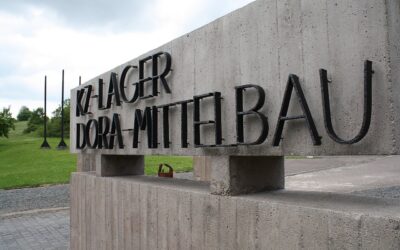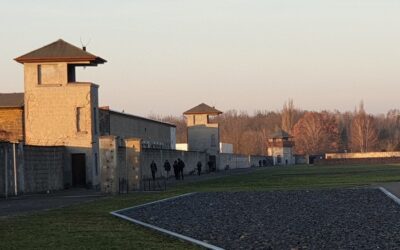
If you have ever stood in front of a photograph of a camp “infirmary” and wondered whether anything good came out of what happened inside, you are not alone. It is one of the most persistent questions people ask about the Nazi camps, and it usually arrives wrapped in an apology: I don’t want to defend them, I’m just curious.
The truthful answer is one that historians have consistently offered and which astonishes people: the medical atrocities carried out in the camp infirmaries, including that at Sachsenhausen, were not a dark shortcut to scientific advancement. They were simply murders committed while wearing a lab coat.
The guide explains what the experiments really involved, shows that the ‘useful data’ assertion falls apart when examined, and describes how to refer to the matter without spreading the myth.
Why a camp “infirmary” was never a place of healing
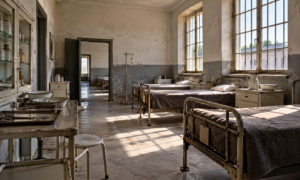
At Sachsenhausen, just as was the case with the other concentration camps, the infirmary was part of a system designed to wear down and kill the prisoners. The SS doctors had the power to take or give life. The prisoners went there in the hope of getting some rest and, in some cases, eventually left by way of the crematorium. Within the same building,, a nurse might be trying to save a fellow inmate while a doctor chose individuals for an experiment.
Sachsenhausen’s infirmary is documented as one of the places where prisoners were used as test subjects, including in studies of infectious disease and in the testing of poisoned ammunition. Much of the detailed public record, though, comes from other camps where documentation survived better: Dachau, Auschwitz and Ravensbrück. Those cases show the pattern that applied across the system, so they are the best way to understand what an infirmary like Sachsenhausen’s was used for.
The three kinds of experiments
Researchers who study this period tend to sort the experiments into three groups.
Medico-military research. This covers freezing prisoners in icy water to see how long a downed airman might survive, placing people in decompression chambers to simulate pilots at extreme altitude, making people drink seawater, infecting wounds, and attempting nerve transplants. The Luftwaffe and its leadership were not bystanders. In August 1942, Field Marshal Erhard Milch wrote to Heinrich Himmler saying he had read the reports from Dr. Sigmund Rascher and Dr. Hans Wolfgang Romberg, that he was informed about the ongoing experiments, and that he wanted both men to lecture his officers with film footage. That letter is a primary source showing military leadership knew and approved.
Racially motivated experiments. Carl Clauberg and others worked on mass sterilization methods, aimed at quickly sterilizing people the regime labeled “half” or “quarter” Jews, using injections or X-rays. They tested the methods on hundreds of prisoners in Auschwitz and Ravensbrück, and the program never produced a workable method. August Hirt in Strasbourg wanted a skeleton collection to identify skeletal markers of “Jewishness,” and several hundred prisoners were killed to build it. Mengele’s twin research, built on the idea that changing one twin’s eye color might change the other’s, was flawed from the start.
Everything else. Some “experiments” were simply timing exercises: how fast does a poison kill, how long does it take someone to bleed to death. Many did not bother with a medical pretext. They were another way to kill prisoners.
Want to understand more about the daily reality prisoners faced at Sachsenhausen? Read our blog on What Happened on Sachsenhausen’s Roll-Call Square? to learn about the significance of this central area.
Why the “usable results” idea falls apart
The idea that Nazi experiments contributed to the development of medicine is one of the most persistent myths concerning the war, and it fails to stand up when examined against the actual records for the following four reasons.
The premises were ideology, not science. These physicians were among the most Nazified members of an already Nazified profession. Doctors who got access to prisoners were expected to hold the party line, so their experiments were designed to confirm racial theory. One physician set out to prove tuberculosis was not an infectious disease but an “exhaustive” condition to which Jewish bodies were supposedly more vulnerable. That is not a hypothesis. It is a prejudice with a lab report attached.
The experimental design was broken. Take Rascher’s hypothermia work at Dachau, the experiment most often cited as “valuable.” Camp prisoners were malnourished, tortured, and worked nearly to death, so their bodies did not behave like those of healthy subjects. Rascher’s notes do not clearly separate subjects who were clothed from those who were naked, conscious from unconscious, or healthy from sick. The water temperature was not reliably recorded. The study lacked proper cardiac monitoring and blood pressure measurement. Basic controls were missing.
The analysis contradicted itself. Rascher’s conclusions were inconsistent, sometimes saying the goal was not to cause death and elsewhere suggesting it was. He concluded that water at 2°C and water at 12°C made no difference, which is plainly false. The high altitude documentation was largely destroyed or never existed in full.
Nobody independent ever checked it. For most of these studies, complete data were never published, let alone reviewed by anyone beyond figures like Himmler, who was no scientist. Peer review, the safeguard that makes research trustworthy, did not exist here.
Researchers who cite Rascher’s work today usually do so to show how flawed it was, not to build on it.
“But they were trained scientists. Why was the work so sloppy?”
This is the question that bothers people most, and it has a grim answer. Training does not protect against ideology or cruelty. Survivors who saw Mengele operate described a man running what one called a butcher shop, performing major surgery without anesthesia. As one survivor put it, he professed to be doing science, but it was madness fed by power. He had the training to know anesthesia would make his work easier. The evidence points to a sadist, not a researcher.
Notably, even the rare resource that could have had real scientific value, a large population of twins, went to waste. Twin studies are central to modern research on genetics and disease. Mengele’s experiments were, as one commenter bitterly put it, either incredibly sadistic or incredibly stupid.
The one thing people get half right
Some people point out that Nazi Germany was ahead of its time on cancer research, especially the link between smoking and lung cancer. That is true, and Robert Proctor’s book The Nazi War on Cancer covers it in depth. But that research did not come from human experimentation in the camps. It came from conventional epidemiology. Crediting the camps for it blurs a line that should stay sharp.
Complicity went far beyond the doctors.
The infirmary system did not operate in isolation. After the war, a comfortable story took hold of a “clean” Wehrmacht that fought a conventional war. The 1995 exhibition War of Annihilation: Crimes of the Wehrmacht 1941 to 1944, which toured 33 German and Austrian cities, was among the first big public challenges to that myth, and a revised show followed in 2001. Milch’s letter is one small piece of evidence that military leaders were briefed on and supported these programs.
Accountability afterward was also inconsistent. During the Cold War, the major powers employed many German scientists and officers. For example, with regard to the Japanese Unit 731 program, the United States gave immunity in return for the experimental data, while the Soviet Union tried twelve people at the 1949 Khabarovsk trials. The situation is unpleasant in that knowledge obtained as a result of atrocities was at times rewarded rather than punished.
Want to learn about another form of forced labor prisoners endured? Read our blog on The Sachsenhausen Shoe-Testing Track: Why Prisoners Were Forced to March for Miles to explore the history behind the track.
How to talk about this without getting it wrong
People who visit memorial sites generally talk about the same things: machines whose function they can’t work out, rooms full of children’s shoes, and the heavy atmosphere. This kind of discomfort is appropriate. A few habits can be of help:
- Separate “it happened” from “it was useful.” Acknowledging a fact doesn’t endorse its supposed benefits.
- Name the victims and the perpetrators, not just “the Nazis.”
- Be careful with humor. Joking about torture victims lands badly, and people will tell you so.
- Remember that some people who wore the uniform or held the party card did take real risks to save lives, such as Oskar Schindler and Wilm Hosenfeld, but that does not erase the system’s complicity.
FAQs
- Did the Nazi experiments produce any usable medical results?
Historians say no, not in any meaningful way. The experiments suffered from flawed premises, poor design, inconsistent analysis, and falsified or missing data. Even the best-known, Rascher’s hypothermia studies, are cited mainly as examples of bad science.
- Were the experiments unscientific even by the standards of the 1940s?
Yes, for in that period there were no controls, inconsistent protocols, inadequate measurement, and no independent review.
- Why did Nazi doctors operate without anesthesia?
There was no medical basis for it; both survivor accounts and historical evidence point to cruelty and the exercise of absolute power. Since anesthesia would have made the procedures easier, omitting it was deliberate.
- How could trained scientists produce such sloppy work?
The doctors given access to prisoners were among the most ideologically committed in the profession. Their goal was often to confirm racial theory, not to discover anything, so rigor was secondary.
- Did Nazi researchers make real progress on cancer?
Some did, particularly on the link between smoking and lung cancer, but through conventional research, not camp experiments. Robert Proctor’s book is the standard source on this.