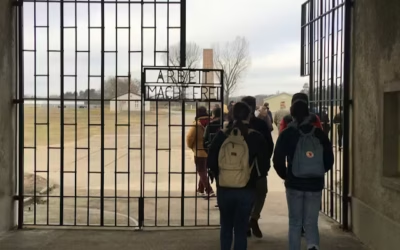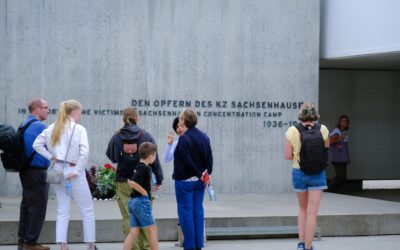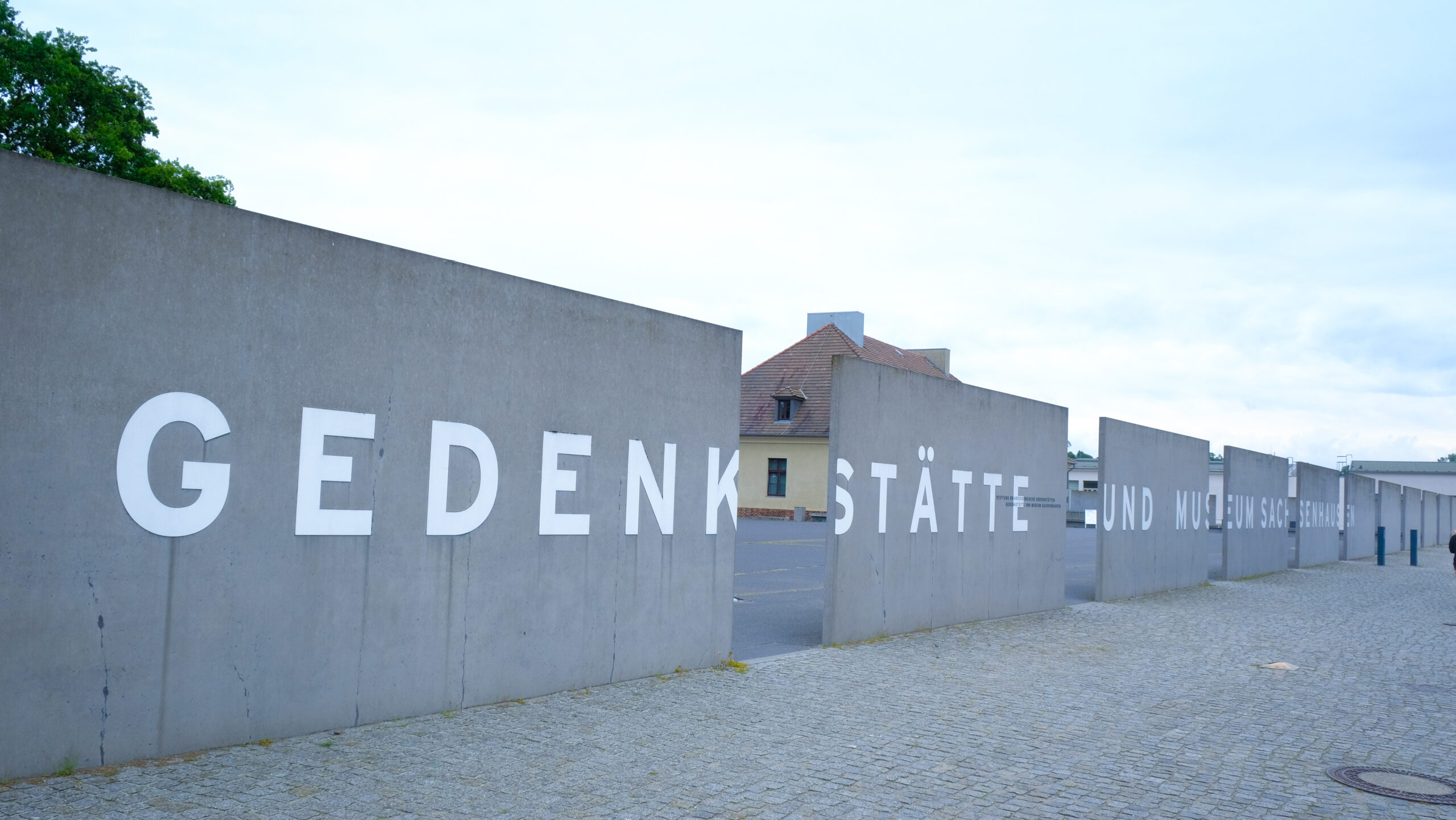
Eis a pergunta que paira sobre cada foto de Yakov Dzhugashvili: Joseph Stalin realmente deixou seu próprio filho morrer em vez de fazer uma troca? A resposta curta é que Yakov morreu em 14 de abril de 1943. em SachsenhausenE o boato de que seu pai poderia tê-lo salvado é apenas metade da história. A outra metade é mais incômoda e explica por que as pessoas ainda discutem sobre isso mais de oitenta anos depois.
O Homem do Sobretudo
Comecemos pela imagem que todos conhecem: um jovem com um pesado casaco do Exército Vermelho, com ar cansado, cercado por soldados alemães. Este é o Tenente Yakov Dzhugashvili, comandante de bateria do 14º Regimento de Obuses. Ele foi capturado pelas tropas alemãs em 16 de julho de 1941, perto da cidade bielorrussa de Liozno, nas proximidades do aeródromo de Surazh, durante o caos dos combates de Smolensk.
Esse casaco merece ser mencionado, porque Os espectadores sempre reparam nisso.. Soviet soldiers wore the greatcoat year-round. In hot weather they rolled it up and carried it over the shoulder, and in winter they were issued a quilted cotton jacket on top. It is a small detail, but it shows the photo captures an ordinary soldier in an ordinary uniform, not a prince in disguise. For those interested in exploring the wider history of World War II and Nazi Germany, a free historical walking tour of Berlin offers additional context about the period.
Os propagandistas alemães compreenderam imediatamente o valor da imagem. Panfletos mostravam Yakov com a legenda provocativa perguntando se você sabia quem era ele. A mensagem para as tropas soviéticas era simples: até o próprio filho do líder havia se rendido. Yakov, segundo a maioria dos relatos, recusou-se a cooperar e resistiu a todas as tentativas de fazê-lo desertar.
Quem era Yakov, de verdade?
Born in 1907, Yakov was Stalin’s eldest son and his only child with his first wife, Kato Svanidze, who was also Georgian. After his mother died, relatives raised him far from his father. He grew into a reserved young man whose relationship with Stalin was often strained. What he got instead, according to those who studied the family, was a difficult relationship with his father and, ultimately, death in a Nazi concentration camp.
His half-brothers lived very different lives. Konstantin Kuzakov, born in 1911 to Maria Kuzakova, with whom Stalin reportedly had a relationship during his exile, worked in Soviet radio and television and died in 1996. Alexander Davydov, believed to have been Stalin’s son through Lidia Pereprygina during his Siberian exile, served in World War II, reportedly reached the rank of major, and died in 1987. Their alleged parentage has not been established with the same certainty as Stalin’s acknowledged children. Claims that both signed nondisclosure agreements with the NKVD require stronger documentary evidence. Vasily, Yakov’s younger half-brother, born in 1921 to Stalin’s second wife, Nadezhda Alliluyeva, struggled with alcoholism, misused his position, and was imprisoned after Stalin’s death. He died in 1962.
A troca de prisioneiros que todos comentam
After the German defeat at Stalingrad in early 1943, accounts emerged that Germany had offered to exchange Yakov for Field Marshal Friedrich Paulus. Although the story appears in historical accounts and memoirs, no conclusive documentary evidence establishes that a formal exchange was proposed or rejected por Stalin. The reported exchange therefore remains disputed.
The most widely repeated versions of Stalin’s alleged reply remain unverified. One claims he said that the Germans held not only his son Yakov but millions of his sons, so either all should be freed or Yakov would share their fate. Another has him dismissing the deal in military terms: why would he trade a general, or a field marshal, for a lieutenant? A third, more brutal line, “I have no son,” gets quoted constantly. However, none of these statements has been conclusively established through reliable documentary evidence.
Tenha cuidado com tudo isso. São tradições ligadas à história, não documentos que qualquer um possa exibir. Elas sobrevivem porque soam como algo que Stalin diria e porque se encaixam no que muitas pessoas já acreditam.
A second exchange story is worth knowing. When Soviet forces captured Leo Raubal Jr., Hitler’s nephew, at Stalingrad on 31 January 1943, there were claims that Hitler considered exchanging him for Yakov. However, no conclusive documentary evidence confirms that a formal exchange was proposed or that Stalin rejected it. Yakov died em Sachsenhausen on 14 April 1943, while Raubal survived the war and was released on 28 September 1955.
Quer saber mais sobre outro prisioneiro notável detido em Sachsenhausen que se opôs a Hitler? Leia Georg Elser em Sachsenhausen: O homem que quase assassinou Hitler Descobrir a história da tentativa de assassinato e do aprisionamento dele sob o regime nazista.
Recusar o acordo foi a decisão "certa"?
This is where the debate gets heated, although the reported prisoner exchange itself remains unverified. The arguments surrounding Stalin’s alleged refusal are therefore hypothetical rather than assessments of a confirmed decision.
Supporters of the supposed refusal argue that exchanging a high-ranking German commander for Stalin’s son could have damaged Soviet military morale. Critics suggest that refusing such an exchange, if it was offered, would demonstrate Stalin’s cold relationship with Yakov. Neither interpretation establishes that the exchange actually took place. This debate also connects to the wider history of Nazi Germany and World War II, which visitors can Explorar through private historical tours of Berlin.
Há também o argumento de que Stalin demonstrou coerência, independentemente da opinião que se tenha sobre suas outras escolhas. Muitos observam que outras famílias de prisioneiros soviéticos sofreram com o cativeiro de seus parentes, pois perderam benefícios sociais e assistência estatal e enfrentaram outras perseguições, enquanto a família Dzhugashvili escapou em grande parte desse tratamento. Vasily, que servia na Força Aérea, notavelmente não recebeu tratamento diferenciado por causa de seu sobrenome, pelo menos nos primeiros anos da guerra.
A crítica é mais emocional do que estratégica. Os críticos argumentam que se pode aceitar a lógica militar e ainda assim afirmar que Stalin era frio com o próprio filho muito antes da guerra, tratando Yakov como uma decepção de um relacionamento que ele nunca valorizou. Outros dizem que usar esse único episódio para condená-lo é um alvo errado. Stalin é culpado de crimes documentados suficientes para que essa decisão, seja qual for seu peso moral, não seja a acusação mais forte contra ele. Muitas pessoas já fizeram exatamente essa observação: é a única escolha em sua vida que pode ser considerada correta.
Prisioneiros soviéticos realmente eram enviados para o Gulag?
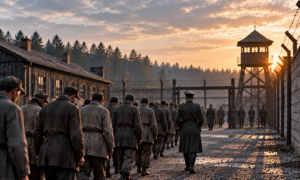
A história de Yakov levanta uma questão mais ampla que muitos leitores procuram responder: o que aconteceu com os soldados soviéticos que sobreviveram ao cativeiro alemão?
The popular belief is that all returning Soviet prisoners were punished, but historical records show a more complicated picture. According to archival figures examined por historians, approximately 1.54 million repatriated Soviet POWs had been processed por March 1946. Of these, around 43% were returned to military service, 22% entered military labour battalions, 18% were sent home, and 14.7% were transferred to NKVD custody. These figures describe specific administrative outcomes and should not be interpreted as meaning that every prisoner transferred to NKVD custody received the same punishment.
Order 270, issued in 1941, is the document people usually cite. It treated surrender under certain circumstances as betrayal and imposed severe penalties, which is why the unverified quotation “I have no son” carries such weight. Yet Yakov’s own family, unlike many others, was reportedly spared the usual consequences.
Como Yakov realmente morreu?
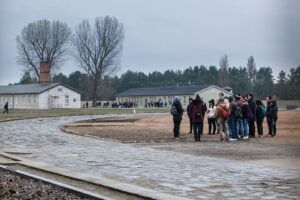
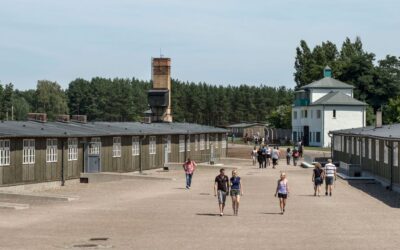
According to German reports, Yakov died on 14 April 1943 em Sachsenhausen concentration camp. He reportedly approached or threw himself against the electrified barbed-wire fence, where a guard shot him. However, the precise sequence of events and whether the gunshot or electrocution caused his death remain disputed.
The circumstances have led to different interpretations. Some historians suggest that Yakov deliberately approached the fence to end his life, while others have considered the possibility of an escape attempt. Neither explanation has been conclusively established. The claim that news of Stalin’s refusal to exchange him drove Yakov to suicide also lacks reliable documentary confirmation.
Whether Yakov intended to escape or take his own life remains uncertain. What is established is that he died em Sachsenhausen on 14 April 1943, while being held in German captivity.
Perguntas frequentes
- Os alemães realmente ofereceram trocar Yakov pelo Marechal de Campo Paulus?
That is the story most often told, and it is widely repeated. However, the proposed exchange itself remains historically disputed, and the exact wording of Stalin’s alleged reply is unverified, with different versions appearing.
- Stalin realmente disse "Eu não tenho filhos"?
It is attributed to him often, but there is no conclusive documentary evidence confirming he said it. Several different versions of his alleged response circulate, including the one about millions of sons. Their wording and authenticity remain uncertain, as does the reported prisoner exchange itself.
- Yakov também foi oferecido em troca do sobrinho de Hitler?
The proposed exchange remains historically disputed. Leo Raubal Jr. was captured at Stalingrad, and the Germans allegedly suggested trading him for Yakov. However, there is no conclusive evidence that a formal exchange was proposed or that Stalin refused it. Yakov died in 1943, while Raubal was released in 1955.
- Os prisioneiros de guerra soviéticos eram automaticamente enviados para o gulag após retornarem para casa?
No. Soviet records indicate that returning prisoners experienced different outcomes, including military service, release, labour battalions, and NKVD detention. Of approximately 1.54 million repatriated POWs processed por March 1946, around 14.7% were transferred to NKVD custody. This does not mean that all returning prisoners were imprisoned in the Gulag.
- Como morreu Yakov Dzhugashvili em Sachsenhausen?
O relato russo diz que ele foi baleado em 14 de abril de 1943, enquanto tentava escapar atirando-se contra a cerca de arame farpado. Alguns consideram essa versão mais condizente com um ato suicida do que com uma tentativa real de fuga.