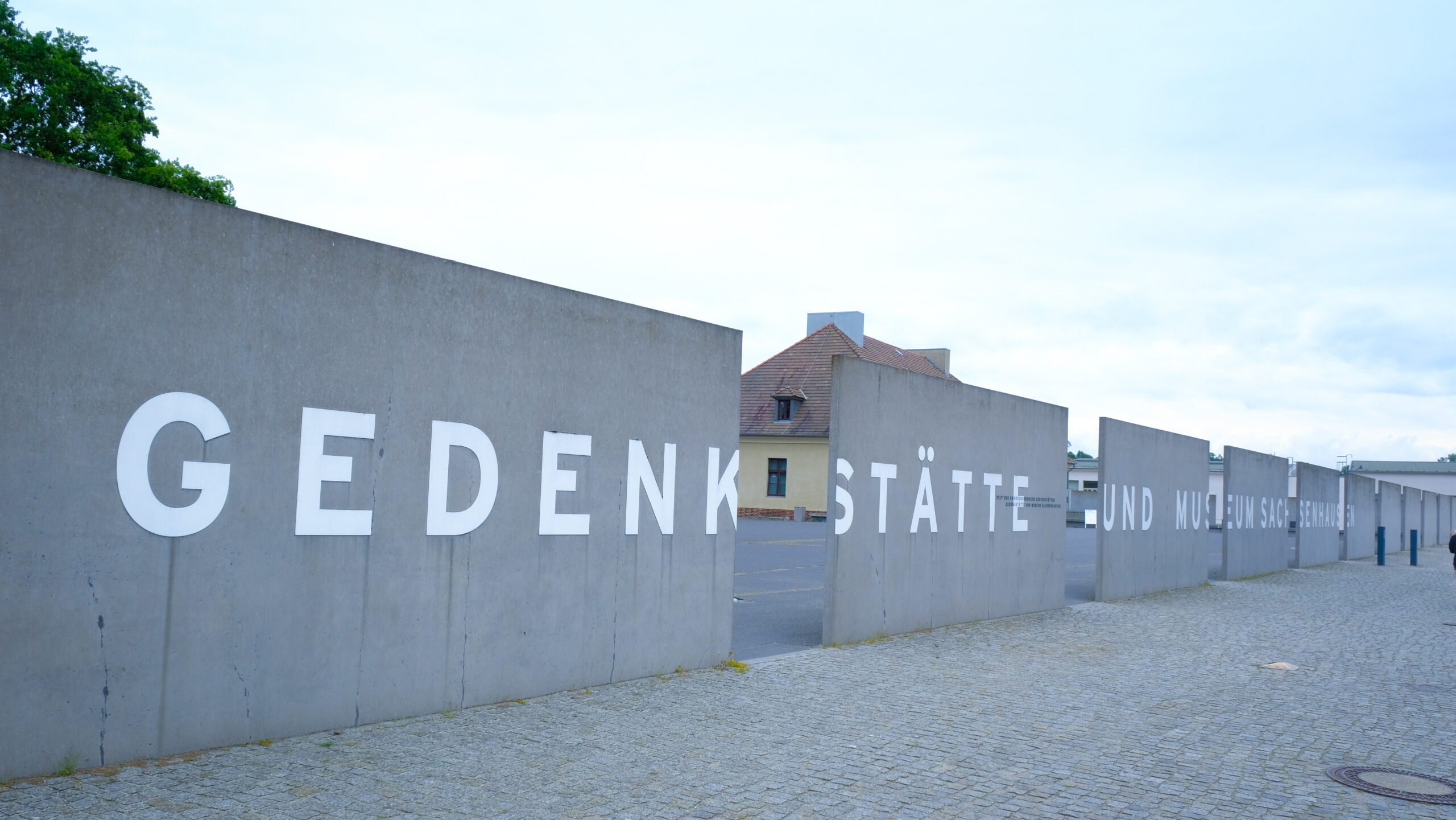
When you get off the train in Oranienburg, you see bakeries, a castle, and a quiet stretch of river. It does not look like the place where an entire country’s system of terror was administered. Yet from 1938, the Concentration Camps Inspectorate, which administered and controlled the concentration camp system, was headquartered in the T-building near Sachsenhausen. This guide explains what that office, the Concentration Camps Inspectorate (Inspektion der Konzentrationslager, IKL), actually controlled, why it was moved to Oranienburg, how it changed during the war, and what visitors can understand of the site today.
What the Inspectorate Was
The Inspectorate was established as a result of the SS’s reorganization of the camps in 1934. Theodor Eicke, who had previously been in charge of Dachau and had established its system of strict discipline and punishment, was named the first Inspector of Concentration Camps; his role was to transform what had been a collection of sporadically arranged and locally managed camps into a unified system controlled from the center by the SS.
Eicke held the post until 1939, when he left to command the SS Death’s Head Division. His chief of staff, Richard Glücks, succeeded him and led the Inspectorate for the rest of the Nazi era. Eicke was the system’s architect and enforcer; Glücks was its long-serving administrator. Where Eicke built the model, Glücks ran it through the war’s expansion, and he remained in charge until the regime collapsed in 1945.
What the Inspectorate Controlled
The Inspectorate was not a symbolic headquarters. Its authority covered most of what made the camps function as a system:
- Camp administration: organization, budgets, and the day-to-day running of the main camps.
- Regulations: standardized rules, punishments, and routines, based on the disciplinary order Eicke had developed at Dachau.
- Personnel: staffing and assigning commandants and guard units.
- Prisoner policy and discipline: how categories of prisoners were treated, and how punishment was applied.
- Transfers: the movement of prisoners between camps.
- Labor: the deployment of prisoners to work, which grew steadily in importance.
- Coordination: keeping the separate camps operating to a common pattern, through correspondence, inspections, and conferences of commandants.
Much of this work was done through paper. Orders, returns, ledgers, and reports moved between Oranienburg and the camps, and clerks, typists, and telephone operators handled each page. This is the most disturbing aspect of the Inspectorate: the system of terror depended on ordinary office work. The Höcker Album makes the same unsettling point: photographs of SS staff relaxing near Auschwitz in 1944.
Why the Headquarters Moved to Oranienburg
The Inspectorate’s offices were in the Berlin area before 1938; the move to Oranienburg, announced as part of the system’s consolidation, was based on several practical considerations.
- Proximity to Berlin: Oranienburg lies roughly 35 kilometers north of the capital, close enough to stay connected to Himmler’s SS leadership and the central state apparatus.
- Rail and road links: The town was well connected to Berlin and the rest of the Reich.
- An existing camp next door: Sachsenhausen, opened in 1936, was already operating on the edge of town, and the SS had space and infrastructure there.
- SS training and guard units: the site was tied to the training of the SS guard formations that staffed the camps.
Put simply, the Inspectorate was placed where it could supervise a functioning camp, draw on SS personnel, and remain near Berlin. Sachsenhausen’s role as a showcase and training camp is covered in a separate article in this series, so this article treats it only briefly.
The Physical Relationship to the Camp
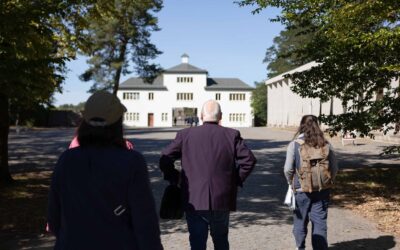
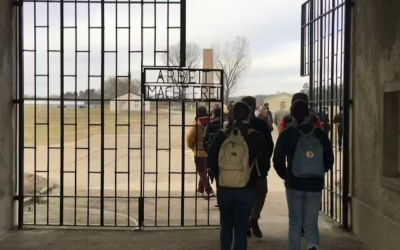
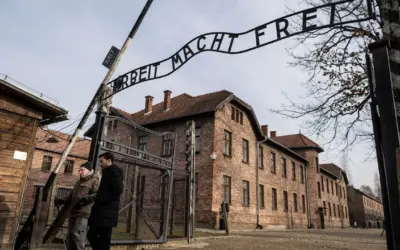
The Inspectorate’s administrative buildings were directly adjacent to Sachsenhausen, outside the prisoner compound but still in sight of, and within walking distance of, the camp entrance. This arrangement was deliberate: the camp gatehouse, referred to as Tower A, overlooked the roll-call ground, and the SS administrative and troop areas lay outside the perimeter.
This meant the two worlds were extremely close: a prisoner at the gate and a high-ranking official reviewing reports from dozens of other camps were just a few hundred meters apart. Sachsenhausen operated as a labor camp, but it was also close enough for the Inspectorate to observe, test, and standardize practices.
The Inspectorate During the War
When Germany conquered and occupied new territories, the camp system expanded far beyond its prewar state. Several new main camps were set up, many subcamps emerged, and the number of prisoners increased considerably. The Inspectorate then had to co-ordinate this growth.
The war also changed its structure. In March 1942, the Inspectorate was incorporated into the SS Economic-Administrative Main Office (WVHA) under Oswald Pohl, where it became Office Group D. Glücks stayed in charge, and the Oranienburg offices remained the camp system’s working center. The merger reflected the SS’s growing emphasis on forced labor for armaments and industry. The Inspectorate’s tasks became increasingly bound up with the economic exploitation of prisoners, alongside their persecution and murder.
The offices which were in charge of the transfers and the use of labor also took responsibility for the camps in occupied Europe, such as Auschwitz and Majdanek, where mass killings occurred. Although the Inspectorate was not the only agency involved in the Holocaust, it was a key element of the broader Nazi system, working alongside other SS agencies that organized deportations and mass murder.
Did the Neighbors Know?
The question of what ordinary Germans knew is a large subject and not the focus here. In short, historians such as Nikolaus Wachsmann have shown that the early camps stood in or near towns, were widely known, and were discussed. Oranienburg is a clear example: a camp, an SS headquarters, and an administrative complex were part of a small town’s life for years. The idea that no one knew is largely a postwar comfort. What was more tightly concealed was the industrial scale of killing in the extermination centers in occupied Poland.
What Visitors Can See and Understand Today
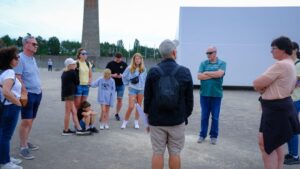
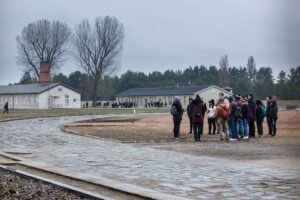
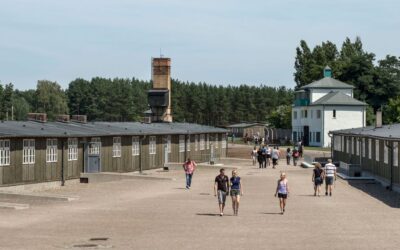
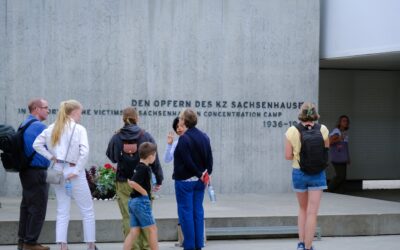
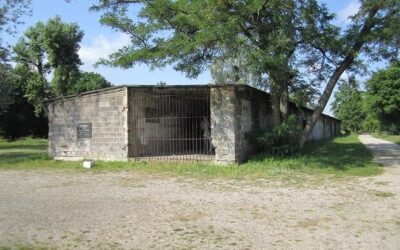
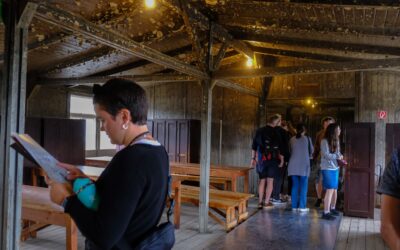
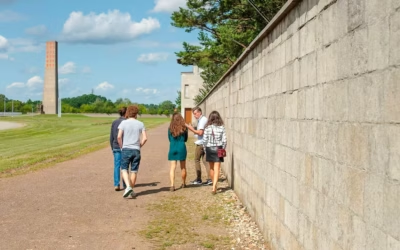
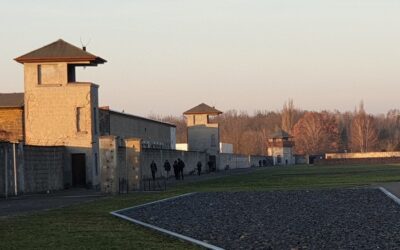
Visitors to the Sachsenhausen Memorial can still see the site’s layout and understand how the camp and its command structure related to one another. Tower A, the gate building, and the remaining outline of the triangular camp show how the SS organized movement and observation. Outside the area occupied by the prisoners, the former SS buildings indicate that the camp was part of a bigger administrative and military complex. For a broader understanding of Berlin’s Nazi-era history, visitors can also explore related historical sites on a free Berlin walking tour
The former Inspectorate buildings are less prominent than the prisoner area. They lie outside the core of the memorial grounds, and parts of the wider site have been put to later uses, including by police training institutions. This means the administrative complex is harder to grasp than the barracks and gate. Ask at the memorial’s information desk, or check its website before your visit, what is currently accessible and how the exhibitions address the Inspectorate and the SS administration.
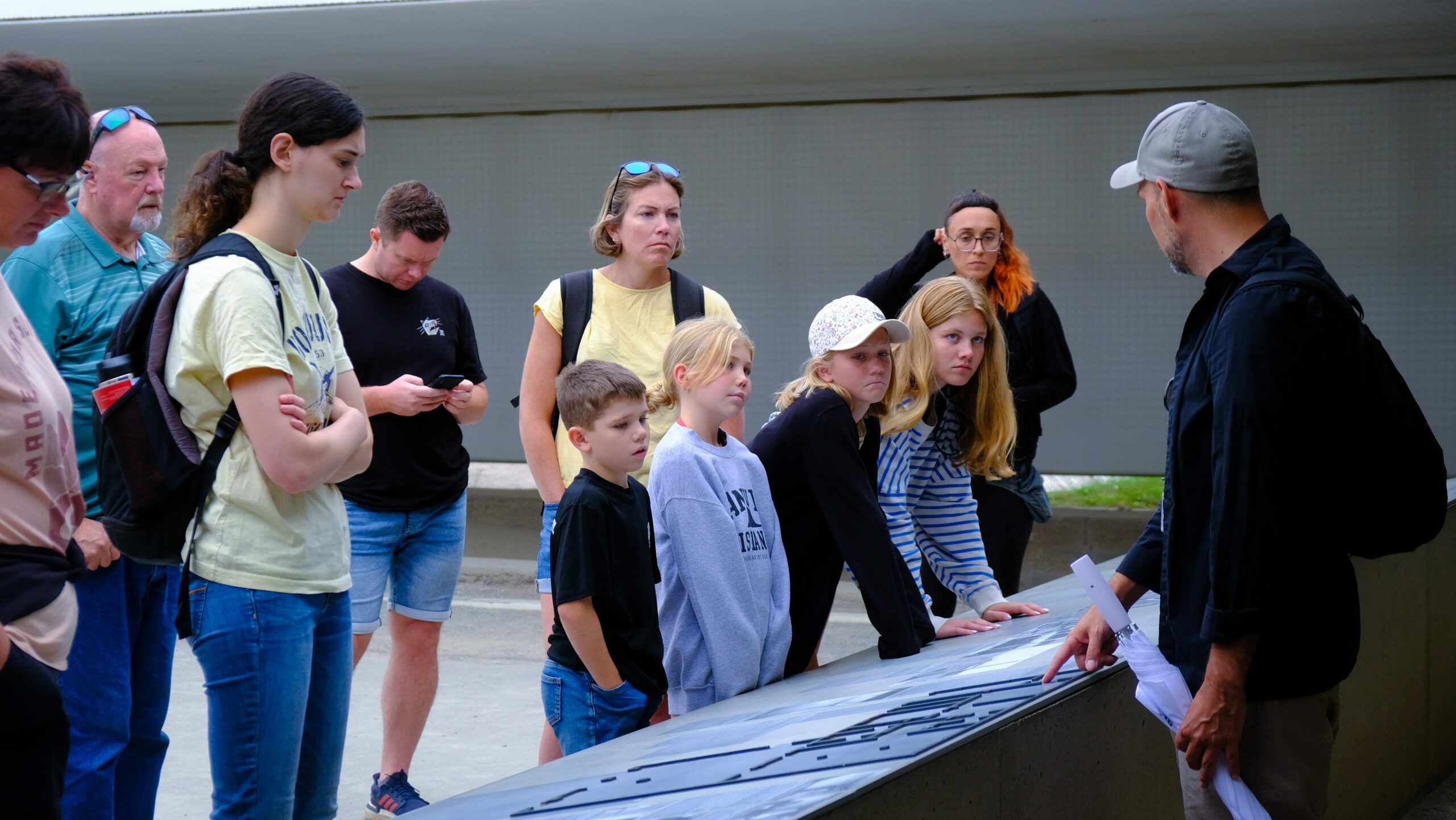
While you tour the site, try to visualize not just the barbed wire but also the offices, the typists, the ledgers, the telephone lines, and the transfer orders that connected Oranienburg with all the other camps. For visitors interested in exploring this history in greater depth, private historical tours offer a more personalized way to discover Berlin’s Nazi-era sites.
Frequently Asked Questions
- What was the Concentration Camps Inspectorate?
The SS office was in charge of the concentration camps in regard to administration, the rules and regulations, personnel, discipline, the transfer of prisoners, and labor. Since 1938, it had been situated in Oranienburg near Sachsenhausen.
- Who ran the Inspectorate?
Theodor Eicke was the first Inspector, from 1934 to 1939. Richard Glücks succeeded him and led the office until 1945.
- Why was the Inspectorate moved to Oranienburg?
The town was close to Berlin and well connected, and it already had Sachsenhausen and SS guard and training facilities, which let the Inspectorate work next to an operating camp.
- What happened to the Inspectorate during the war?
In 1942, the organization was incorporated into the SS Economic-Administrative Main Office as Office Group D, reflecting the growing emphasis on forced labor; Glücks stayed in charge.
- Can I see the Inspectorate buildings today?
The administrative area lies largely outside the memorial’s core grounds, and access varies. Check with the Sachsenhausen Memorial before visiting. The gate building and the camp layout are the clearest ways to understand how the site was organized.