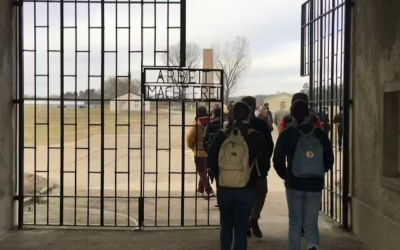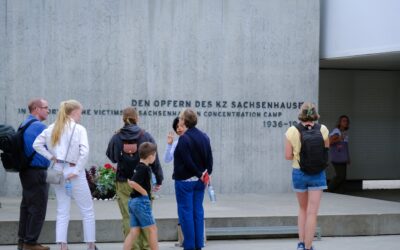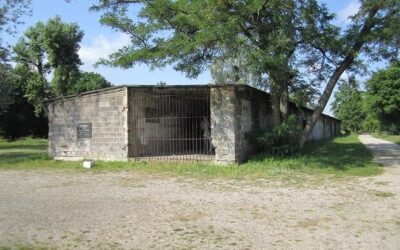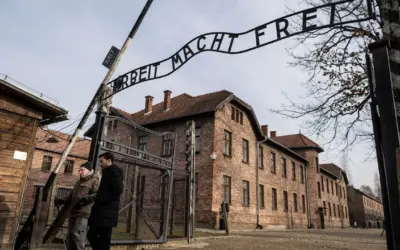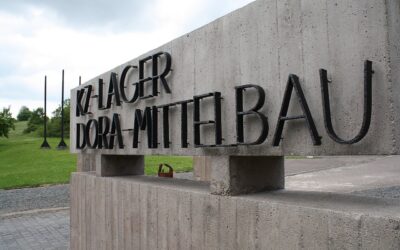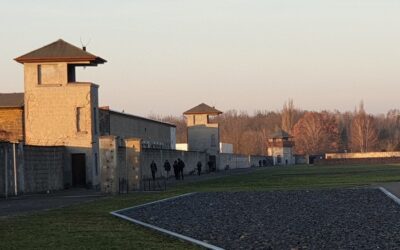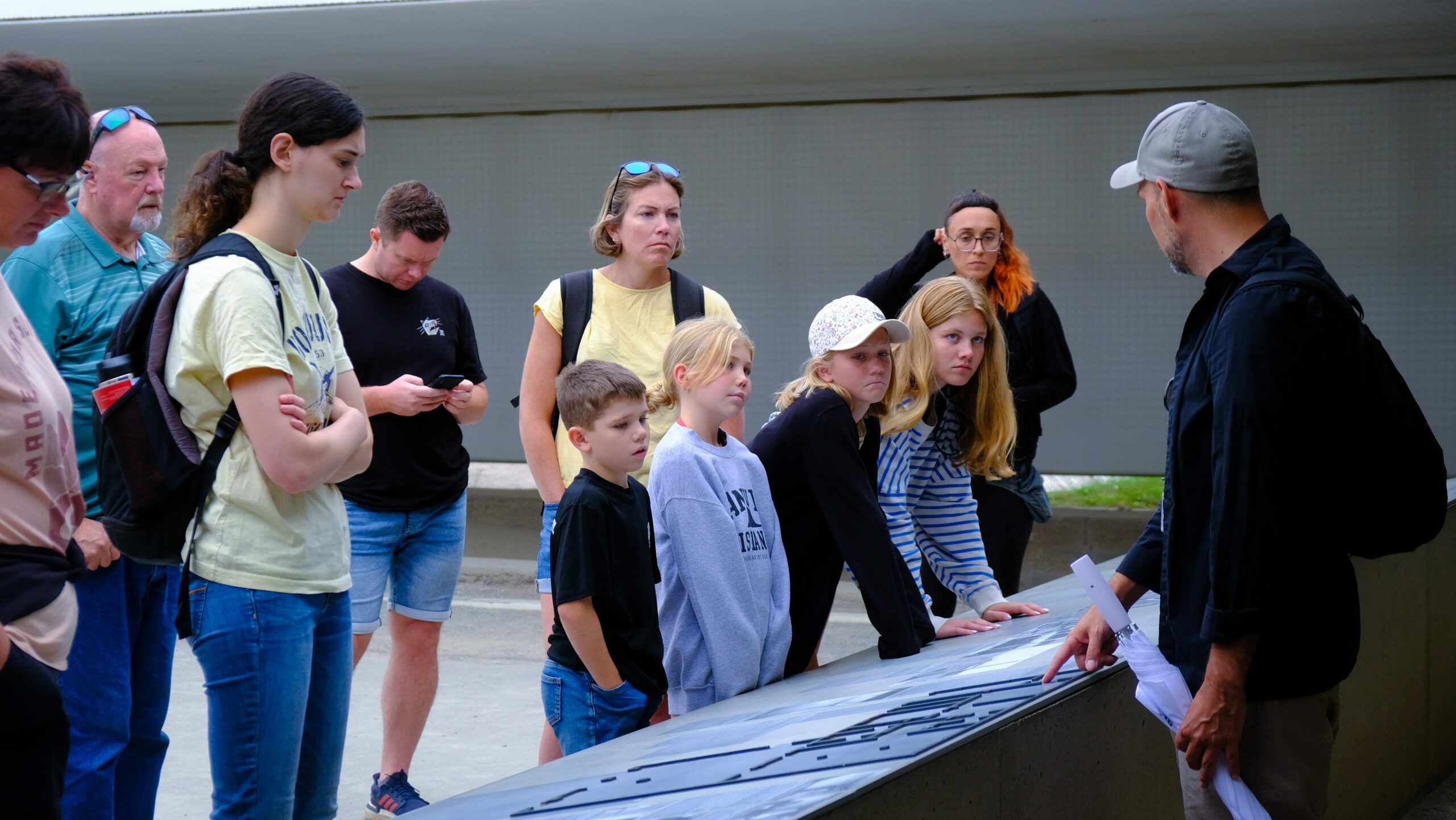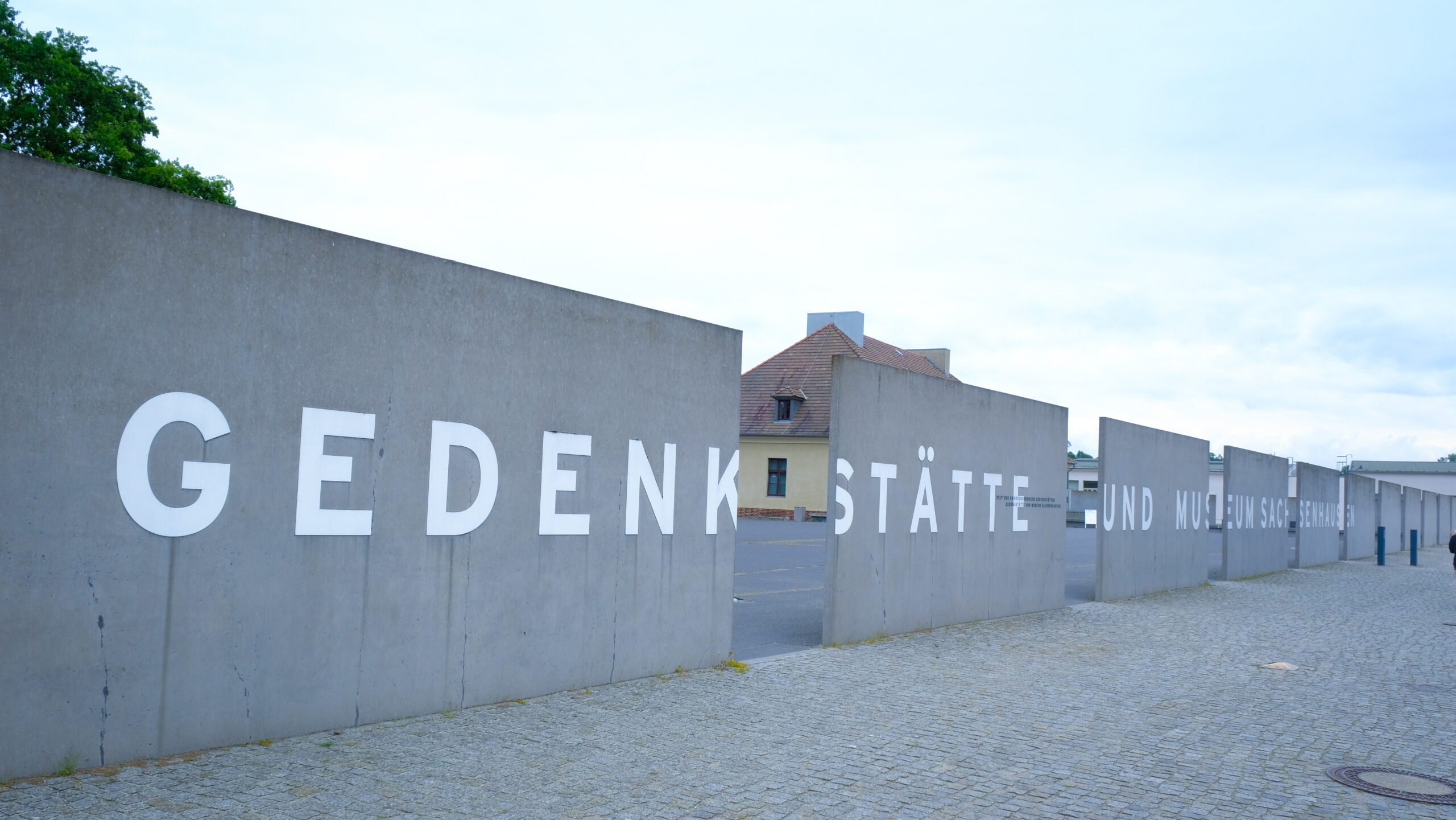
If you are standing at the gate of Sachsenhausen, you are probably wondering how a quiet carpenter from a small Württemberg town became one of the camp’s most closely guarded prisoners. The answer is a story about patience, perfectionism, and thirteen minutes that changed nothing and everything.
Most visitors arrive knowing the name Stauffenberg. Few arrive knowing Elser. That gap is exactly why his story is worth the trip.
The man behind the pillar
Georg Elser was born in 1903 into a low-income family. He performed well in school, trained as a carpenter, and graduated at the top of his class. He was not a general, an aristocrat, or a member of any conspiracy circle. By 1938 he had come to the conclusion that the regime was crushing the ordinary workers and was leading Germany towards war, and that the only way to stop it was to remove Hitler.
That is what separates him from almost every other plotter. Many of the later attempts came from military officers who saw defeat approaching and understood that their leader had become a liability. Elser acted early, alone, and out of plain moral clarity, with no organization behind him. For many Germans today, that is precisely why he ranks above the officers who came later.
A year of preparation
In November 1938, Elser visited the Bürgerbräukeller after the annual speech Hitler gave in Munich to commemorate the anniversary of the Beer Hall Putsch; he observed the setup, noted the weak security, and noticed the pillar behind the lectern.
What followed was extraordinary craftsmanship:
- In March and April 1939, he took explosives and detonators from a quarry where he worked and hid them in a suitcase with a false bottom.
- He tested prototypes in his parents’ orchard and refined a timer until it was reliable.
- In August 1939, he moved to Munich and began eating at the Bürgerbräukeller every night.
- After closing, he hid on the hall’s gallery until the building was locked, then worked alone until morning.
- Over 30 to 35 nights between August and November 1939, he hollowed out a cavity in the pillar, timing each hammer blow to cover it with the noise of passing trams or flushing toilets.
- Each morning he hid the damage and carried the debris out in a suitcase.
On November 6 he set the twin timers for 9:20 p.m. on November 8. He left Munich, then came back on November 7 to check the mechanism one more time. It was ticking perfectly. That perfectionism is the detail people remember most.
The 35 minutes that decided everything
The timeline of November 8, 1939 is almost cruel in its precision:
- 8:45 p.m.: Elser is arrested in Konstanz near the Swiss border, and it is discovered that he has wire cutters, bomb-related notes, and a postcard of the Bürgerbräukeller.
- 9:07 p.m.: Hitler leaves the hall early. Fog was disrupting his flight plans, so he had to catch a train instead.
- 9:20 p.m.: The bomb detonates, wrecking the rostrum area and bringing down part of the ceiling and balconies. Eight people are killed, and between 60 and 63 are injured.
Hitler had been gone thirteen minutes. Had the bomb gone off earlier, or had he stayed through the speech, the entire senior circle crowded near the podium would have been in the blast zone. That list included Goebbels, Himmler, Hess, Bormann, Ribbentrop, Frick, Todt, and Rosenberg. Göring was not in Munich.
Elser was not the only person Hitler escaped through luck. Plotters in 1940 planned to shoot him at a parade in Paris, but he arrived and left four days early, and the parade was canceled. They canceled a repeat visit the day before. In 1943, Rudolf von Gersdorff hid two captured British mines in his coat pockets to blow himself up beside Hitler during an exhibition tour in Berlin, but Hitler rushed through in under ten minutes and left. Gersdorff defused the devices in a public bathroom at the last second. Elser’s attempt was the closest.
Why Sachsenhausen, and why not a quick execution?
This is the question visitors ask most. A man who had tried to kill Hitler and had killed eight people was not shot within days. Instead, he was interrogated by the Gestapo and held for more than five years as a special prisoner, kept apart from the general camp population. Sachsenhausen was one of the places where he was held, and he was eventually moved to Dachau.
The most reasonable reasons are practical ones. The government wanted to link the plot to British intelligence and a broader conspiracy, and the fact that he had been held for a long time kept that possibility alive. There was also the possibility that by killing him quickly he might have turned him into a martyr. Some historians have noted that the Nazis may have anticipated a large trial following the war and had hoped to show that he was an agent acting on behalf of foreign powers. Whatever the reason, Elser remained a prisoner from his arrest near the Swiss border in 1939 until the final days of the war, when he was executed at Dachau. For visitors exploring Berlin’s Second World War history, a private historical tour can provide more context about the Nazi regime and its wartime activities.
He was executed at Dachau on April 9, 1945, when the regime was falling. His death was stated to be accidental, which was normal. It was a regular practice among the Nazis to disguise murders as natural or accidental deaths, even in the case of public hangings, where the official cause of death was at times given as sudden cardiac death.
The debate you will hear in Berlin and Munich
Spend any time around people who care about this history, and you will hit the same argument: what might have happened if Hitler had been killed in 1939? Any answer is speculative, since there is no way to know how events would have unfolded.
One speculative version goes like this. Hitler made terrible military decisions and overruled his own generals, so perhaps a competent successor would have run the war better. Another hypothetical scenario suggests that a 1939 death would have changed little at first. Göring, the designated successor, was popular, still holding enormous power, and riding the success of the Polish campaign. Under that reading, the Norwegian, Low Countries, and French campaigns might have gone roughly as they did, and Britain and France might still have refused a peace that left Germany dominant on the continent. These possibilities remain hypothetical rather than established historical conclusions.
A third hypothetical scenario is more hopeful. The blast might have wiped out much of the party leadership, leaving a hole at the top, and a shaken Germany might have faced a crisis of legitimacy once the Nazi promise of conquest and economic self sufficiency stalled. Nobody can settle it, but it is a fair reminder of what Elser actually risked everything to prevent. There is also a darker footnote. Some argue the string of near misses reinforced Hitler’s belief that providence was protecting him, and fed the cult around him.
What happened to other prominent figures imprisoned by the Nazis? Discover Martin Niemöller at Sachsenhausen: The Pastor Behind “First They Came” to learn how a pastor who initially supported aspects of German nationalism became a vocal critic of Nazi rule and a symbol of resistance.
How to approach the visit
Consider Sachsenhausen primarily as a memorial and only secondarily as a place to learn about history. The site isn’t suitable for smiling photos, so do that early, spend a full half day there, and read up on it in advance. If you would like a more human account of Elser’s story before visiting, the German film Elser, known in English as 13 Minutes, stars Christian Friedel and is generally recommended.
If you’re exploring Berlin’s Second World War history on a free walking tour, you might also consider visiting Munich to learn more about Elser’s story. The Bürgerbräukeller no longer stands as Elser knew it, so don’t expect to see the pillar. The story lives in Munich’s memory and in the memorials that remember him. The best way to honor him is to know the details, because few people do.
FAQs
- Why wasn’t Georg Elser executed straight away?
He lived on for over five years, because the Nazi regime planned to put him on trial after the war and falsely portray his assassination attempt as a British-backed conspiracy. He was executed at Dachau on April 9, 1945.
- Why would the Nazis disguise his death as an accident?
Nazi authorities sometimes disguised executions by recording them as natural or accidental deaths. The desire to avoid creating a martyr and the possibility of being put on trial after the war might also have been factors.
- How close did the bomb come to killing Hitler?
Hitler left the hall at 9:07 p.m. because fog disrupted his flight plans. The bomb exploded at 9:20 p.m., thirteen minutes later, killing eight people.
- Did Elser act alone?
Yes, unlike many later plotters, he had no group or military network to support him; he planned and carried out the preparations himself over about a year, including about 30 nights spent working inside the pillar.
- Would Germany have been better off, or worse, if Elser had succeeded?
It is impossible to know for certain. One hypothetical scenario suggests Göring might have taken over, and the early campaigns might have gone much the same. Another possibility is that the blast could have killed several senior Nazi leaders, potentially destabilizing the regime. However, these are speculative scenarios, not established historical outcomes.