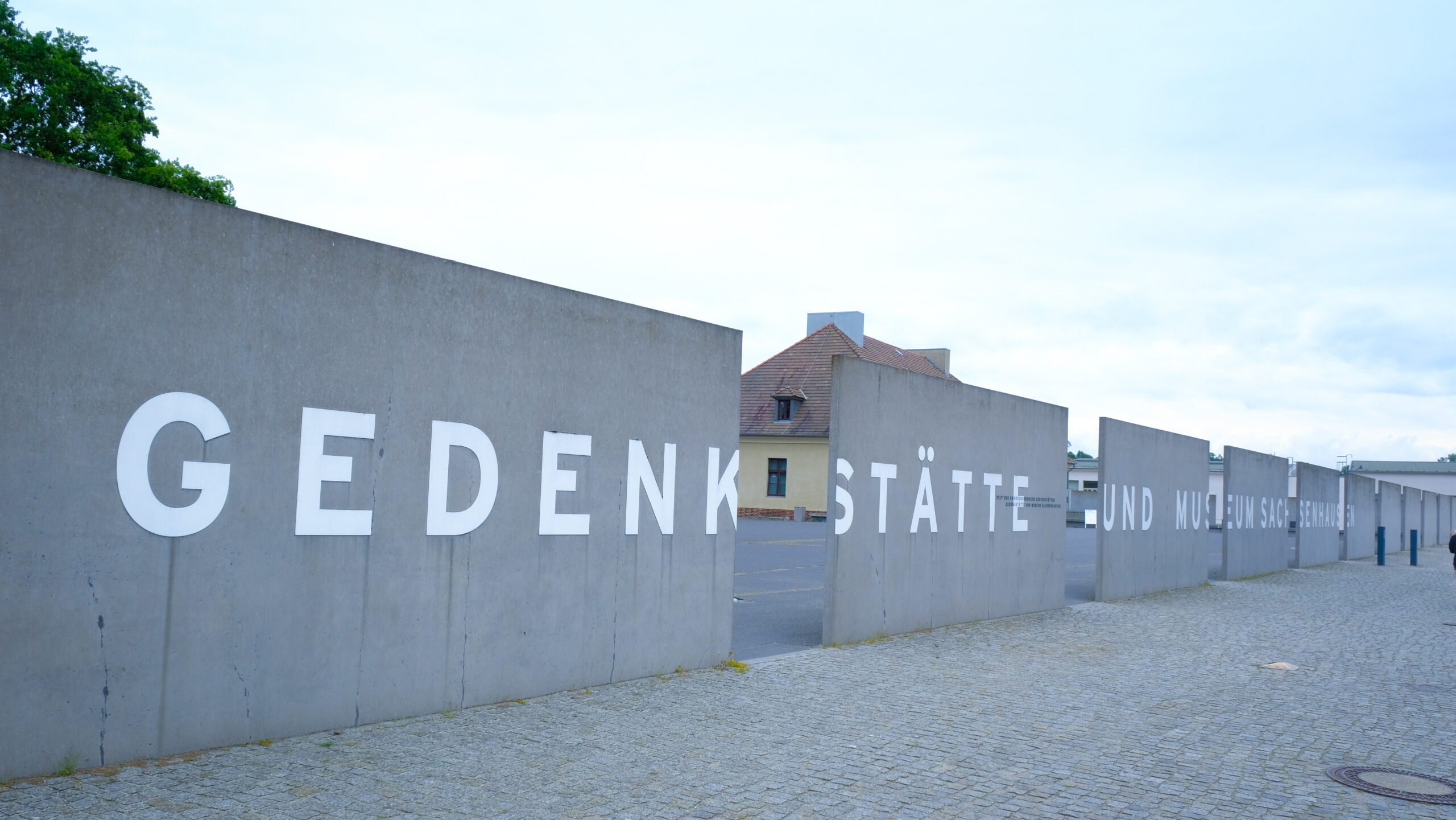
Imagínate recibir unos zapatos que no te quedan bien, cargar una mochila pesada y que te digan que camines en círculos hasta que se ponga el sol. No habría un destino ni un propósito claro. En cambio, avanzarías por una ruta donde el terreno cambiaba de textura cada pocos metros, y los guardias decidirían si podías detenerte.
That was daily life for the men assigned to the shoe testing track at Sachsenhausen, a concentration camp just al norte de Berlín. If you have ever wondered why anyone would design such a thing, the answer is both simpler and more disturbing than most people expect.
What the Track Actually Was
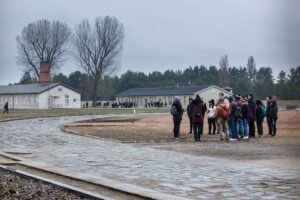
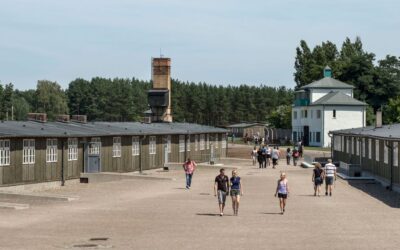
The shoe-testing track was a looping route within the camp and included a variety of surfaces, including gravel, cinder, sand, asphalt, and cobblestone. Because wartime shortages drove German shoe manufacturers to use substitute materials, they wanted to see how well the new soles and materials performed under severe use; records indicate the established companies used the camp as a free laboratory.
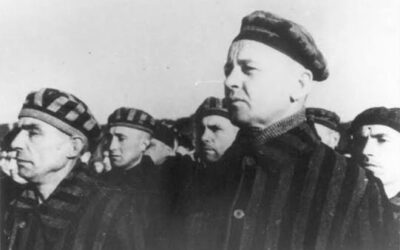
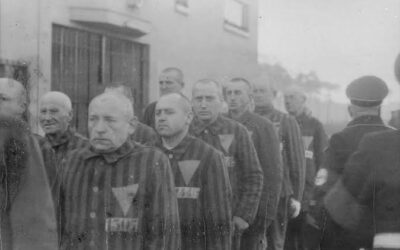
Because the camp needed test subjects, it kept thousands of people it regarded as disposable. The prisoners assigned to the shoe detail were made to walk for hours at a fast pace, sometimes covering thirty kilometers or more each day and often carrying heavy packs. According to survivor accounts, their feet were blistered and bleeding, men collapsed, and the guards saw any slowing down as a violation. Prisoners were frequently given this duty as punishment, meaning the work was meant to cause pain as much as it was meant to measure performance.
Therefore, the truthful answer to the question in the headline is that the march had two objectives at once. In theory, it was intended as a means of testing products; in reality, it was a way of killing people por exhausting them, providing the murder with an industrial justification.
Why “Pointless” Exercise Was Part of the System
The shoe print may seem oddly familiar since harsh and pointless physical work is carried out all over the camp. At Mauthausen, the guards made prisoners do tiring drills and even humiliating games such as leapfrog. Both survivors and historians have described how the guards made people run in circles until they were no longer able to go on, and those who fell were then chosen for the gas chamber or the firing squad. Those prisoners who still met the required standard would survive another day in the quarries or on other forms of forced labor.
That point sheds a great deal of light on the situation. Exercise in these camps served to sort the prisoners; it humiliated them, amused the guards, and quietly revealed who was weakening. The same principle applied to the Vía de Sachsenhausen with one additional twist: it presented the cruelty as research.
A story from another former prisoner illustrates how this pattern continues whenever power goes unchecked. At the Yugoslav island prison Goli Otok, known as the naked island, it is said that the prisoners were made to take rocks from one side of the island to the other and then carry them back again; in a different regime, in a different decade, the same harsh principle was followed. Forced labor with no objective is a method of breaking people’s minds.
Want to understand more about daily life at Sachsenhausen? Read our Blog on ¿Qué ocurrió en la plaza del pase de lista de Sachsenhausen? para conocer la importancia de esta zona central del campamento.
La parte de la que nadie te advierte: ¿Qué pasó después?
Muchos visitantes dan por sentado que la historia termina en 1945. En Sachsenhausen, no es así.
On April 22, 1945, Soviet forces reached the camp and found only about 3,400 prisoners still there. Just a day earlier, roughly 33,000 prisoners had been sent out on a death march, and thousands never survived it. In total, around 30,000 people died at Sachsenhausen under the Nazis.
El campo tuvo entonces una segunda fase de existencia. El NKVD soviético lo utilizó hasta 1950, y alrededor de 12.000 personas más murieron allí durante ese tiempo. Este es uno de los aspectos más malinterpretados del lugar. Un gran número de las personas puestas bajo control soviético eran oficiales nazis y otros prisioneros nazis, aunque algunos eran rusos anticomunistas, y la situación se complicó mucho poco después. Historiadores y lectores aún debaten cómo describirlo. Algunos destacan que los soldados soviéticos que habían sido prisioneros de guerra fueron encarcelados por haberse rendido. Otros enfatizan que también hubo personas detenidas por delitos graves. La conclusión más razonable es que el lugar presenta múltiples capas de sufrimiento que no pueden ser abarcadas con una sola etiqueta simple, y una visita adecuada debería permitir comprender esta complejidad.
Por qué los guardias nunca parecieron ser los dueños
Una pregunta que inquieta a casi todos los que estudian los campos de concentración es: ¿por qué tantos guardias negaron todo durante el juicio?
The short version is that it was often a Legal strategy, not naivety. The defendants and their lawyers were working inside German Legal categories that separated murder, driven by motive and bloodlust, from a broader category closer to manslaughter, and separated perpetrators from accomplices. Admitting to beating prisoners could imply bloodlust. Presenting yourself as an administrator or a cog in a machine could mean a lighter sentence.
Josef Kramer, comandante de Birkenau, intentó precisamente eso, describiéndose a sí mismo como poco más que un administrador de campo que no podía dar órdenes a otros departamentos. Irma Grese y Elisabeth Volkenrath negaron rotundamente haber visto o tenido conocimiento de palizas y selecciones. Estas tres fueron ejecutadas porque los primeros tribunales aliados no aceptaron la defensa. Pero cuando los tribunales de Alemania Occidental asumieron el control en décadas posteriores, la defensa de cómplice funcionó con mucha más frecuencia. Un juicio por una matanza en masa que involucró a miles de asesinos resultó en una sentencia de quince años para el principal acusado. En el primer juicio de Treblinka en 1964 y 1965, solo tres de los once acusados recibieron cadena perpetua por asesinato, y uno fue absuelto.
For anyone standing on the old track, this is relevant. The system that caused prisoners to walk until they collapsed also resulted in people who later stated that they had never seen anything.
Cómo visitarlo y qué esperar
If you plan to visit, here are a few honest, practical notes.
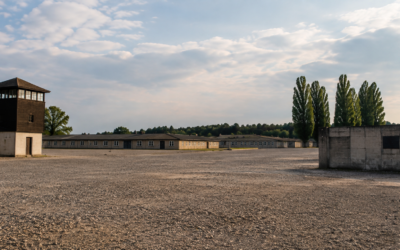
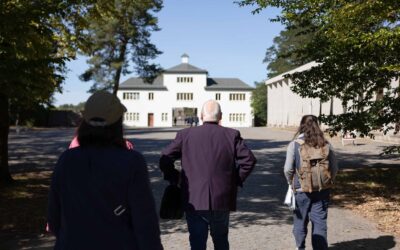
Dedícate un día completo. The property is extensive, and the emotional impact grows stronger. Going through it quickly diminishes the impression you form.
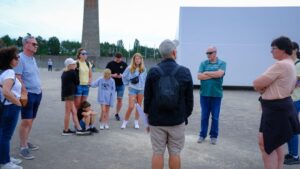
Si puedes, ve en persona. A visitor to Auschwitz explained that the preserved hair, shoes, and personal belongings, along with the walls covered in faces, ages, and occupations, made it impossible to keep the history abstract. Another person stated that pictures and videos have limitations too. The same applies at Sachsenhausen, since walking along the ground where the track used to be changes how you feel about the numbers.
Prepare yourself with context. Many people find it helpful to read the books in advance. In Primo Levi’s The Drowned and the Saved, the way morality broke down is examined for both prisoners and guards. Gitta Sereny’s Into That Darkness, based on her interviews with Franz Stangl, shows how perpetrators justify their actions. Although these books are not comfortable, they make you more aware of what you notice when you are actually there.
Treat the visit with respect. Silence and seriousness are usual. People have been shocked when someone has disturbed the memorial gatherings at these places, and that is entirely justified.
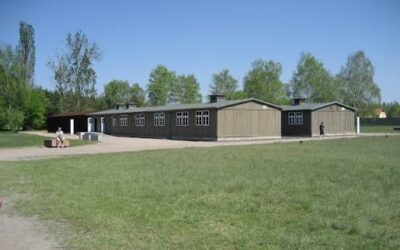
Want to see what remains of the camp today? Read our Blog on Sachsenhausen’s Barracks: What Is Original and What Has Been Reconstructed? para comprender qué partes son originales y cuáles han sido reconstruidas.
Por qué esta historia sigue siendo importante
Mass atrocity is rarely shown in an obvious form of evil; instead, it is often hidden in paperwork, schedules, and plausible justifications like product testing, administrative procedures, or simply obeying orders. The shoe-testing track is a frightening example of how ordinary commercial aims can connect to cruelty and how quickly human beings can become mere material.
Comprenderlo no es cuestión de curiosidad morbosa. Se trata de reconocer el patrón lo suficientemente pronto como para rechazarlo.
Preguntas frecuentes
- Why were prisoners forced to do pointless exercise in camps like Sachsenhausen and Mauthausen?
It had a number of purposes: it was used for humiliating prisoners, for entertaining the guards, for wearing people down, and for identifying those who were weak enough to be chosen for murder. At Sachsenhausen, the shoe print provided a commercial reason for the cruelty.
- What happened to prisoners who could not keep up during forced exercise?
En Mauthausen, quienes se desplomaban podían ser enviados a las cámaras de gas o al pelotón de fusilamiento, mientras que quienes se mantenían lo suficientemente fuertes podían sobrevivir un día más en las canteras o realizando otros trabajos forzados.
- What happened at Sachsenhausen after liberation?
On April 22, 1945, the Soviet forces discovered approximately 3,400 prisoners, and the NKVD continued to operate the camp until 1950, when about 12,000 additional people died while under Soviet control.
- Why did SS guards deny responsibility at their trials?
A menudo se trataba de una táctica legal; según la ley alemana, se distinguía entre asesinato y delitos menos graves, así como entre autores y cómplices, lo que significaba que presentarse como un simple administrador o como un eslabón más en la cadena podía resultar en una sentencia más leve. Si bien los primeros tribunales aliados rechazaron este argumento, los tribunales posteriores de Alemania Occidental generalmente lo aceptaron.
- ¿Merece la pena visitar un antiguo campo de concentración en persona en lugar de aprender en línea?
Many visitors say yes. People who have walked these grounds describe a level of understanding that photographs and videos cannot deliver, especially when preserved belongings and personal records are part of the experience.