You have probably seen the poem on a protest sign, in a museum, or in a heated comment section. Few people can say who wrote it, what he actually did, or why historians argue about him. The man behind those lines was not a saint who saw the danger early. His story is more uncomfortable than that, and more useful.
Who was Martin Niemöller before the camps?
Niemöller began his adult life as a German naval officer who had been awarded decorations and commanded a submarine during World War I; he later became a Lutheran pastor and held highly conservative political and religious beliefs. This background matters because it helps explain how the poem is interpreted.
In the early 1930s, he was not a lone voice warning about Hitler. By his own later account, he met Hitler in 1932 as a representative of the Protestant Church. He says Hitler promised on his word of honor to protect the Church and not to pass laws against it. He also says Hitler told him there would be restrictions on Jews but no ghettos and no pogroms.
Niemöller later admitted he believed it, partly because he feared the growing atheist movement he associated with the Social Democrats and Communists. In a 1941 interview with a Jewish publication, he said he hoped Hitler would be an ally against that movement. His words were stark: he regretted the mistake and was paying for it.
This is the part most quote cards leave out. The author of the poem was not a bystander who stayed neutral. He was a supporter who got it wrong.
The arrest that changed his story
Niemöller organized the Pastors’ Emergency League to protect Lutheran pastors from police pressure. The group fed into the Confessing Church, which became an enduring symbol of German church resistance. He was also among the leading figures behind the Barmen Synod, which produced the theological foundation for that movement.
The Gestapo arrested him on 1 July 1937. One widely shared post about him carries a typo in its headline, giving 1935, and the poster later corrected it in the body: the arrest was in 1937.
On 2 March 1938, a Special Court tried him for activities against the state. He received a fine of 2,000 Reichsmarks and a seven-month sentence. Because he had already been held longer than that before trial, the court released him.
For a while he was able to go free, but then the Gestapo arrested him once more. The reason most often given is that the sentence was seen as too mild and that the Nazi leadership wished for a more severe response. He was put into what the regime referred to as protective custody and would not be set free for about seven more years.
Sachsenhausen and Dachau: what the record says
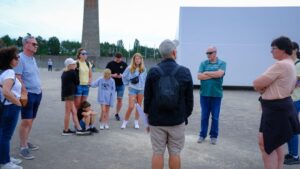
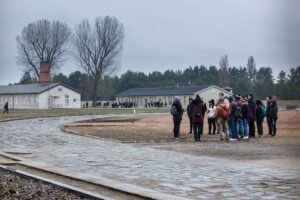
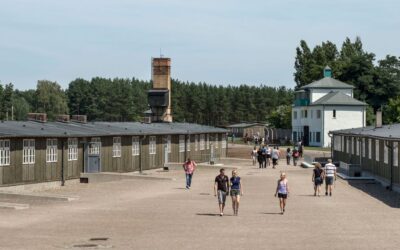
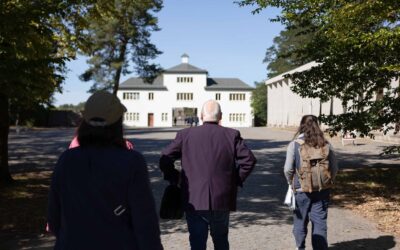
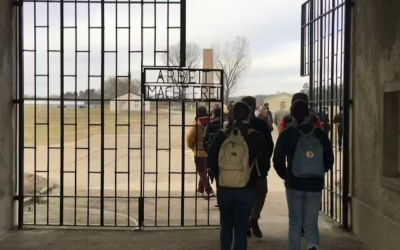
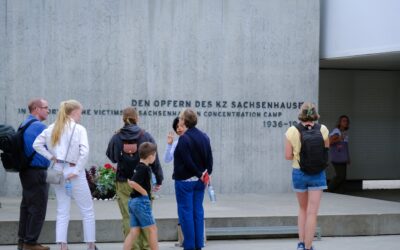
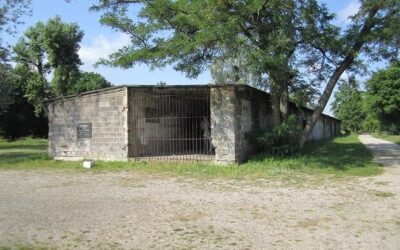
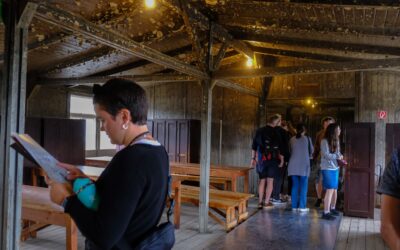
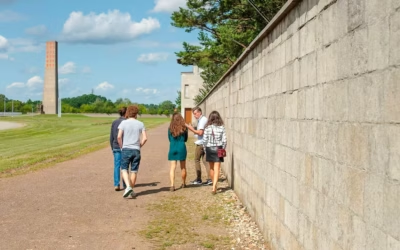
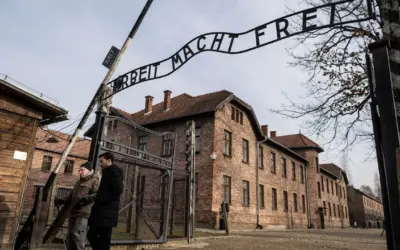
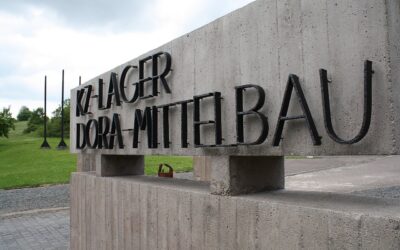
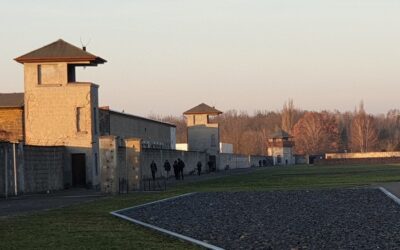
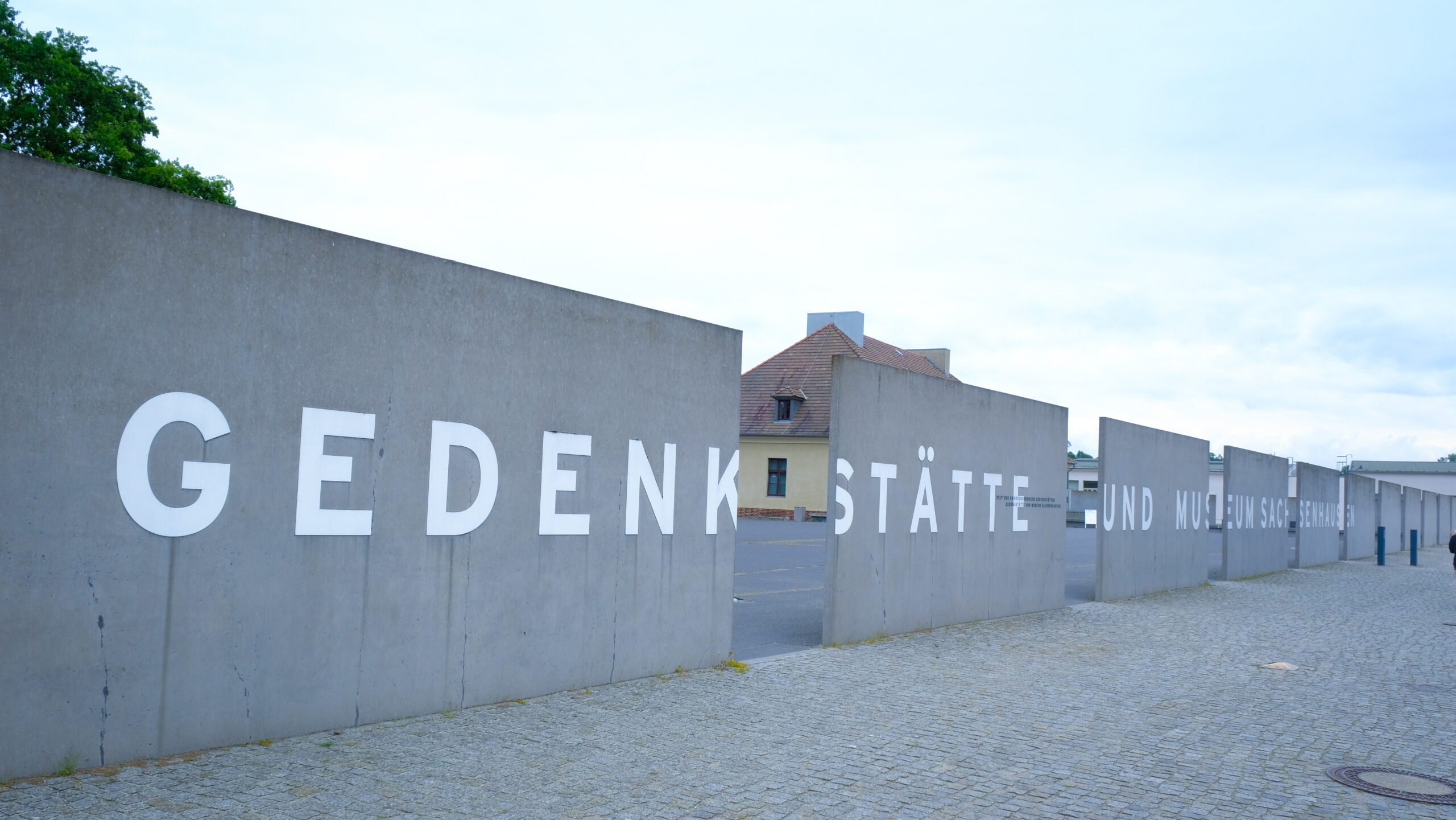
From 1938 until 1945, Niemöller was imprisoned in two concentration camps, namely Sachsenhausen at first and then Dachau. If you search for ‘Niemöller Sachsenhausen’, you will find this key fact. He was a prisoner there as a political prisoner of the regime, being a pastor and a former naval officer who had previously welcomed the movement that was now imprisoning him.
One detail from his imprisonment says a great deal about his character. In September 1939, after the war began, he volunteered to serve as a submarine commander. The offer was rejected. A man in a concentration camp was offering to fight for the country that held him there. That same conservative nationalism that shaped his early support remained intact even after his arrest.
Leo Stein, a former cellmate released from Sachsenhausen to go to America, later wrote about Niemöller. That article is the source of the quote about Hitler’s promises. It is one of the few firsthand accounts of how he explained his own earlier support.
The final weeks of the war
In late April 1945, Niemöller and about 140 high ranking prisoners were moved toward the Alpine Fortress region in the south. Historians believe the group may have been intended as hostages for surrender negotiations. The SS guards reportedly had orders to kill everyone if liberation by the Western Allies became imminent.
That did not happen. In the South Tyrol region, regular German troops took the prisoners into protective custody. Units of the U.S. Seventh Army eventually liberated the entire group. Niemöller survived by a narrow margin.
The poem, and why nobody agrees on its wording
One fact that surprises many readers is that the poem has no single official version. For years, Niemöller recited different versions, and the sequence of the names and the groups mentioned changed depending on the audience. Certain versions start off with Communists, while others begin with Socialists. Some of them include the Social Democrats, the sick, or Jews. A French version circulating at the time of an election names the Communists, the Social Democrats, and the trade unionists, then ends with “no one left to protest”.
In the United States, memorial versions typically start with socialists, and a reason that is often given is that American audiences were uncomfortable with naming Communists first. Whether that is the true explanation, the difference exists, which is why two people can quote “the poem” and get different lines.
A speech Niemöller gave in 1946 shows the thinking behind the poem more plainly than the verse does. He said the first people put in the camps were Communists, and that people like him did not care because they saw them as enemies of Christians. He then described the regime removing the incurably sick, and a person who called himself a Christian saying that might be right. He asked what would have happened if 14,000 Protestant pastors and their congregations had defended the truth to the death in 1933 or 1934. He did not exempt himself. He said mea culpa.
Was he antisemitic? The honest answer
This is the question people raise most when his name comes up, and a fair answer has two sides.
Yes, Niemöller held antisemitic views, and that includes the period when he supported the Nazis. His own recollection of agreeing with the idea that Jews should avoid government positions shows how ordinary those attitudes were around him.
The later record is also important since, in 1947, he was said to have been refused recognition as a Nazi victim, and at that time critics launched an attack on his previous support and on his attitude towards Jews. Although he never denied his own guilt, he had played a part in drawing up the Stuttgart Declaration of Guilt, in which it was admitted that the German Protestant churches had not done enough to resist. In a letter that he wrote to Alfred Wiener, a Jewish researcher of Nazi crimes, in 1959, he stated that the imprisonment had been the turning point in his life.
One reader summed him up well as a two-act figure. He started badly, and he spent the rest of his life dealing with it openly.
What he did after 1945
His postwar path surprised people. He served as president of the Protestant Church in Hesse and Nassau from 1947 to 1961. After meeting the chemist Otto Hahn in July 1954, he became a committed pacifist and campaigner for nuclear disarmament. He was brought to court in 1959 over unflattering remarks about the military. His visit to Ho Chi Minh during the Vietnam War caused an uproar, and he took part in protests against that war and against the NATO Double Track Decision. In 1961 he became president of the World Council of Churches, and in December 1966 he received the Lenin Peace Prize.
He died in Wiesbaden on 6 March 1984, aged 92. When visitors came to the former camp site at Dachau, he greeted them, talked about his time there, and handed out copies of his poem. He insisted his suffering mattered less than the lesson: to speak out for others.
What was life like for the son of one of history’s most powerful leaders inside a Nazi concentration camp? Read Yakov Dzhugashvili at Sachsenhausen: What Happened to Stalin’s Son? to discover the story of Stalin’s eldest son and the circumstances of his imprisonment.
Why the poem keeps getting fought over
Almost every person who quotes this poem believes it is about their own side. One commenter noticed that anyone, in any position, tends to read it as a warning about their own persecution. Another pointed out that people on opposite ends of the political spectrum quote it against each other, and that this overuse can flatten its meaning. A third argued that it should stay tied to its original warning about genocide.
The most straightforward interpretation may be the most uncomfortable, since the poem functions as a confession rather than an accusation directed at others. Niemöller is recounting his own silence, so reading it as a weapon against opponents misses that.
FAQs
- Did Martin Niemöller really support the Nazis at first?
Yes. He had initially given his support to the movement, somewhat due to his fear of the influence of atheists and Communists, and he stated that Hitler had promised him protection for the Church. Later, however, he called this a mistake he deeply regretted.
- Which camps was Niemöller held in, and for how long?
He was held in Sachsenhausen and Dachau under protective custody from 1938 to 1945, after the Gestapo arrested him again immediately following his March 1938 sentence.
- Does the poem begin with Communists or Socialists?
It varies according to the version. Niemöller expressed it in different forms throughout the years, and memorials tend to have different opening statements. None of the texts is regarded as definitive.
- Was Niemöller antisemitic?
He had antisemitic views, including when he first supported the regime. After the war, he admitted he was at fault, took part in drafting the Stuttgart Declaration of Guilt, and stated in 1959 that imprisonment had altered his point of view.
- Why do people argue about using the poem today?
Because people across the political spectrum have quoted it, each applying it to their own cause. Critics say this makes it feel empty, while others argue it still matters most when read as a warning about silence in the face of persecution.