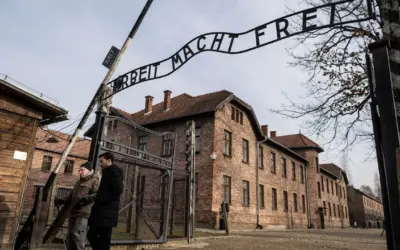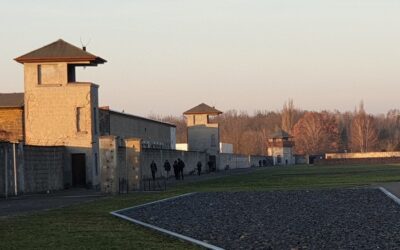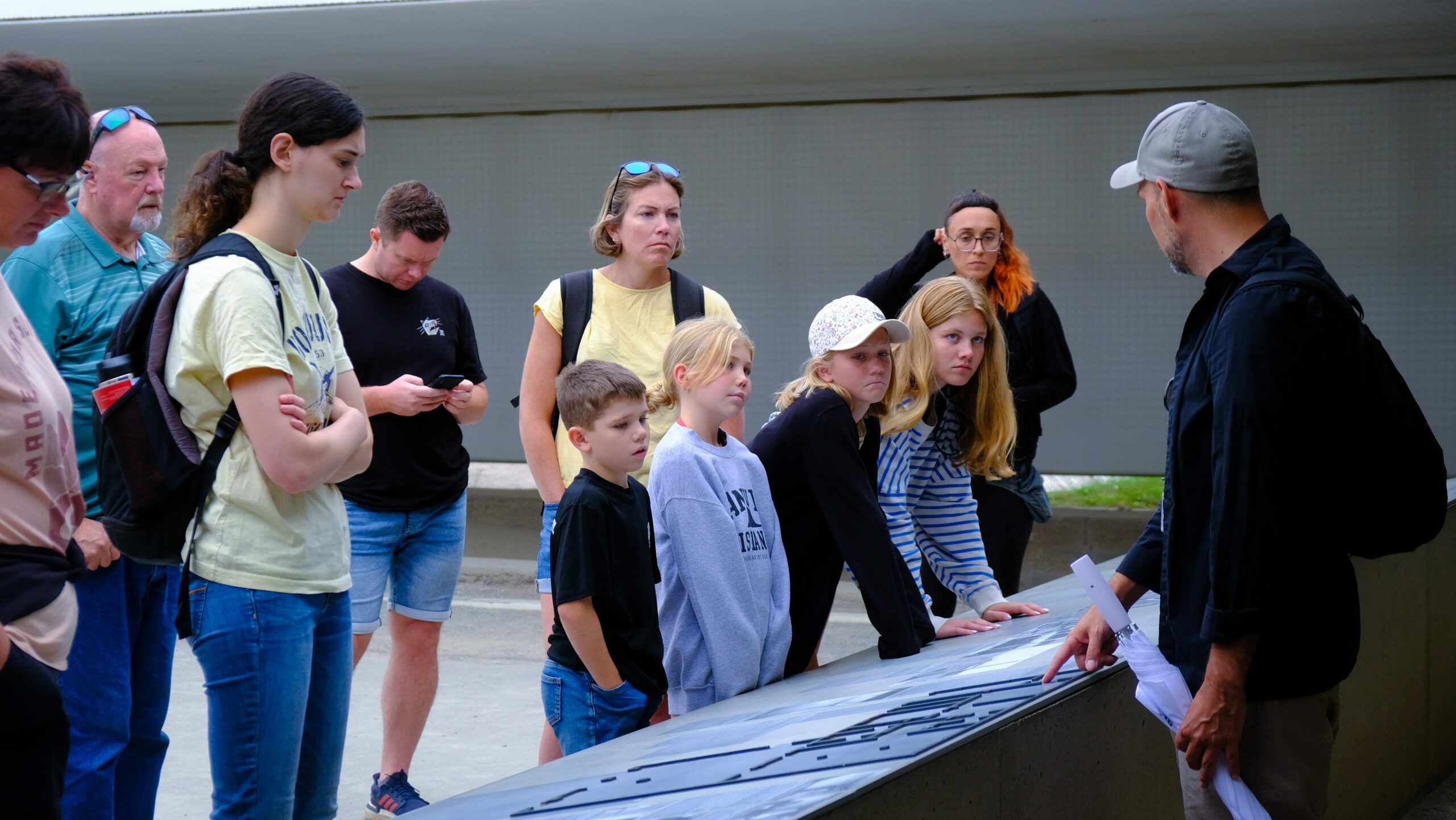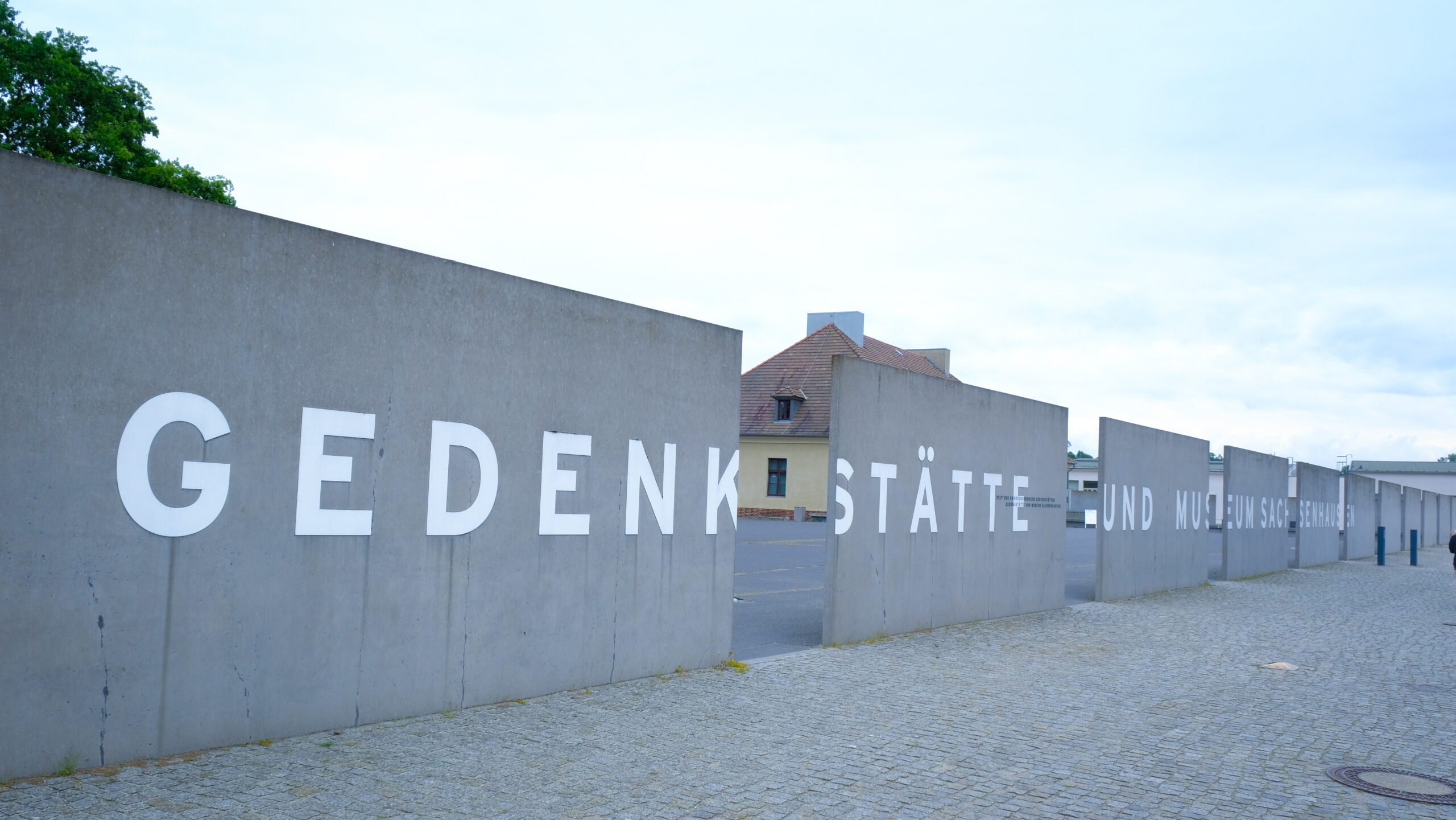
When news broke that a 100-year-old former guard would stand trial at a district court in Neuruppin, the reaction was not celebration. It was anger. Why now? Why after seven decades of quiet retirement? Why not when survivors could look him in the eye?
The frustration is justified, and the response is more surprising than most people anticipate. The attempt to achieve justice for the guards of Sachsenhausen did not fail since no one ever tried; instead, justice arrived in irregular waves, influenced by the period of Soviet occupation, Cold War politics, and a legal definition of murder which left the majority of the guards untouched for sixty years. That is how it really happened.
The Short Answer
Sachsenhausen guards were held accountable in three phases. First came Soviet military tribunals in the late 1940s that convicted the top staff. Then came a long gap in which both German states mostly failed to prosecute lower ranking guards. Finally, a 2011 legal shift made it possible to convict a guard simply for serving at a camp built for mass murder, which is why centenarians are in court today.
Phase One: The Soviets Moved First
In May 1945, the Soviet Union’s Extraordinary State Commission initiated an investigation, during which the investigators found hidden SS administrative files and physical evidence from the camp, such as containers of lethal gas. That paper trail was important at the time and remains so. It was decades before SS rosters became the evidence that caused a defendant who had claimed that he had never been there to be found guilty.
In October 1947, a Soviet Military Tribunal in Berlin put 16 senior camp functionaries on trial. The group included the last commandant, Anton Kaindl, twelve other SS officers, a civil servant, and two prisoner functionaries whose roles had been compromised. All 16 were convicted that November. The Soviet Union had temporarily abolished the death penalty in May 1947, so 14 defendants received life in prison with hard labor and two received 15-year terms. Many, Kaindl included, died in Soviet labor camps.
That sounds like a satisfying ending. It wasn’t, because 16 people ran a camp that depended on far more.
Phase Two: The Long Gap That Still Makes People Furious
If you have ever wondered why a guard could live peacefully into his hundreds, this section explains it.
For many years prosecutors in both countries faced the same legal obstacle. According to traditional German criminal law, it was necessary to prove that a suspect had personally taken part in a particular and identifiable murder; a guard who had been on a watchtower, had marched prisoners to work or had secured the perimeter need not have pulled the trigger on a specific date. It was almost impossible to prove that “guard X shot prisoner Y at a specific time”, which is why thousands of former SS members just went back to leading normal lives.
East Germany and West Germany handled this very differently.
Trying to uncover what happened to a relative who was imprisoned at Sachsenhausen? Read How Can You Research a Family Member Who Was Imprisoned at Sachsenhausen? to discover which archives, historical records, and research resources can help you trace a family member’s story.
East Germany: Fast, Political, and Not Fair
The East German government regarded the Nazi trials as evidence that socialism had eliminated fascism. In 1950, the Waldheim trials resulted in the arrest of thousands of people who had previously been imprisoned by the Soviets. Special tribunals tried over 3,400 individuals in a short period, with little regard for normal legal procedures. This led to a large number of convictions, long sentences, and 24 executions. Among those dealt with in this manner were some former staff of Sachsenhausen, including administrators and lower-level guards.
Behind the scenes, the Stasi kept careful files on citizens with Nazi pasts. Some of that information was used for propaganda trials, and some was used for blackmail, turning former camp personnel into informants instead of defendants.
West Germany: Peacetime Law Applied to Mass Murder
West German courts dealt with camp guards under regular criminal law. In order to secure a conviction, the prosecutors were required to prove that the defendant had intended to act, had taken personal initiative, and had carried out a specific killing. The defendants usually claimed that they had acted as a result of following orders and that they would have been shot had they refused to do so. Later on, historians demonstrated that SS members who requested transfers were seldom executed, yet the courts in the 1950s and 1960s frequently accepted this argument, thereby reducing the length of the sentences or dismissing the charges.
The most cruel technicality was that in 1960 the statute of limitations for manslaughter had run out. If it was not possible to charge a former guard with premeditated murder, he could no longer be prosecuted at all. Therefore, thousands of men who had kept watch from the watchtowers or had marched the prisoners were fully protected by the law.
There was one organization which attempted to resist the move. In 1958, the state of West Germany established the Central Office for the Investigation of National Socialist Crimes in Ludwigsburg. Although it was not empowered to bring cases, it reconstructed prisoner lists, interviewed survivors worldwide, and prepared case files. It initiated tens of thousands of investigations. Although most did not result in convictions during the Cold War, those files have nonetheless become the basis for the trials currently taking place.
The Ones Who Got Away
Not everyone at the top faced a courtroom, and the stories are worth knowing.
Dr. Heinz Baumkötter, chief medical officer from 1942 to 1945, selected sick and weak prisoners for execution and ran brutal medical experiments. The Soviets sentenced him to life in 1947, but he was released in 1956 under an agreement to repatriate German prisoners. Back in West Germany, he disappeared into the private sector, working as a physician for the pharmaceutical company Grünenthal, which was notorious for employing former SS medical personnel. He lived openly for years before being rearrested for a later trial in the early 1960s.
Hans Loritz, commandant from 1940 to 1942, oversaw the mass shooting of more than 10,000 Soviet prisoners of war. After the war, he tried to hide his identity, was captured, and ended up in a British internment camp in Neumünster. When he realized extradition to the Soviet Union was coming, and with it almost certain execution, he killed himself in January 1946.
Karl Otto Koch, the first commandant who helped draw up the camp’s system of total control and later administered Buchenwald, never attended any postwar trials. He was arrested by the SS on charges of corruption and was then executed by firing squad in April 1945, a few weeks before the camp was liberated.
Meanwhile, many mid ranking officers vanished during the chaos of the April 1945 death marches. They discarded uniforms, burned papers, and blended into the millions of civilians moving west. Because of the legal barriers above, dozens lived through the 1950s and 1960s under their own names.
Phase Three: The 2011 Turning Point
The law changed because of a single case. In 2011, a German court found John Demjanjuk, a former guard at an SS camp, guilty. This set a new precedent according to which acting as a guard in a camp designed for the systematic murder of large numbers of people constitutes complicity and can therefore be punished, even if no specific atrocity can be linked to the defendant. Since murder does not have a statute of limitations in Germany, prosecutors were finally able to pursue the surviving guards.
That is the reason a 100 year old can be charged with accessory to murder in some 3,500 cases. It is also why the delay feels so unforgivable. The legal door opened in 2011, when almost every guard was already in his late 80s or older.
Two cases show how this works in practice:
- Josef Schütz. In June 2022, a court in Neuruppin sentenced the 101 year old, the oldest Nazi war criminal tried to that point, to five years in prison for accessory to 3,518 murders. He had maintained life-threatening conditions from a camp watchtower between 1942 and 1945. He died in 2023 while his appeal was still pending.
- Gregor Formanek. In late 2024, a higher regional court cleared the way for the trial of Formanek, then 100, who is accused of aiding and abetting 3,322 murders as a Sachsenhausen guard.
How the Defense Fights Back
Because “I was only following orders” no longer works, defense teams rely on three strategies.
The first is denial of presence. Schütz claimed he had spent the war as a farm laborer near Pasewalk, said he was getting mixed up because of his age, and insisted he knew nothing about the camp’s atrocities. Prosecutors responded with SS records showing a Waffen-SS noncommissioned officer with his exact name, birthdate, and birthplace stationed at Sachsenhausen.
The second was to attack the legal theory. Schütz’s lawyer argued that being a guard is not enough and that prosecutors must link a person to a specific execution or violent act. Judges rejected this repeatedly, ruling that securing the perimeter and manning watchtowers supported the camp’s killing system.
The third is health. With defendants aged 95 to 101, fitness for trial is the central battleground. Formanek’s defense initially persuaded a lower court that his condition made a trial impossible, until a higher court ruled the medical evaluations were insufficient. Even when defendants are deemed fit, hearings are typically limited to about two to two and a half hours a day.
The honest bottom line: these defenses rarely produce acquittals when official rosters exist, but they do buy time, and time is the one thing these cases do not have.
Why the Public Mood Changed
In the 1960s a great many Germans wished for a Schlußstrich, that is to say a final line to be drawn under the past. Since they were occupied with the economic miracle, people regarded the trials as an unpleasant reopening of old wounds. The prosecutor Fritz Bauer, who was in charge of the Frankfurt Auschwitz trials, received death threats and stated that leaving his office seemed as if one were entering foreign territory. It was not until the student protests of 1968 that a younger generation started asking questions about what their parents had done during the war.
Today the mood is urgency. Mainstream media covers these trials heavily, institutions back them, and most people see them as a moral duty to the victims. There is also an uncomfortable shared shame. Many Germans openly admit the system let these men live long, quiet lives and only acted when they were too frail to serve time. Fringe voices still complain about putting grandfathers on trial, but the prevailing view is that the law must judge the young SS guard, not the fragile older adult he became.
FAQs
- Why wasn’t this guard prosecuted seventy years ago?
Because until 2011, German courts required proof of a specific murder committed by the individual. Simply serving as a guard was not enough, and the manslaughter statute of limitations expired in West Germany in 1960. The law changed only after the Demjanjuk conviction.
- Can a 100 year old really stand trial?
Yes, with limits. In the Sachsenhausen case, a court spokesman said the defendant should be able to take part for up to two and a half hours per day. Courts must be satisfied medically that the defendant understands the charges, and judges have overturned rulings that found defendants unfit on weak evidence.
- What was the first Sachsenhausen trial after the war?
The Soviet Military Tribunal in Berlin, held in October 1947. It tried 16 senior functionaries, including commandant Anton Kaindl, and convicted them all in November 1947.
- What defenses do former guards use today?
Mainly three: denying they were ever at the camp, arguing that guard duty alone is not complicity, and claiming they are too ill to stand trial. Official SS records usually defeat the first, and judges have rejected the second.
- Do these late trials still matter if the defendant may die before serving time?
Many Germans see them as symbolic but necessary. Schütz was convicted and sentenced before he died, which established the record. The prevailing public view is that there is no expiration date on accountability for systemic atrocities, and that a verdict, even a late one, honors the victims.