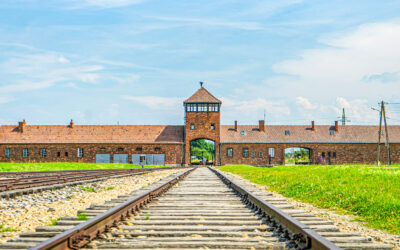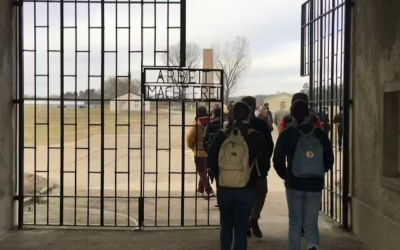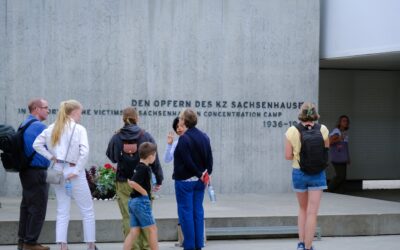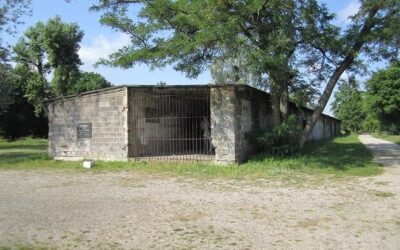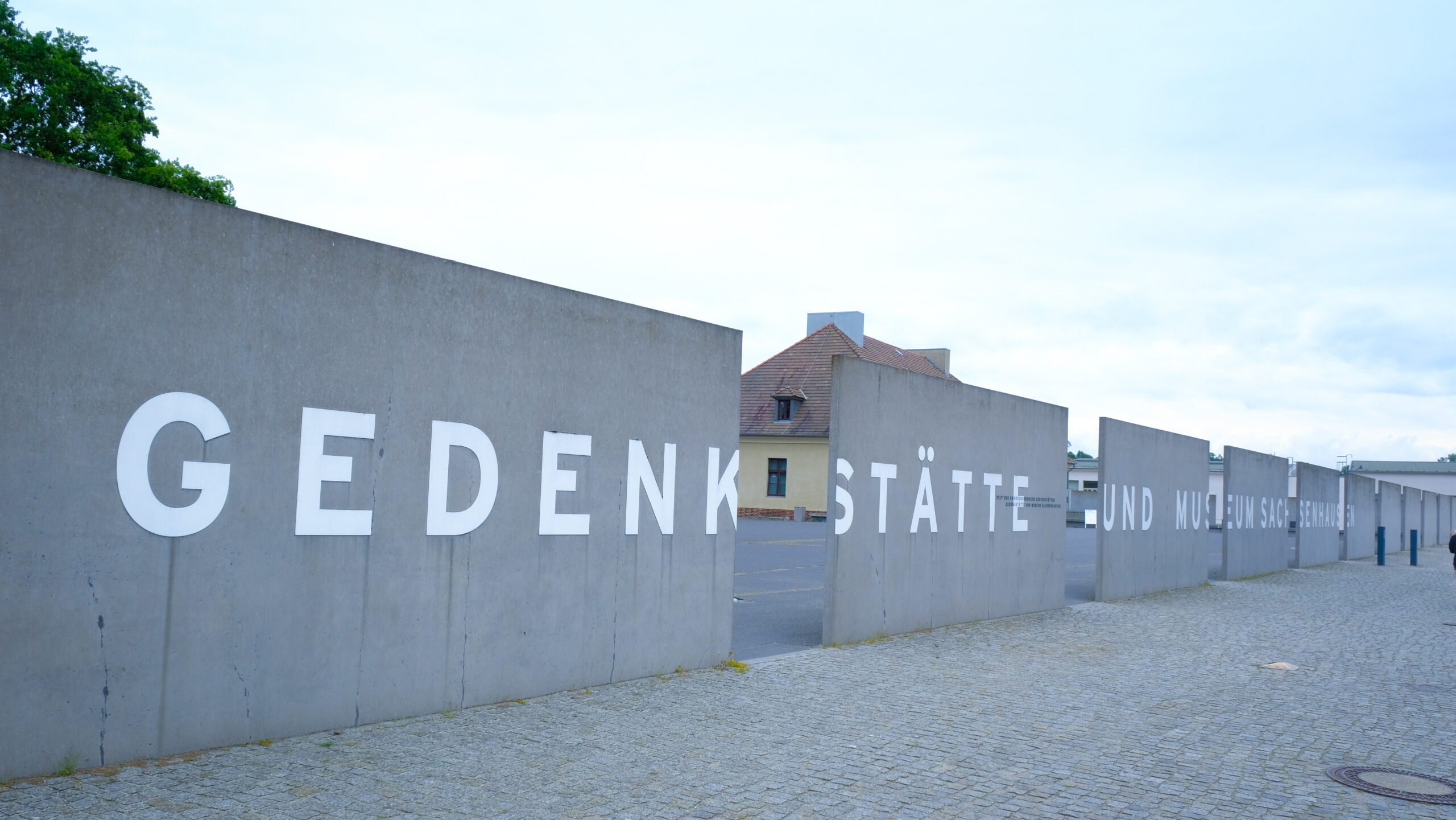
You have a name, maybe a faded family story, and a camp that left almost nothing behind. That’s where many descendants of Sachsenhausen prisoners start, and it is easy to hit a wall in the first week. An archive replies that the records were destroyed. A relative remembers only that “he was taken away.” The photo you hoped for does not seem to exist.
The wall doesn’t usually appear as solid as it does. When investigating a prisoner at Sachsenhausen, one has to work around the gaps and, instead of viewing it as a single locked door, experienced researchers see it as a puzzle with numerous entry points. That is how it functions in practice.
First, Accept the Hard Truth About the Camp Records
Sachsenhausen was one of the main concentration camps of the Nazi system. It is also one of the hardest to research from the camp’s own paperwork. One descendant whose great-grandfather was a resistance member from Antwerp did exactly what most people do. He contacted several archives and then the Arolsen Archives, the world’s largest collection of Nazi persecution documents. The answer was blunt: almost everything from Sachsenhausen was burned before liberation.
This doesn’t mean your relative left no trace at all; it means the trace may be elsewhere. In Antwerp’s case, the archives did contain files relating to the man’s resistance activities. That is a genuine lead, since the reason someone was arrested is usually recorded in the archives of the country where they were arrested, not in the camp.
So reframe the question. Do not ask “where is the Sachsenhausen file?” Ask “which organization had a reason to write about this person at any point between arrest and aftermath?”
Start at Home, Then Work Outward
Before writing to anyone, gather all the information your family already has. Make a list of every spelling of the name you can remember, along with the birth date, town, and approximate date of arrest. Since Ukrainian, Polish, Dutch, and German records frequently give the same name different spellings, one investigator searching for a man called Ivan discovered that the database contained several individuals named Iwan who shared the same surname. Although one of these entries had a birth date that was very close to the one in question, another entry showed that this man had died in 1944, thus eliminating him. The point is clear: a name match provides a lead, not the solution; you must always verify the information with the birth date, the place, or a second document.
Family tradition should be included in your notes, but you should regard it as a suggestion rather than as a definite fact. A descendant had a story to the effect that his great-grandfather, who was an electrician, managed to escape from a Nazi prison in 1933 because he had been asked to repair an electric gate. The archives verified the arrest and the political accusation, but they found no independent evidence for the escape story. Both statements could be true: the story might be genuine even if it hasn’t been verified. So make a note of it, mark it as a family memory, and keep investigating.
The Archives Worth Contacting, in Order
The Arolsen Archives are the place where most people start, and that is entirely appropriate. Even if records for a particular camp are scarce, the Arolsen Archives have transport lists, documents from the Gestapo and the police, registrations from the hospital and the liberation period, and compensation files. When searching the online database, try every possible spelling, then make a direct inquiry, since only part of the collection is searchable online.
The compensation trail. This is one of the most overlooked sources. If a survivor received payment from Germany, even a small sum, they had to file a claim with supporting evidence. A researcher whose grandmother went through that process found her file in the archive ran to roughly 50 pages. One man received 300 Deutschmarks in the mid 1990s, which tells you a claim file almost certainly exists. If your relative survived, ask the family whether they ever received any money, and from which program.
The US Holocaust Memorial Museum. Its databases and survivor registries are frequently recommended, and they cover far more than Jewish victims. Be aware that common names return crowds of results. Searching a plain name like Johann Jakob will give you many people, so use dates and places to narrow it down.
Yad Vashem. It is best known for Jewish victims, but it does hold some information on non Jewish prisoners, so it is worth a check. It also holds photographs and testimony pages, which matters if you are hoping for a face to go with a name.
JewishGen and its viewing tools. Useful if there is any chance of a Jewish connection in the family line, and a good place to cross reference towns and communities.
The Sachsenhausen Memorial and Museum. Most former camps are now memorials, and their staff has spent decades assembling information from surviving documents, survivors, and witnesses. Visit the memorial’s website and ask whether their archive or research team can look up a name. They often know about sources that general archives do not.
National archives in the prisoner’s home country. For the Antwerp resistance case, Belgian archives held the resistance paperwork. For German political prisoners, the federal archives may hold criminal proceeding files, and some are being digitized right now. A descendant researching a communist party functionary arrested in 1933 learned his file sat in the federal archives and was in the middle of being scanned. Check whether the file you need has been digitized before assuming a long wait.
Understand the System Your Relative Was Caught In
Many families end up choosing the wrong camp or the wrong kind of detention, which throws their search off track. Early Nazi detention was a complicated arrangement. For instance, Osterstein Castle in Zwickau functioned as a small early concentration camp only between 1933 and 1934 before going back to serving as a normal prison, namely a Zuchthaus, a type of penitentiary with more severe conditions in which the term ‘Zucht’ means discipline. In such cases, if your ancestor was arrested early on, the documentation could lead you to a prison rather than to Sachsenhausen, or it could lead you to both in turn.
Forced labor is another common confusion. A man taken from Ukraine as a teenager around 1942 and put to work for a German farmer would have been counted as an Ostarbeiter, an Eastern worker. Organizations have compiled lists of these workers from old records. Even more useful, German municipalities were required to draw up lists of forced laborers after the war using health insurance and housing records. If you know the town where someone was held, a local archive may hold that list.
Want to understand what people living near Sachsenhausen may have witnessed or known about the camp? Read What Did People in Oranienburg Know About Sachsenhausen Concentration Camp? to explore the relationship between the camp and the surrounding community during the Nazi era.
When the Dates Do Not Add Up
You shouldn’t reject a date merely because it comes after the war. For example, one family was puzzled by the death date of 18 June 1945 for a man who had died in a camp, since the war in Europe had already ended weeks before. The explanation, although terrible, is a common one: many prisoners were too ill to be moved, had no place to go, or were unable to return home and so died after the camp was liberated. The camps for displaced people remained open for months or even years. Moreover, it should be remembered that during the last weeks of the war prisoners were forced to be marched between camps, so a man recorded at one camp might have ended up at another.
Reading What You Find
The documents will be in old German script. Most modern German speakers cannot read handwriting styles such as Sütterlin and Kurrent, as well as the printed font Fraktur. Don’t try to decipher them by yourself. Researchers often use translation tools at the beginning, then have native speakers review the rest. Since assistance with Sütterlin and Kurrent is often available in genealogy communities, provide a clear scan and ask politely.
A Realistic Research Plan
- Write out every name, spelling, date, and place the family knows.
- Search the Arolsen online database, then send a formal inquiry.
- Check the US Holocaust Memorial Museum and Yad Vashem databases.
- Contact the Sachsenhausen Memorial and the archives of the prisoner’s home country.
- Ask the family about compensation payments, and request that file.
- Look for regional and municipal lists, then get documents translated.
FAQs
- Can I still find a photo if almost everything from Sachsenhausen was burned?
There is a small chance, and it will not come from the camp itself. Try Yad Vashem, the US Holocaust Memorial Museum, and the archives in the prisoner’s home country, where resistance or police files sometimes include photographs.
- Is there a place to look if my relative was not Jewish?
Yes. Yad Vashem has limited information on non Jewish victims, and Arolsen and the US Holocaust Memorial Museum cover many categories of persecution, including political prisoners and forced laborers.
- Where do I request prison files from a specific Nazi era prison?
Start with the federal and regional archives in Germany, which may hold criminal proceeding files. Some are being digitized, so ask whether the file you want is already scanned.
- Could a death after May 1945 really be linked to a concentration camp?
Yes. Many prisoners were too ill to be moved or had nowhere to go, and some camps continued operating for displaced people for months or longer. A June 1945 death date is plausible.
- What if the database shows several people with the same name?
Compare birth dates, places, and any second document before accepting a match. We ruled out one candidate with a near-identical birth date because another record showed he died in 1944.