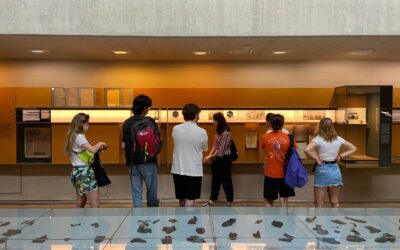
Anyone who looks at an intake photograph in the archives of a camp might ask themselves why a regime determined to destroy should have recorded so much. The reason is that Sachsenhausen was not merely another camp; it was intended to serve as a standard, a model of how the SS wanted a camp to be designed, operated, and staffed.
Ce guide explique ce que signifiait « camp modèle », pourquoi la SS a construit ce camp en 1936 au nord de Berlin, et quelles parties de cette conception vous pouvez encore reconnaître aujourd'hui au mémorial d'Oranienburg.
Pourquoi le camp a-t-il été construit en 1936 ?
In 1936, the SS was bringing the concentration camp system to consolidation. The early camps of 1933 and 1934 had been set up in disused factories, barracks, and prisons, and there had been a great deal of variation in both their layout and how they were managed. The SS wished for camps which were specially constructed, permanent and uniform, and therefore Sachsenhausen was designed as the first of this new series.
Construction began in the summer of 1936. The first prisoners to work on the site were brought from the Emsland camps, including Esterwegen, which were being wound down. These men cleared the ground and built the camp that would hold them. From the start, forced prisoner labor was part of the project.
The site, in Oranienburg about 35 kilometers from central Berlin, was also deliberate. It was close enough to the capital for senior officials to visit and inspect, yet outside the city. That closeness helped make it a showpiece among the camps.
Ce que signifiait réellement « camp modèle »
The SS did not regard Sachsenhausen as a place where guards could behave arbitrarily; rather, they saw it as an illustration of how a camp should be planned, managed, and administered, and they applied the lessons learned there to other camps. It was a model camp for three reasons: its architectural design, its standardized administration, and its role in training the people who would run the system.
The triangular layout
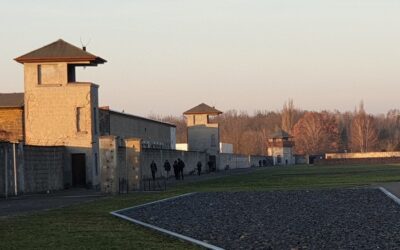
The camp was laid out in the shape of a triangle, a plan generally attributed to the SS architect Bernhard Kuiper. The area reserved for the prisoners was surrounded par a perimeter wall, a “neutral zone” which prisoners were not allowed to enter or else they would be shot, and also had watchtowers. The SS administrative buildings, guard quarters, and workshops were situated outside this boundary.
Le triangle constituait une géométrie de contrôle délibérée. Chaque partie de la zone réservée aux prisonniers était agencée en relation avec un point unique.
Tower A and the surveillance concept
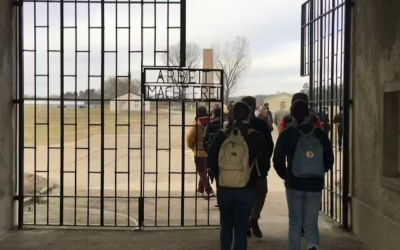
Le corps de garde situé au sommet du triangle, connu sous le nom de Tour A, constituait ce point stratégique. Il regroupait l'entrée principale, le poste de commandement et de garde du camp, ainsi qu'une position surélevée dominant la zone des prisonniers. Les concepteurs avaient prévu qu'un seul poste de tir à la Tour A puisse contrôler le lieu de l'appel et les baraquements qui s'étendaient devant.
Les historiens soulignent que la visibilité totale relevait davantage de l'idéal que de la réalité, car un camp comportait des zones invisibles et les SS utilisaient des miradors, des patrouilles, des prisonniers informateurs et des châtiments sévères. Néanmoins, l'idée de base était la suivante : l'architecture visait à faciliter le travail des gardes en donnant à l'ensemble de la population le sentiment d'être constamment surveillée.
The semicircular roll-call area
In front of Tower A lay the roll call ground, laid out as a wide half circle. The prisoners’ barracks were arranged in arcs around it, so that every barrack faced the same central space and the same tower.
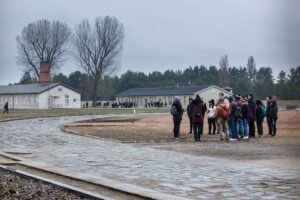
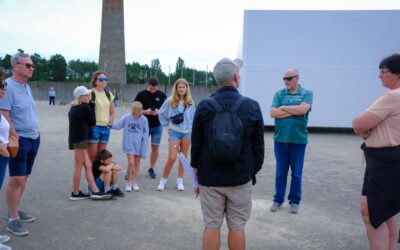
Roll call was a daily means of exercising control. The prisoners were required to stand for hours regardless of the weather so that they could be counted, and the counting was then used as a way of humiliating, exhausting, and punishing them. All the prisoners were gathered into a single area in a semicircle while the guards watched them and kept their guns ready. Now, when you stand on the ground where roll call takes place today and turn to look at the gate, you will find yourself in that situation.
How architecture was designed around control
Taken together, the design worked as one system:
- Une seule entrée et sortie, contrôlée depuis la tour A.
- Un partisan des baraquements qui plaçaient chaque prisonnier à la vue du corps de garde.
- A perimeter of wall, wire, and watchtowers, with a death strip inside it.
- A separation between the prisoner zone and the SS zone, which kept guards’ housing, offices, and workshops outside the wire.
None of this was designed for prisoners’ safety or well-being. Every element answered a question about how a small number of guards could dominate a large number of captives.
Want to understand how Sachsenhausen fit into the wider Nazi concentration camp administration? Read Sachsenhausen et l'Inspection des camps de concentration : pourquoi Oranienburg est devenu le centre du système concentrationnaire nazi to Explorer the administrative role Sachsenhausen played in the camp system.
Procédures et administration standardisées
Sachsenhausen’s model status was not only about walls and watchtowers. It was also about standardized procedure. Admission routines, prisoner numbering, categories and markings, work assignments, roll calls, and punishments followed set patterns that could be taught and repeated.
This is why the paperwork matters to the story. The camp ran on registration: who was where, what they were doing, what they cost, and what they produced. Administrative staff, clerks, and record-keepers were as necessary to the system as the guards. A standard way of running a camp meant staff could move between camps and still know exactly what to do.
Formation des gardes et du futur personnel du camp
A model is only useful if it can be taught. Sachsenhausen became a place where SS men learned the work. Guards were trained there, and personnel who would later hold senior posts passed through its ranks. One well-known example is Rudolf Höss, who served at Sachsenhausen in the late 1930s before becoming the first commandant of Auschwitz.
A camp that trains the people who go on to run other camps is, in the most literal sense, a model, because it spreads its procedures along with its people.
How Sachsenhausen influenced the wider camp system
The earlier Dachau regime had already determined many of the rules concerning the treatment of prisoners, and Sachsenhausen introduced a systematic physical plan as well as closer links with the central SS authority. The layout, routines, and trained staff at Sachsenhausen influenced the design and administration of later camps. Since 1938, the Inspectorate of camps de concentration, which oversaw the entire network, had been based in Oranienburg and thus maintained close contact with the people who formulated policy for the other camps.
The camp subsequently obtained a killing facility which was specially constructed and was generally known as Station Z, consisting of execution sites and crematoria. The fact that the camp had evolved from a closely controlled detention center into one possessing killing capabilities on an industrial scale serves as a reminder of its original purpose.
Why “model” does not mean humane
“Model” here has nothing to do with decent conditions. Prisoners at Sachsenhausen suffered forced labor, starvation, beatings, torture, and murder. “Model” meant a model for SS control and organization: efficient, orderly, replicable, and designed to break people. It meant that the system could be copied, not that it was better for those inside it.
What you can recognize at the memorial today
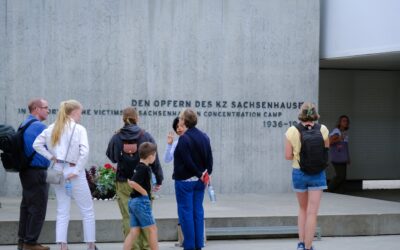
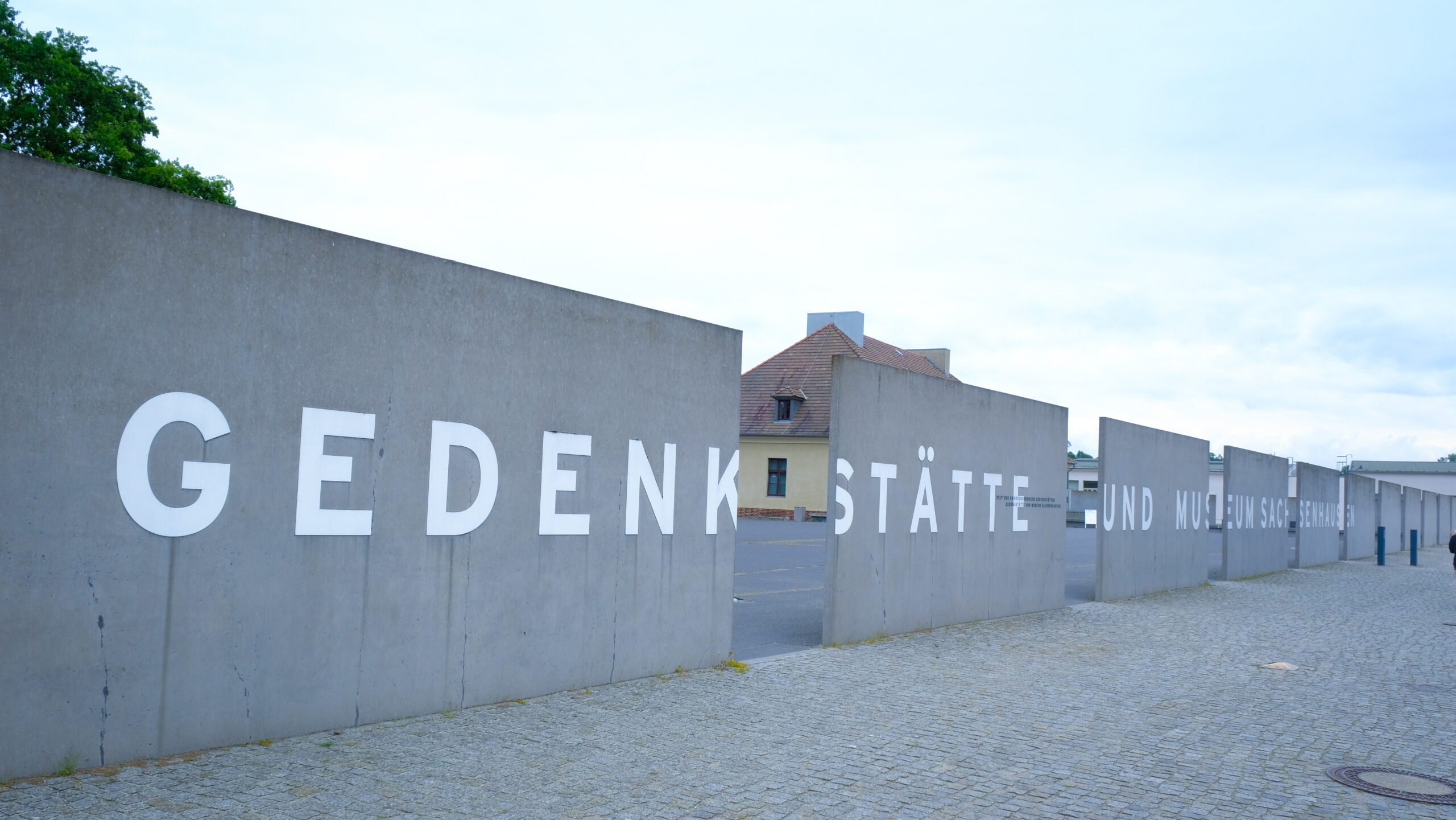
Le mémorial d'Oranienburg conserve suffisamment de détails du dessin pour que les visiteurs puissent le lire au sol :
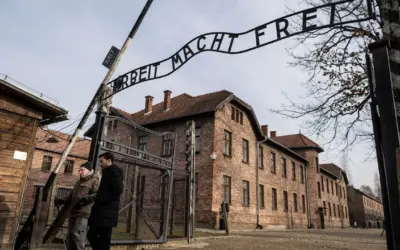
- The gatehouse and Tower A. The entrance building stands at the apex of the old triangle. Looking out from the gate, you see the whole fan of the camp spread in front of you, which is the view the designers intended.
- The roll call ground. The open, semicircular space is still the center of the site, and its shape makes the layout of control easy to grasp.
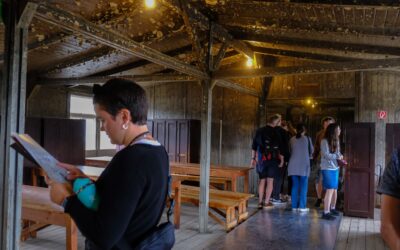
- The barracks arcs. Foundation outlines and surviving or reconstructed barracks show how the huts were arranged around the central space.
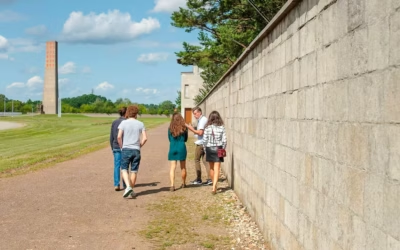
- The perimeter. Parts of the wall, the line of the neutral zone, and the watchtower positions show how the boundary worked.
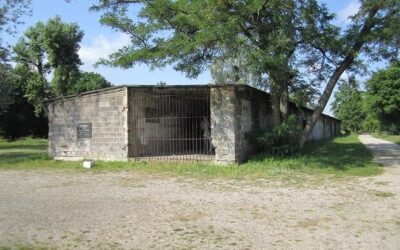
- Station Z. The remains of the killing and cremation facility lie outside the main prisoner area, and they mark the camp’s later role.
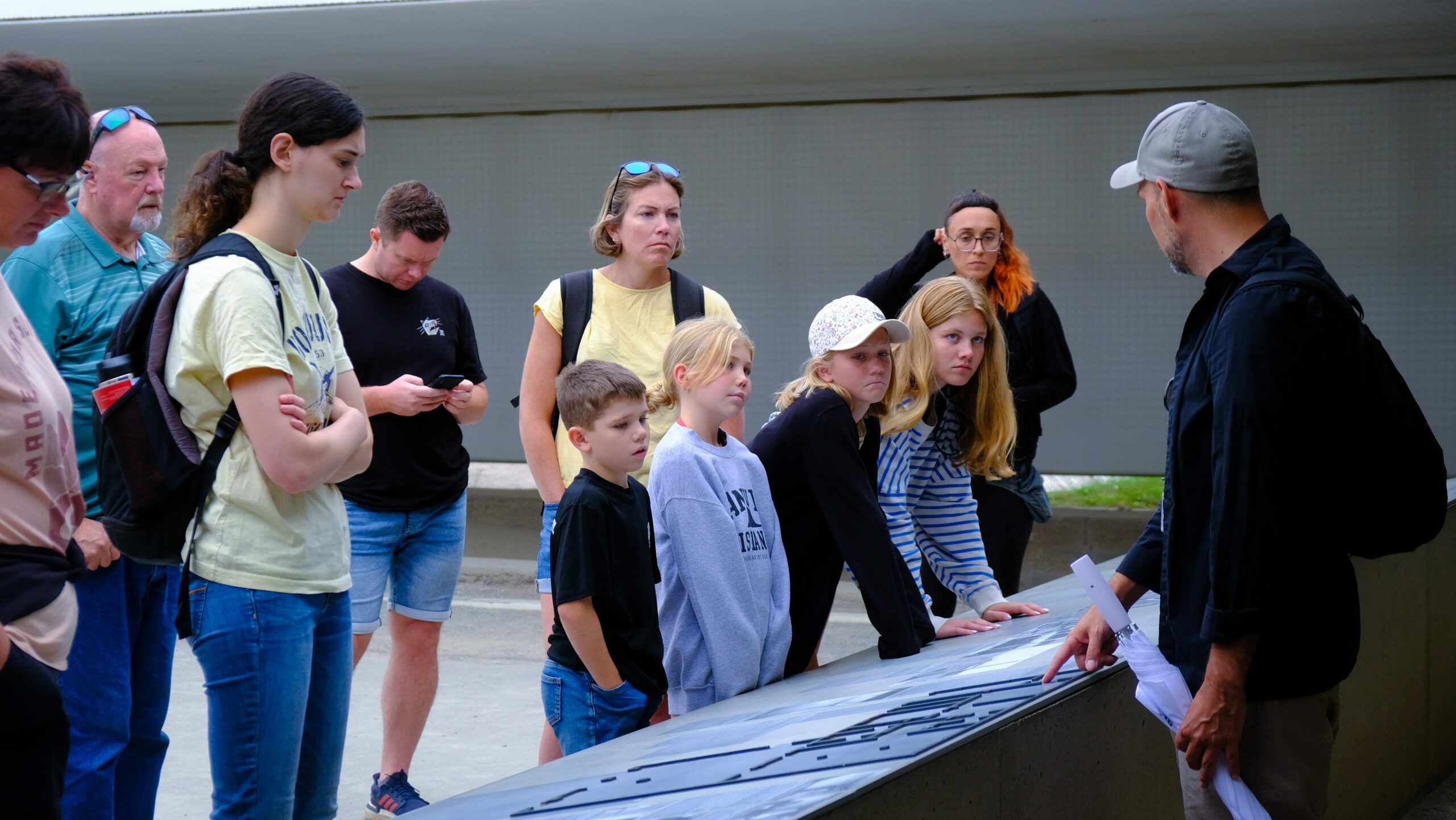
Only part of the original camp is preserved, so it helps to look at the site plan at the entrance before walking the grounds.
Why the “model” idea still matters
The main lesson of the visit is that this was not a one-off. A common view among descendants of that generation is that the lesson should be less “what Germany did,” and more “any society can become cruel toward people it labels undesirable, so the signs need to be recognized and resisted.” Systems that dehumanize people tend to rely on the same elements: classification, paperwork, normalization, and many people who believe they are only doing their jobs.
That is what “model” tells you. A model can be copied, and understanding how this one worked is how you recognize the pattern.
FAQs
- Why did the Nazis keep such detailed records if the goal was to kill people?
The camp system was a bureaucracy responsible for managing labor, property, transport, and personnel, and its administrators used documentation to check whether their policies were working. After the war, many of those same records were used as evidence at trials.
- Why was Sachsenhausen built in the shape of a triangle?
The triangular plan placed Tower A at the apex, so that a single gatehouse position could overlook the roll call ground and the fan of barracks in front of it. The design meant that the architecture itself did part of the guards’ work, because prisoners were made to feel constantly watched. Historians note that complete visibility was more an ideal than a reality, which is why the SS also relied on watchtowers, patrols, informers, and severe punishments.
- What was the purpose of the neutral zone and perimeter around the prisoner area?
The prisoner area was enclosed par a wall, wire, and watchtowers, with a “neutral zone” just inside the boundary that prisoners were forbidden to enter on pain of being shot. This created a clear, enforceable barrier that a small number of guards could control from the towers. It also kept the SS housing, offices, and workshops outside the wire, separating the guards from the prisoners.