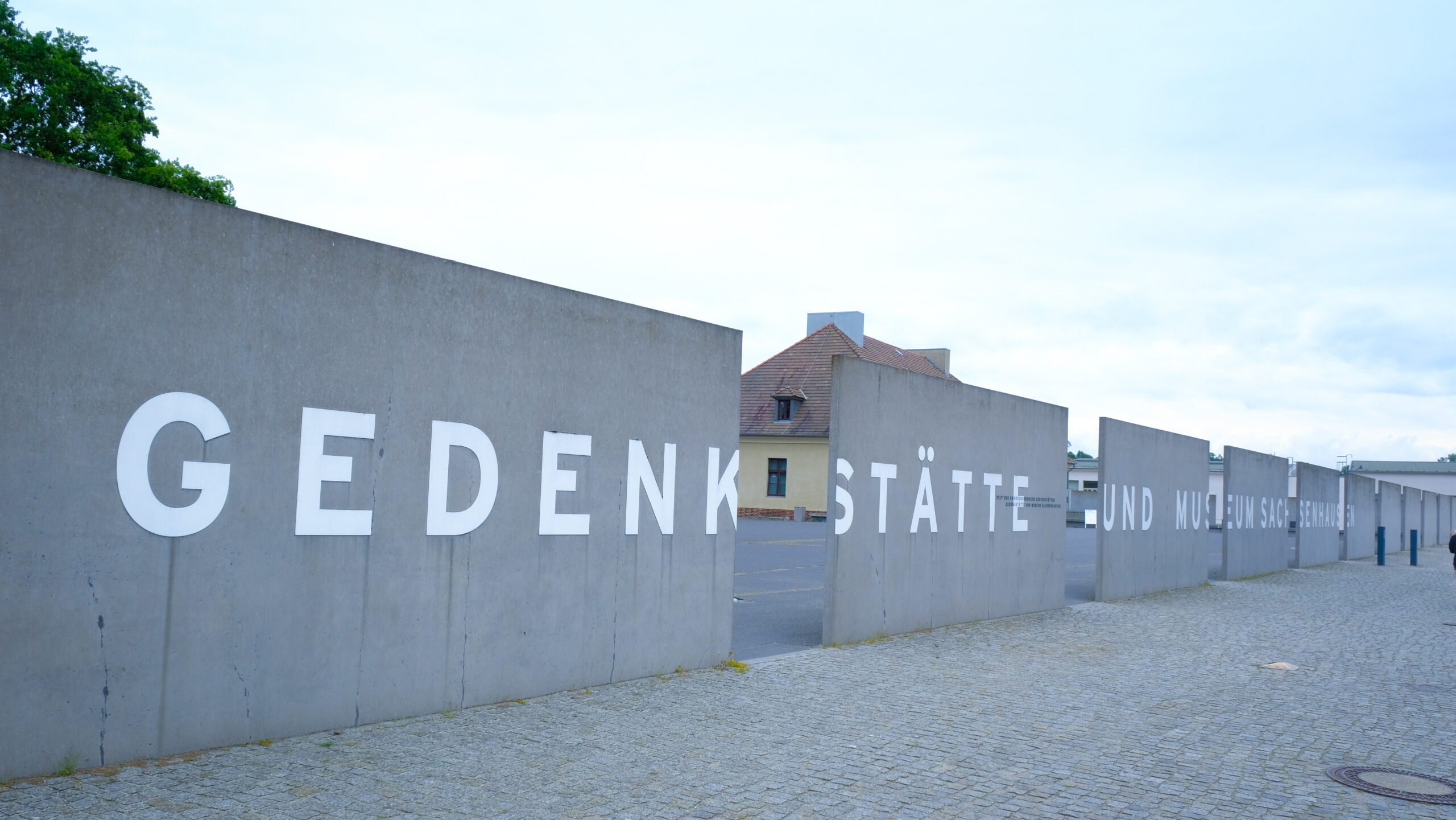
Imagine a banknote so realistic that the Bank of England itself is said to have mistaken the forgeries for genuine ones. Now imagine who created it: not skilled criminals in a secret workshop, but prisoners in a concentration camp near Berlin, working under the guard of the SS with their lives at stake.
That is Operation Bernhard, and the most common question people ask about it is a practical one: if the fakes were that good, how could anyone tell them apart from the genuine thing? The answer says a lot about the people who made them.
What Operation Bernhard Actually Was
The plan was based on a harsh idea: Germany should flood Britain with counterfeit banknotes, undermining confidence in the pound and, it was believed, bringing about the collapse of the British economy; the notes were to be dropped over the country by aircraft.
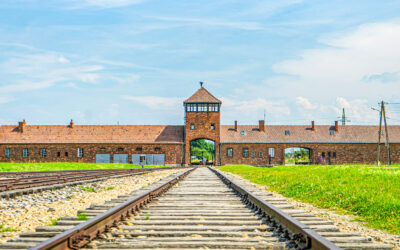
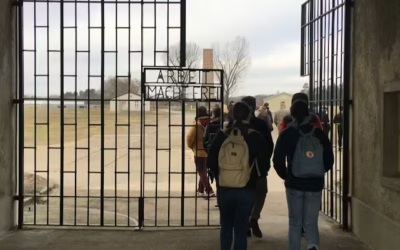
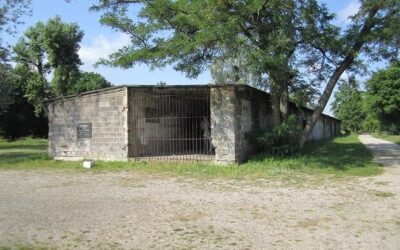
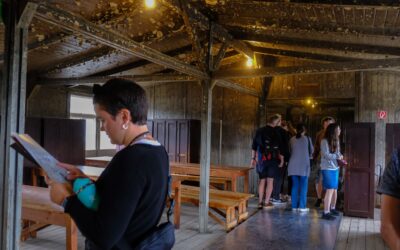
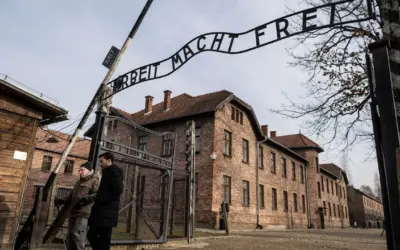
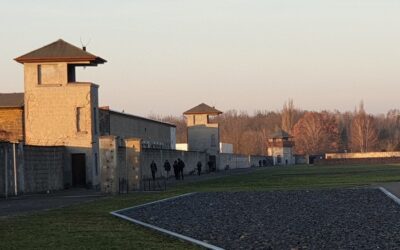
The forgery itself took place inside Sachsenhausen, a concentration camp just outside Berlin. The SS pulled in prisoners with relevant skills: printers, engravers, artists, and bankers. Some had been transferred from Auschwitz, where selections on the arrival ramps decided who lived and who did not. Adolf Burger, one of the prisoners forced into this work, survived and later told his story in person to school groups. A listener who heard him decades ago still remembers his account of how those selections were made.
The output was enormous. Estimates for the total run of forged sterling start at roughly £130 million, and some accounts claim far higher. The notes were the old “white” Bank of England fivers and tenners, along with larger denominations that most Britons never handled.
Want to learn about other groups imprisoned at Sachsenhausen? Read our blog on Political Prisoners at Sachsenhausen: Who Were Hitler’s Opponents? to understand the wider system of persecution at the camp.
The Big Myth: The Notes Were Never Dropped on London
Many people believe the Germans carpet bombed Britain with fake cash. They did not. The airdrop plan was abandoned. The Germans chose a more practical use for the money: financing their spies and buying services abroad.
That detail matters because it explains the story’s second twist. The agents sent to Britain were often not committed to the cause. Many handed themselves over almost immediately and became double agents. Their job was to be seen at high-profile gatherings, keep up appearances, and report back, which in practice meant a lot of drinking and spending on both the British and German payroll.
Meanwhile, the head of German military intelligence, Wilhelm Canaris, was quietly asking Allied contacts what kind of peace deal might be possible if Hitler suddenly died. He was later executed, and his organization was effectively dismantled once the regime worked out what he had been doing. A different part of the machine ran the counterfeiting operation, but the broader picture is a system working against itself.
How Did Prisoners Copy a Watermark?
This is the question that stumps most people, and the explanation is surprisingly low tech. The watermarks were made using “grates” that matched the original design, adjusted to account for paper shrinkage. A paper mill near the camp reportedly reproduced the paper itself using rags, which is how real banknote paper was traditionally made.
It worked with ordinary light and ultraviolet light. The paper, the watermark, and most of the printed details were copied to a standard no modern home printer or ordinary reproducer could achieve. This is why collectors frequently ask how to distinguish a wartime forgery from a modern imitation. The straightforward answer is that a modern fake is not in the slightest bit on a par with the quality of the camp production, so if you have something that appears excellent under ultraviolet light and has a convincing watermark, you are dealing with a specialist issue, not one that can be resolved by simply looking at it.
Want to explore another group of prisoners and their experiences? Read Soviet Prisoners of War at Sachsenhausen: What Happened to Them? for a closer look at their history.
The Tiny Mistakes That Gave the Notes Away
Even near perfect work leaves fingerprints. Two details come up again and again among people who know these notes.
The first is Britannia’s eyes. On the forgeries, the figure’s eyes are not quite right, which is a small rendering difference that becomes obvious once you know to look.
The second case is a watermark defect concerning the letter N, with one of its lines being in the wrong position. This is where the accounts become confusing. According to one version, the authentic British note had a deliberately off-center line on the letter N, and the German reproductions corrected this flaw. In the alternative version, the forgers introduced a small mistake. Nevertheless, in both cases the agreement is that the letter N is the one to examine. Because the sources differ on which side had the flaw, if you ever need to verify a note, consult a known expert rather than rely on memory.
The humor people attach to the first version, that the forgers could not help straightening British sloppiness, is a nice story, but treat it as a story.
Quality also varied. Forgery came in different grades, and the best were far better than the weakest. Anyone describing “the” Bernhard note as one uniform thing is simplifying.
The Human Cost Behind the Craft
It is tempting to view the account as one of heists with a clever twist, but one should resist that interpretation. There is evidence that the prisoners were the ones carrying out the work, and some of the records state that the inmates on this particular detail were treated better than the others in the camp, many of them managing to survive the war by narrowly escaping execution. This more favorable treatment was due to the SS wanting the work to be done well, not because of any kindness on their part; the men were forced by the regime that was persecuting them to produce perfect forgeries.
The film The Counterfeiters dramatizes this story, but it is a fictionalized telling, so treat it as a way into the history, not a documentary record. For firsthand testimony, start with Burger’s own memoir. For the operation itself, a 1987 study by Bryan Burke covers Operation Andrew and Operation Bernhard together. However, it was a small print run of about 1,000 copies, so it takes some tracking down.
Wondering what the different prisoner markings meant? Read What Did the Colored Triangles on Sachsenhausen Prison Uniforms Mean? to understand how prisoners were classified.
Why the Bank of England Changed Its Notes
The forgeries had lasting consequences. Enough of them entered circulation that the Bank of England stopped releasing high denomination notes. Britain did not see a new £10 note until 1964, a new £20 in 1970, and a £50 in 1981.
That gap is a physical reminder that this operation affected everyday British money for decades. Before the war ended, the Germans also made real progress in faking American currency, showing how seriously they pursued the technical effort.
Many of the forgeries were destroyed at the end of the war, but many survived. Today, collectors value them, and they often sell for far more than their face value. One collector said he paid around $540 for a pair and added that prices may vary depending on where you are. Use caution, since the market includes many modern reproductions and outright scams. If a seller says they are offering ‘grade A’ notes that pass UV testing and can be used everywhere, that is not history; it is a warning sign. Buy only from reputable dealers who can provide clear provenance.
Interested in another group targeted by the Nazi regime? Read our blog on Gay Prisoners at Sachsenhausen: The History of the Pink Triangle to learn about their persecution and experiences.
Other Wartime Forgery Games
The Germans were not alone in this economic and psychological trickery. Britain ran Operation Cornflakes, in which a mail train was located using Ultra intelligence, bombed, and then used as a delivery point for bags of propaganda letters and fake stamps, in the hope that German postal workers would deliver them. It had limited reach because the German mail system had already largely collapsed under the strategic bombing campaign.
Frequently Asked Questions
- How can you tell Operation Bernhard notes from genuine Bank of England notes if they were so well made?
Examine the most subtle features, such as Britannia’s eyes and a small watermark error involving the letter N with a misplaced line; there is a discrepancy as to which version had the defect, so a specialist must verify it.
- How did the prisoners reproduce the watermarked paper?
The grates used to create the watermarks matched the original design but had been adjusted to allow for shrinkage. According to a report from a paper mill near the camp, they reproduced the paper using rags.
- Were the forged notes ever dropped over Britain to crash the economy?
No. The airdrop idea was dropped. The Germans used the notes to finance spies and other operations instead, though enough forgeries circulated to push the Bank of England to withdraw high-denomination notes.
- How do I tell a wartime forgery from a modern fake?
Wartime notes showed the same paper under normal and UV light, displayed the watermarks, and reproduced most of the details. A typical modern reproduction can’t achieve this, so only a qualified expert can verify a particular note.
- Is there a book or film I can use to learn more?
Adolf Burger’s memoir is the firsthand account. Bryan Burke’s 1987 study covers the operations in depth. The film The Counterfeiters tells the story, but it is fictionalized.