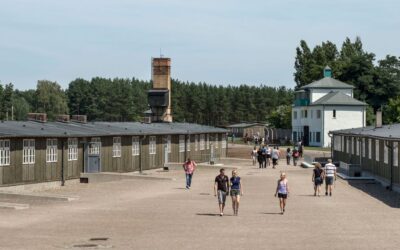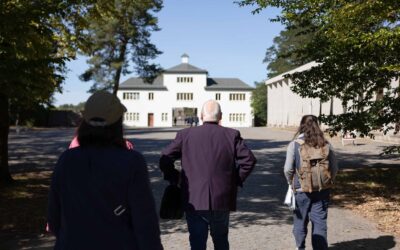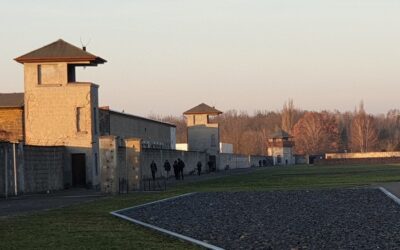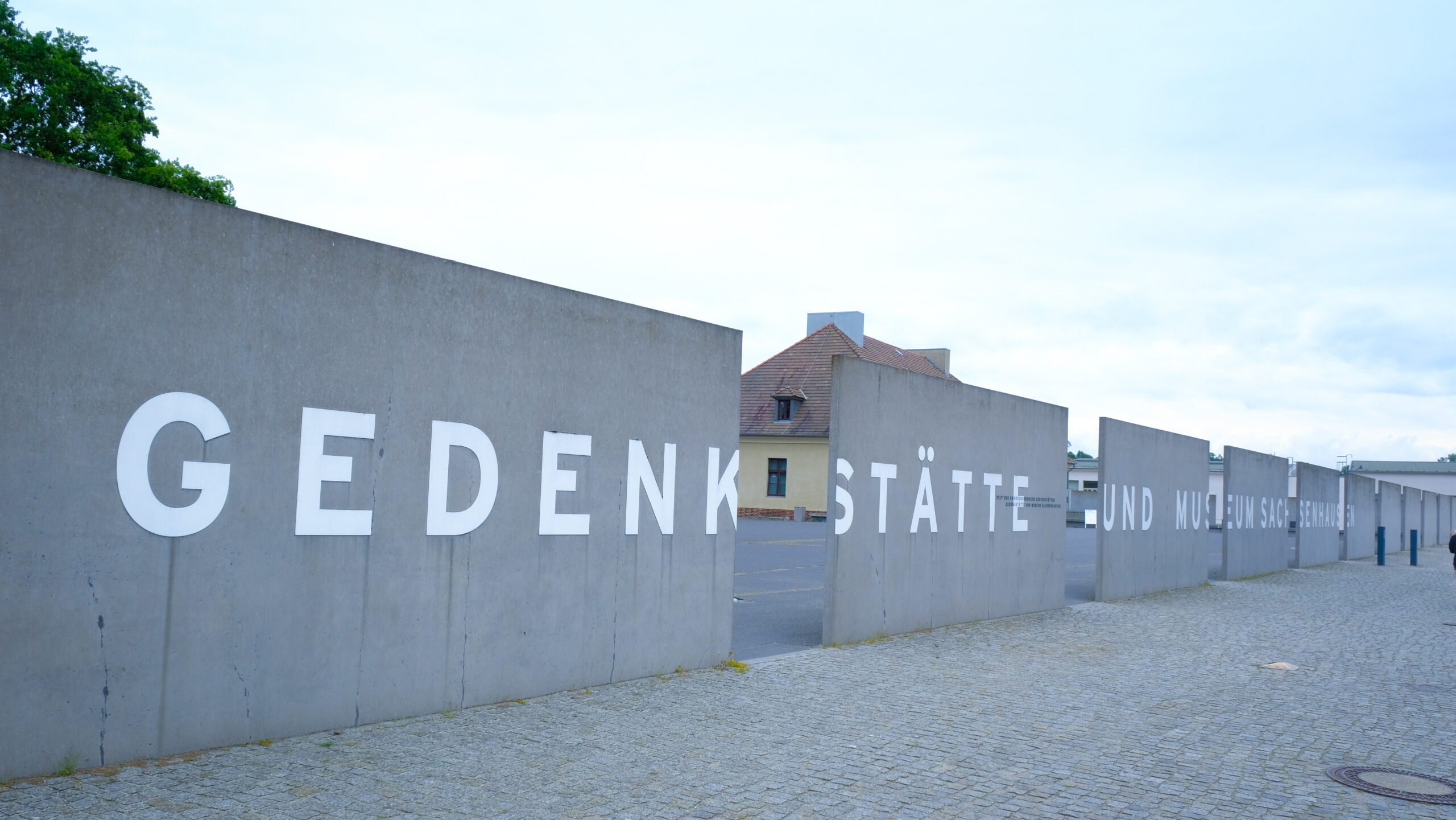
You may have seen the photograph: rows of men in striped uniforms, each with a small pink triangle stitched to the chest, standing in a camp yard at Sachsenhausen on December 19, 1938. It circulates every year, usually with a caption saying the men were freed when the war ended. That part is wrong, and it is the most important thing to understand about the pink triangle. For many of these men, liberation was not the end of the punishment.
Here is the full story, including the parts that rarely make it into the caption.
Why the Pink Triangle Exists at All
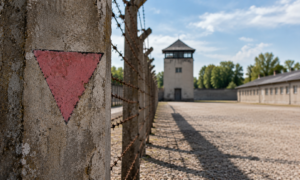
The Nazi camp system used colored triangles to sort prisoners at a glance. Political prisoners, mostly communists, wore red. People classed as career criminals wore green. Those labeled “asocial,” a catch-all that included Roma, wore black. Jewish prisoners wore yellow, often combined with another color. Men arrested under the law against homosexuality wore pink.
What is most surprising is the place that the pink triangle holds in Germany’s legal history. Since 1871, homosexuality had been made a criminal offense by Paragraph 175 of the penal code. Nevertheless, before the rise of the Nazis, Berlin had a flourishing gay culture. The world’s first organization campaigning for homosexual rights was established there in 1897, and during the 1920s there appeared dedicated clubs, magazines, and a public debate that had no parallel elsewhere in Europe. Although the law was in place, its enforcement was limited. Since the courts required evidence of penetrative sex, convictions were rare, and fines were usual.
Tolerant attitudes came to an end in 1933 when the Nazis raided and destroyed the Institute for Sexual Science in Berlin, burned its library, and closed down the clubs. In 1935, they altered Paragraph 175 to allow almost any kind of intimacy between men to be prosecuted, and abolished the previous requirement of concrete proof.
How Did They Know Who Was Gay?
This is the question people ask most, and the honest answer is unsettling: often, they did not need to know.
A regime built on denunciation only needs a suspicion and an audience willing to act on it. Several things fed the machine:
- Police already held records. Authorities had files on men previously arrested or known to officials, and they went through club membership lists and logbooks from the venues they had just shut down.
- Neighbors were encouraged to report. A bachelor who was never seen with women, or a man with a steady stream of male visitors, could be reported with one phone call.
- Pressure traveled through interrogation. Law enforcement pushed arrested men to name others, and in a community that was small even in a big city, one arrest led to many.
- Blackmail and informants did the rest. Extortion was already a danger for gay men before 1933, and under the Nazis it became a tool of the state.
Authoritarian movements always need an enemy to rescue society from, and the same pattern of denunciation and scapegoating shows up in other regimes and eras. The pink triangle was one result.
Want to learn about another group imprisoned at Sachsenhausen? Read our blog on Political Prisoners at Sachsenhausen: Who Were Hitler’s Opponents? to understand who was targeted for opposing the Nazi regime.
What Actually Happened to the Men
Numbers vary by source, but the broad picture is well documented. Between 1933 and 1945, an estimated 100,000 men were arrested as homosexuals. About 50,000 were formally sentenced. Most of those served time in ordinary prisons, while an estimated 5,000 to 15,000 were sent to concentration camps. Researcher Rüdiger Lautmann has argued that the death rate among pink triangle prisoners could have reached 60 percent.
Survivors and historians describe unusually harsh treatment. Pink triangle prisoners were often given the most punishing work assignments under the policy known as “Extermination Through Work.” They faced hostility not only from guards but sometimes from other prisoners, and many were beaten to death. The triangle itself became a target for abuse.
Some men were castrated under court order, and others were subjected to medical experiments meant to “cure” them. One of the most disturbing episodes involved forcing gay inmates into sexual contact with women held in camp brothels, an attempt to reverse their orientation that amounted to rape on both sides. It did not work, which surprised no one except the people running it.
The Part the Caption Leaves Out: 1945 Was Not Freedom
When the camps were liberated, Allied forces freed most survivors. But Paragraph 175 was still on the books, and the Nazi version stayed in force in West Germany for more than two decades. Some gay survivors were sent back to prison to finish their sentences. Time spent in a concentration camp was often not credited toward the term.
The numbers are staggering. In West Germany, around 100,000 men were arrested under the law between 1945 and 1969. The harsher Nazi wording was kept until 1969, when relations between consenting adults aged 21 and over were decriminalized. The paragraph was not fully removed until 1994.
Survivors were also excluded from compensation because their convictions were still technically valid. Many hid what had happened to them. Some destroyed their triangles and papers after release for fear of being caught again, which is one reason physical evidence is so scarce today. The German government did not apologize to the gay community until 2002.
This is not unique to Germany. Homosexuality was a crime in much of Europe and in many other countries, and the public attitude in the West for decades was that gay people were immoral or mentally ill. Alan Turing, who helped win the war, was chemically castrated by the state he served. His story, and the survivors’ stories, belong together.
The Memorial That Took a Decade to Install
If you visit Dachau, near Munich, you will find markers for the persecuted groups, with the colors and triangles displayed. For years, the pink triangle was missing.
Here is what happened. In 1985, activists in Munich commissioned a memorial stone dedicated to the homosexual victims of National Socialism. The International Dachau Committee, an association of former prisoners, did not allow it on the memorial grounds. In 1988, the stone was provisionally placed in front of a Protestant church on the same site. A memorial for the gay victims was only installed on the grounds of the camp in 1995.
That delay says as much about the postwar world as it does about the camps themselves. Acknowledgment arrived slowly, and only after people fought for it.
From Badge of Shame to Symbol of Resistance
The gay community later reclaimed the pink triangle. In the 1970s, activists adopted it to fight the erasure of gay men from Holocaust history. In 1987, the AIDS activist group ACT UP chose the triangle as its emblem, flipping it to point upward. The rainbow flag has since become the more common international symbol, but the pink triangle lives on in monuments to people persecuted for their sexuality.
What to Take From This
If you remember three things, make them these:
- The pink triangle marked a minority of gay men. Most of those arrested went through the regular prison system, and the camps held a smaller, more brutalized group.
- The persecution did not stop in 1945, and the legal system that outlived the Nazis kept punishing survivors for decades.
- Memory is political. The fight to be remembered, from Dachau’s missing plaque to the 2002 apology, was won by people who refused to let the story disappear.
Want to explore what happened to Soviet prisoners held at Sachsenhausen? Read our blog on Soviet Prisoners of War at Sachsenhausen: What Happened to Them? for a closer look at their experiences.
FAQs
- How did the Nazis identify homosexual men?
Primarily through denunciations and existing police records, the authorities used the club’s membership lists, logbooks, and previous arrest files, and they also asked neighbors to report any suspicions they might have. When the men were questioned, they named others, and extortion, along with the presence of informants, accounted for the rest of the cases. In numerous instances, a rumor was enough.
- Were gay prisoners freed when the camps were liberated?
Not always, since Paragraph 175 remained in effect; some survivors were sent back to prison to serve the rest of their sentences and were generally denied compensation because their convictions were still regarded as valid.
- Why was there no pink triangle memorial at Dachau for so long?
An association of former prisoners refused to allow a memorial stone commissioned in 1985 to be placed on the grounds. It was placed in front of a church in 1988, and a memorial on the camp grounds was installed only in 1995.
- What did the other triangle colors mean?
Red marked political prisoners, mostly communists, and green marked people classed as criminals. Black marked those labeled “asocial,” including Roma, and yellow marked Jewish prisoners. Pink was for men arrested under the law against homosexuality, and some prisoners had combined or additional markings.
- When did Germany finally end the law and apologize?
The harsh Nazi version of Paragraph 175 stayed in West Germany until 1969, when sex between consenting adults aged 21 and over was decriminalized. The paragraph was fully abolished in 1994, and the German government formally apologized to the gay community in 2002.