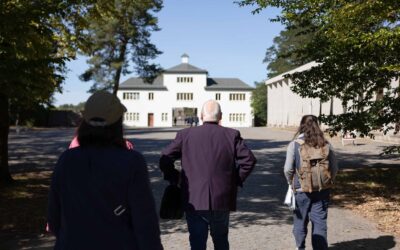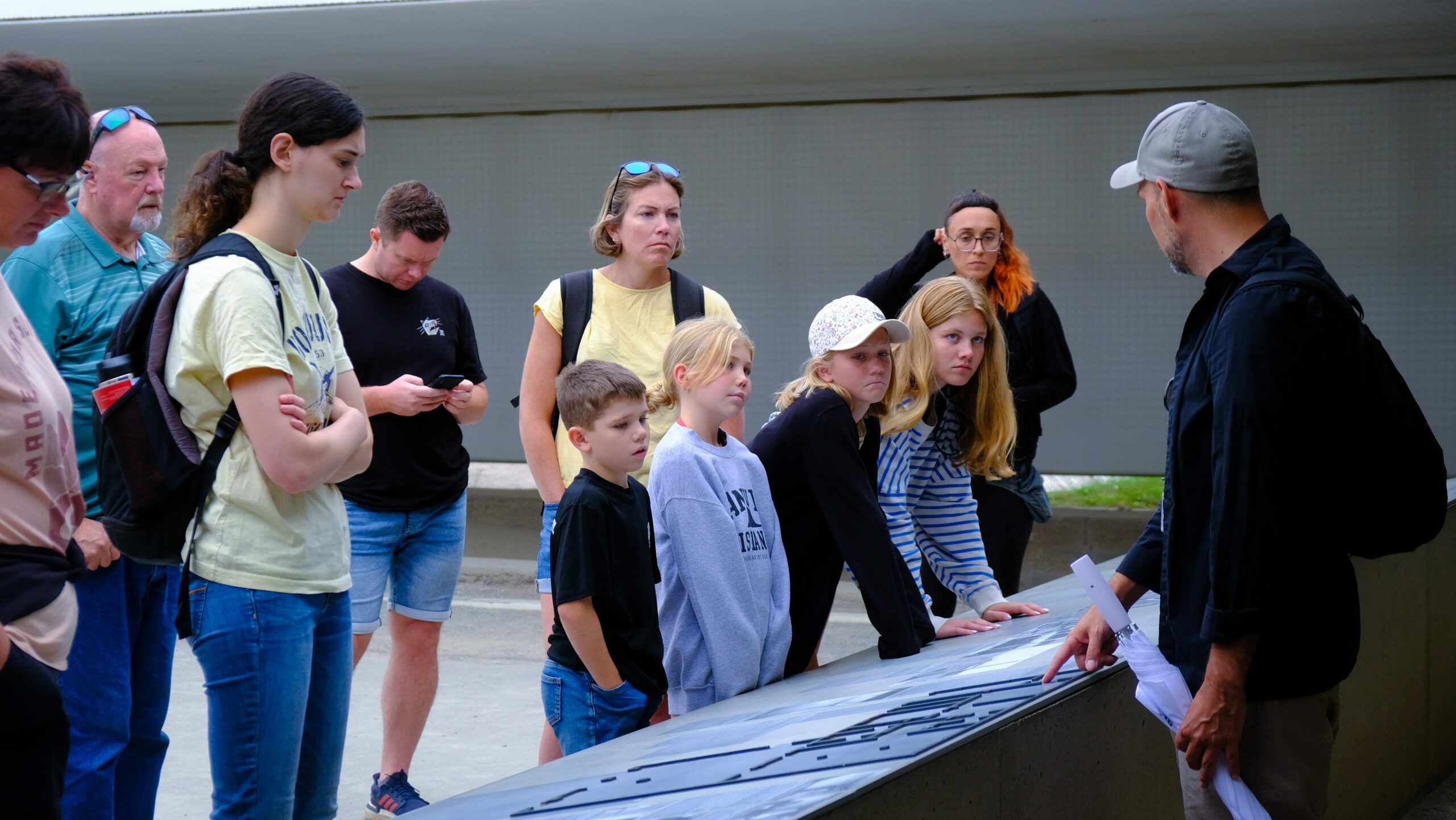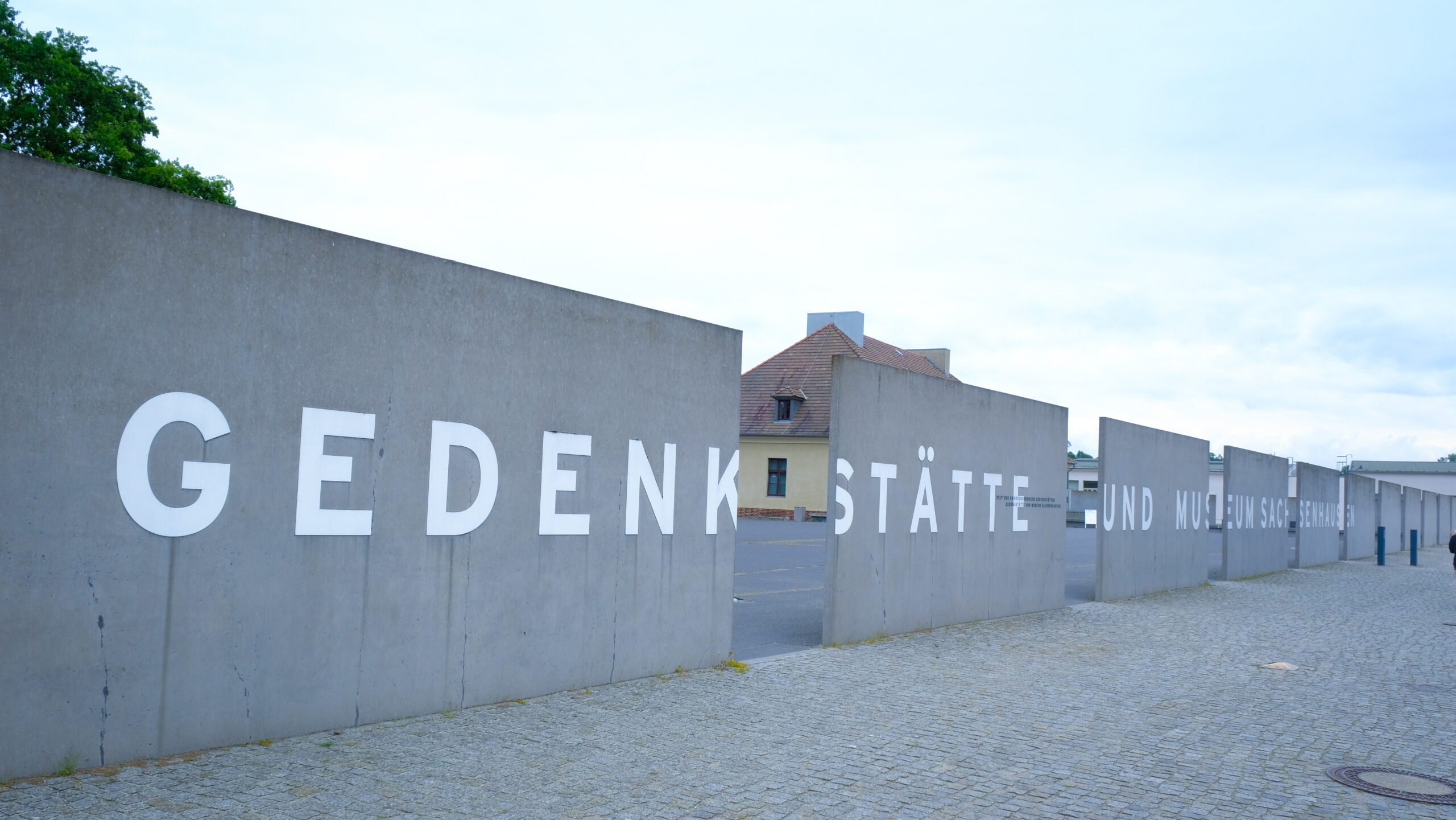
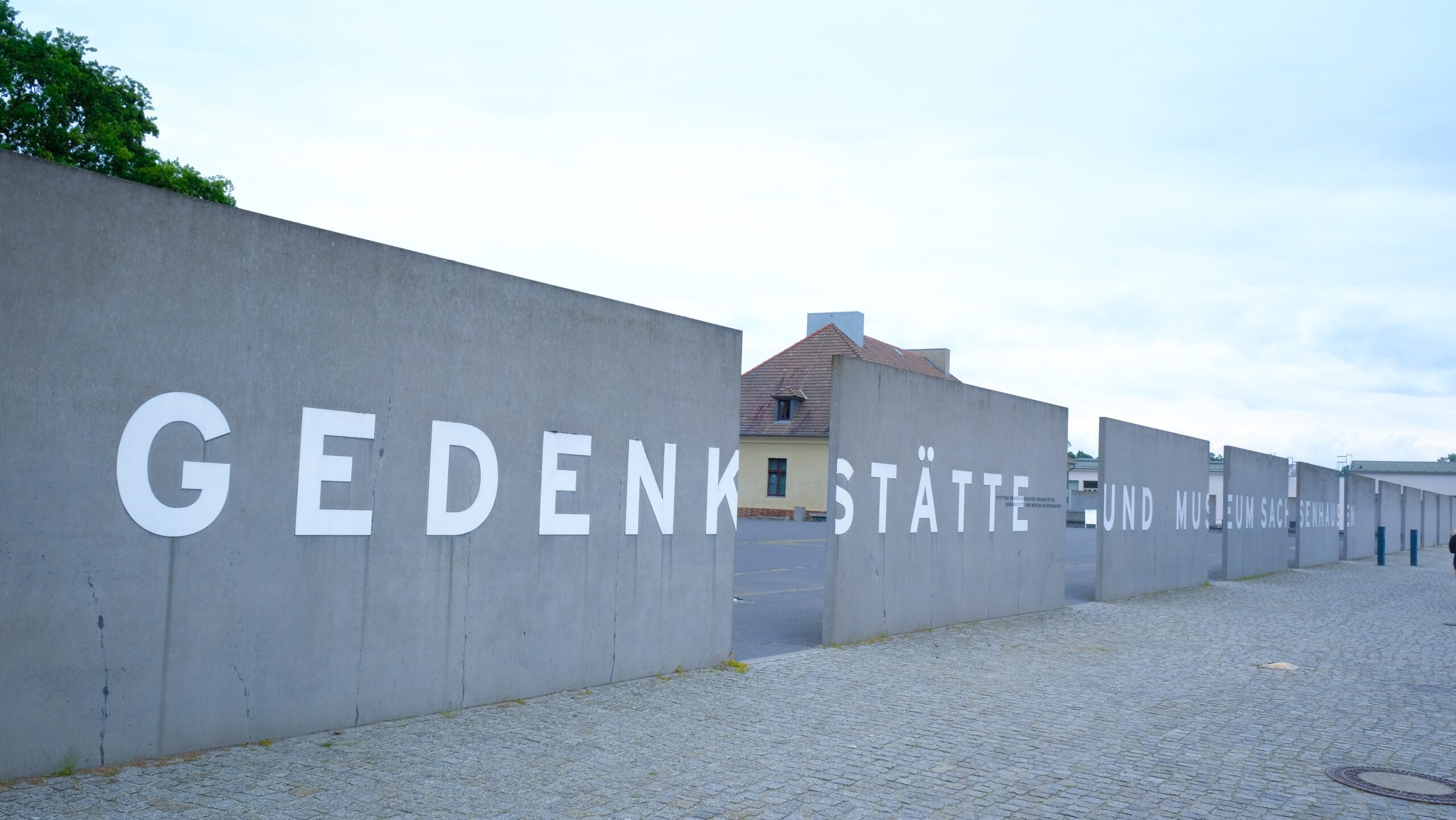
Are you planning to visit the Sachsenhausen Memorial and Museum in Berlin? Looking at the Sachsenhausen Berlin map in advance can help you get more out of your visit. The site is large, quiet, and deeply moving, with many important places spread throughout the former camp.
Sachsenhausen is located in Oranienburg, just outside Berlin. The camp was established by the Nazi regime in 1936 and became one of the most important concentration camps in Germany. More than 200,000 prisoners passed through Sachsenhausen between 1936 and 1945, including Jewish prisoners, political opponents, resistance fighters, Roma and Sinti people, homosexual prisoners, Jehovah’s Witnesses, Soviet prisoners of war, and many others persecuted by the Nazis.
Today, the Sachsenhausen Memorial map shows visitors where important places are, such as the entrance, Tower A, the roll-call square, prisoner barracks, punishment cells, watchtowers, museum exhibitions, and Station Z.
If you want a deeper understanding of the site, history, and map layout, you can join our guided Berlin concentration camp experience here: Book a Berlin concentration camp experience
Why the Sachsenhausen Berlin Map Matters
The Sachsenhausen Memorial covers a large area, and many of the most important locations are spread across the former camp grounds. Without a map, it is easy to miss key places or visit them without fully understanding their historical importance.
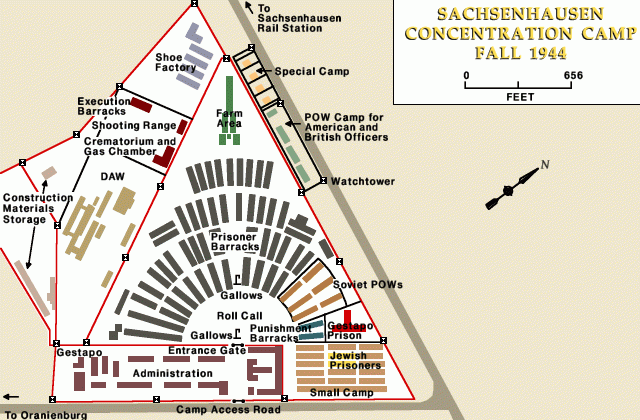
The Sachsenhausen Berlin map helps you see how the camp was set up for surveillance, control, forced labor, punishment, and intimidation. It also guides visitors to move through the memorial with respect and care.
Sachsenhausen was more than just a group of buildings. It was a system designed for oppression. The way it was laid out helped the SS control the prisoners.
Do I need a map to visit Sachsenhausen?
Yes, using a map is highly recommended. The memorial is large, and a map helps you find key locations, including Tower A, the barracks, Appellplatz, Station Z, the prison building, and museum exhibitions.
Entrance and Visitor Center
The entrance and visitor center are usually the first places visitors see on the Sachsenhausen map. This is where you can get practical information before entering the memorial grounds.
For more information about visitor center, kindly read this: Visitor Information Center Sachsenhausen: What You Should Know Before You Go
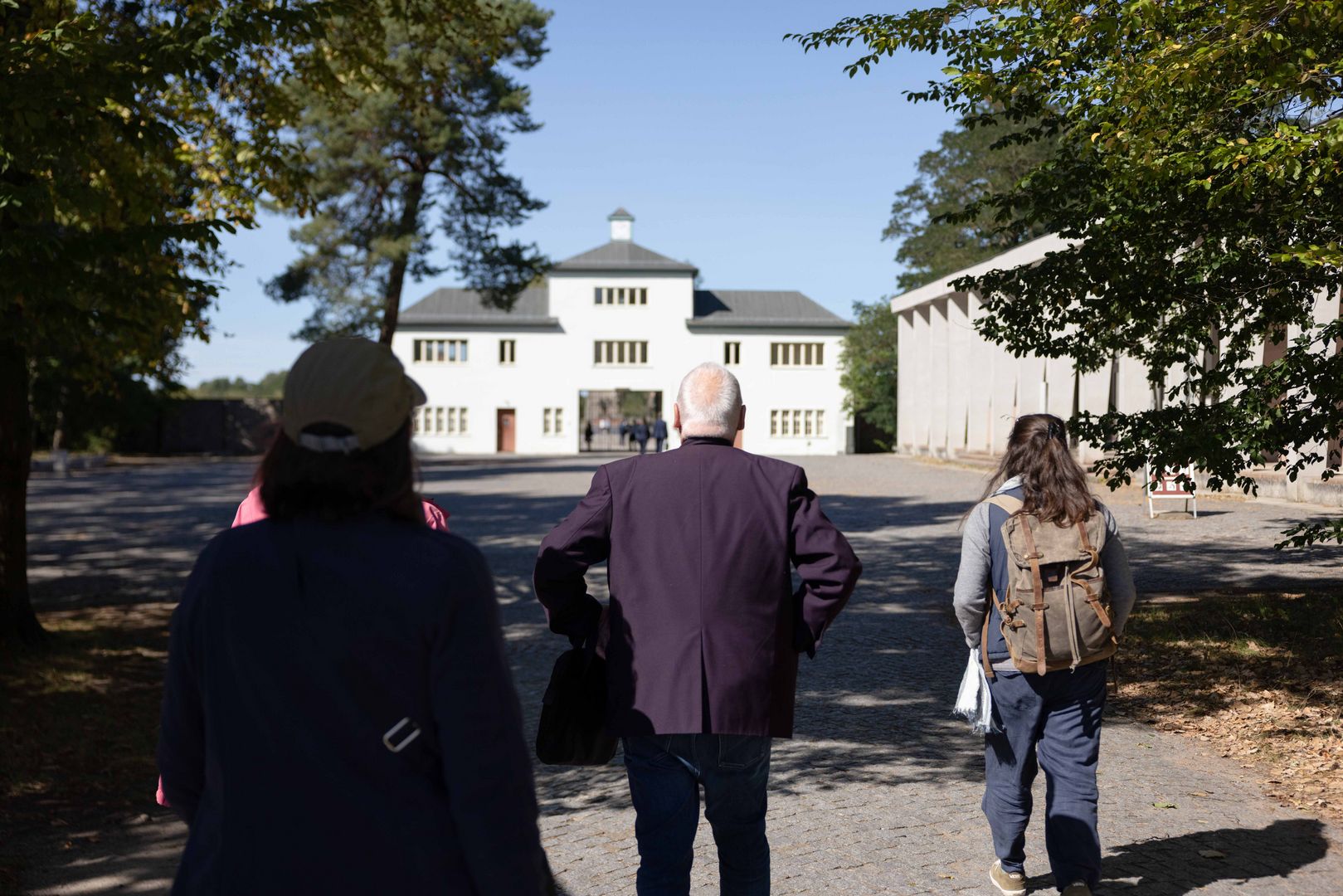
At the visitor center, you can find information on opening times, exhibitions, guided tours, audio guides, and the site layout. It is a good idea to start here so you can understand the route before walking into the former camp area.The visitor center also helps you get ready for the emotional impact of your visit. Sachsenhausen is not a typical tourist spot. It is a memorial, so visitors should enter with respect and awareness.
Is Sachsenhausen free to enter?
Yes, admission to Sachsenhausen Memorial and Museum is free. Guided tours, audio guides, or special services may have separate costs.
Tower A and the Main Camp Gate
One of the most important locations on the Sachsenhausen Berlin map is Tower A, the main entrance gate to the former prisoner camp.
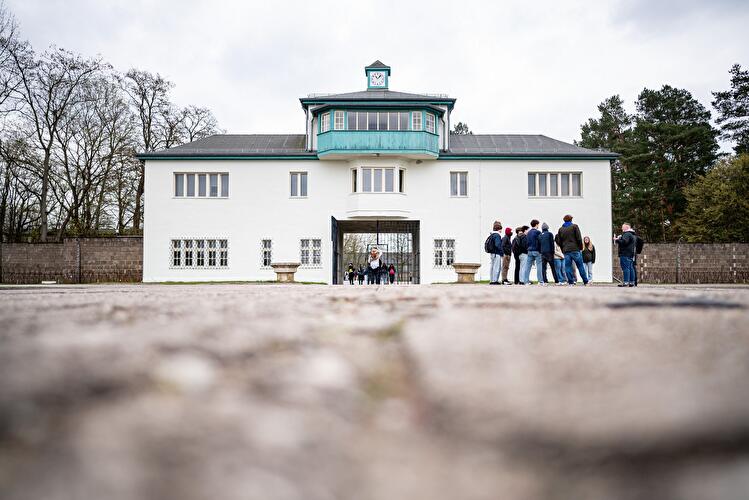
Tower A was the main control point of the camp. From here, the SS watched over the roll-call square and much of the camp. The gate came to symbolize imprisonment, fear, and complete control. Walking through this area today can feel unsettling because it is so quiet and open. The fences, watchtowers, and empty grounds help visitors imagine how exposed and powerless the prisoners felt.
What was Tower A used for?
Tower A was the main entrance and central guard tower of the prisoner camp. It was designed as a place of surveillance and control.
Appellplatz: The Roll Call Square
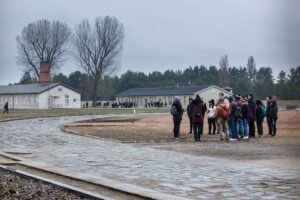
The Appellplatz, or roll-call square, is one of the key places on the Sachsenhausen map. This large open space was used for daily roll calls, punishment, public humiliation, and control.
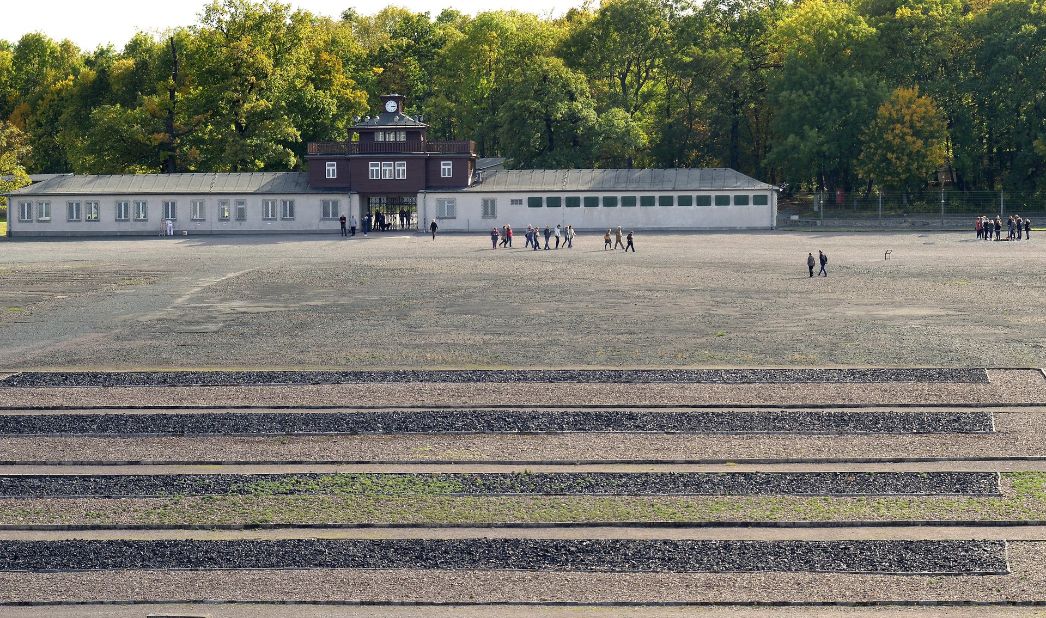
Prisoners had to stand here for long periods, often in freezing cold or rain, or when extremely tired. Roll call was not just for counting people. It was also meant to intimidate, weaken, and dehumanize them. Standing in the Appellplatz today helps visitors understand how big the camp was. The space feels empty now, but it was once filled with fear and suffering for thousands of prisoners.
What happened at the Appellplatz?
The Appellplatz was where prisoners were forced to stand for roll call, sometimes for hours. It was also used for punishment and public displays of Nazi authority.
Prisoner Barracks
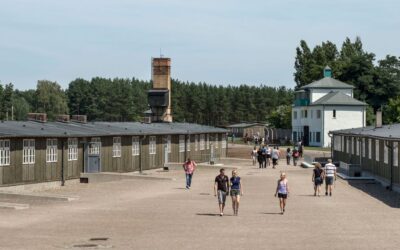
The prisoner barracks are another important stop on the Sachsenhausen Berlin map. Some have been rebuilt to help visitors see what life in the camp was like.
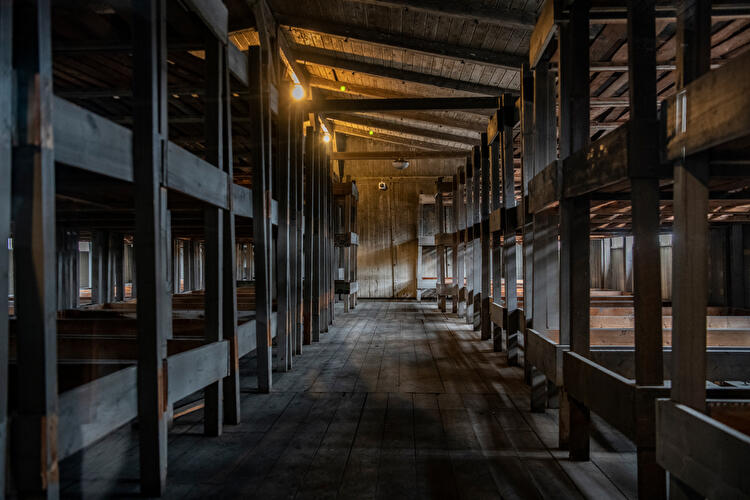
Prisoners were forced to live in overcrowded, cold, and unsanitary conditions. They had very little privacy, poor hygiene, and inadequate food. Disease, exhaustion, and fear were part of daily life. The barracks help visitors see beyond the numbers and understand the real lives of people in the camp. These were not just buildings; they were places where prisoners fought to survive every day.
Are there original barracks at Sachsenhausen?
Some structures at Sachsenhausen are reconstructed or preserved as part of the memorial. They are used to help visitors understand the layout and living conditions of the former camp.
Watchtowers, Fences, and Camp Boundaries
The watchtowers and fences are among the most striking features of Sachsenhausen. The map shows how the camp was enclosed and controlled.
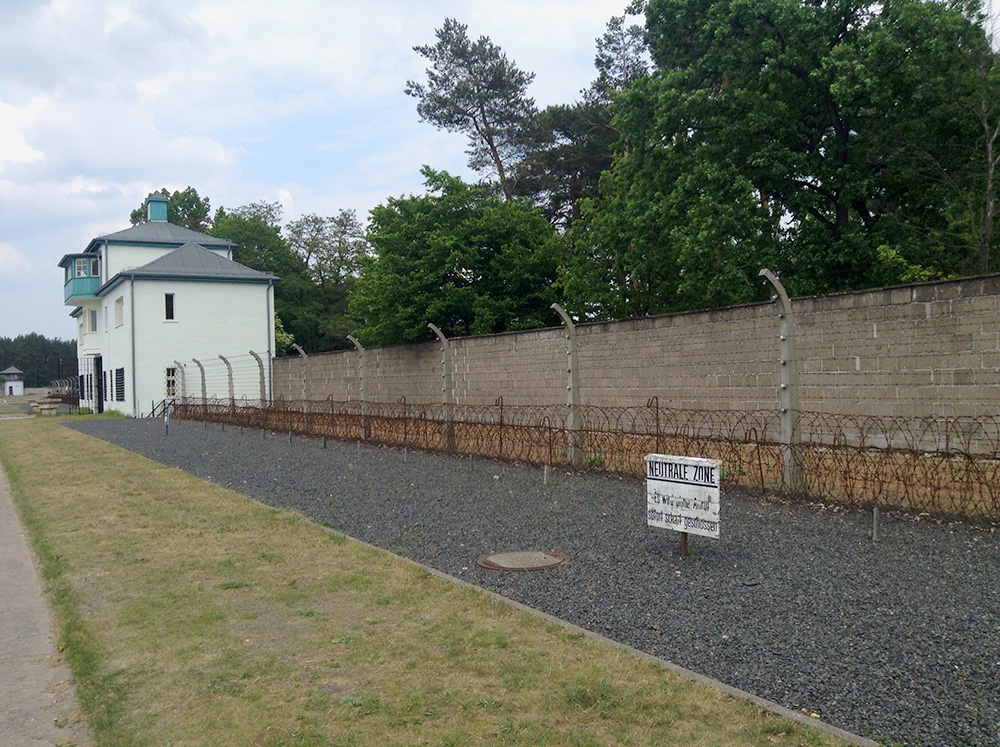
ThBarbed-wire fences, open spaces, and guard towers made it nearly impossible to escape. The camp was set up so that prisoners were always visible and under constant watch. Many visitors find this part of the memorial especially powerful because of the contrast between the quiet surroundings today and the site’s violent past. The nearby town and peaceful streets make entering the memorial feel even more unsettling.
Why was Sachsenhausen designed with so much open space?
The open layout helped guards monitor prisoners. It also made prisoners feel exposed, controlled, and powerless.
The Prison Building and Punishment Cells
The prison building, sometimes called the camp prison or cell block, is another important location on the Sachsenhausen map. This area was used for punishment, interrogation, isolation, and torture. Prisoners were kept in small cells under harsh conditions. For many visitors, this is one of the hardest parts of the memorial to see. The prison building shows that Sachsenhausen was not just a forced labor camp but also a place of systematic abuse and terror.
What were the punishment cells used for?
The punishment cells were used to isolate, intimidate, torture, and punish prisoners. They were part of the camp’s system of control and fear.
Station Z and the Crematorium Area
Station Z is one of the most important and disturbing places on the Sachsenhausen Berlin map.
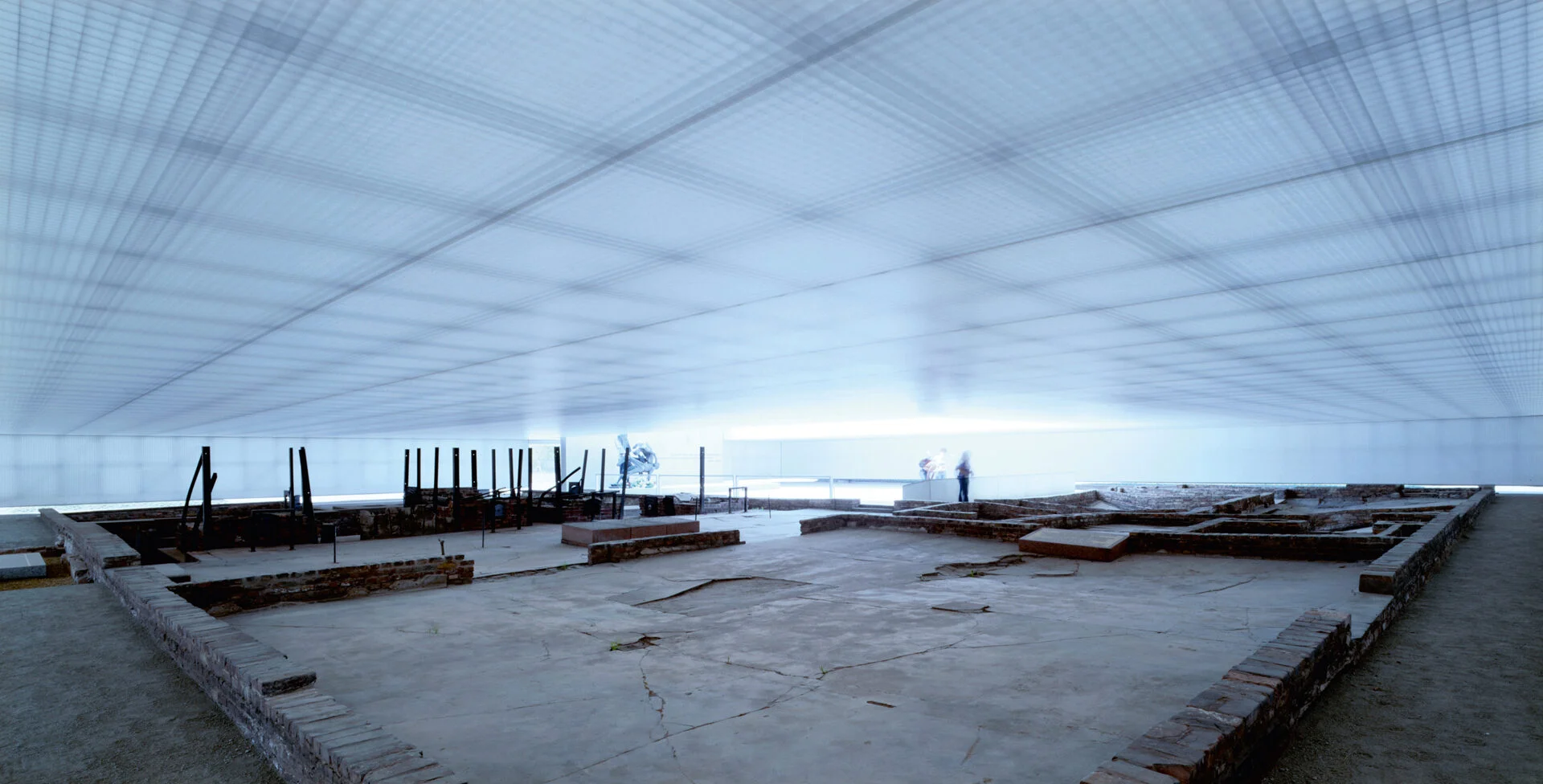
The SS gave this area the name “Station Z” as a cruel reference to the final station in a prisoner’s life. This area included execution facilities and crematorium ovens. Today, it is a central place of remembrance within the memorial. Visiting Station Z can feel overwhelming, but it is a key part of understanding Sachsenhausen’s history. It reminds visitors that the camp was a place of forced labor, suffering, murder, and mass death. Visitors should be especially respectful in this area. It is not a place for casual photos or loud talking.
What was Station Z at Sachsenhausen?
Station Z was the execution and crematorium area of Sachsenhausen. It is now one of the most important memorial areas at the site.
Museum Exhibitions
The museum exhibitions are easy to find on the Sachsenhausen map and are worth visiting. They give important background about the camp, the prisoners, the SS, forced labor, daily life, executions, liberation, and what happened after the war. The exhibitions help visitors make sense of what they see outside. Without this context, some parts of the memorial might just look like empty buildings or open ground. The museum tells the human stories behind these places. If you would like to see more real images please visit this page: Berlin concentration camp experience Berlin Concentration Camp Memorial Tour Photos
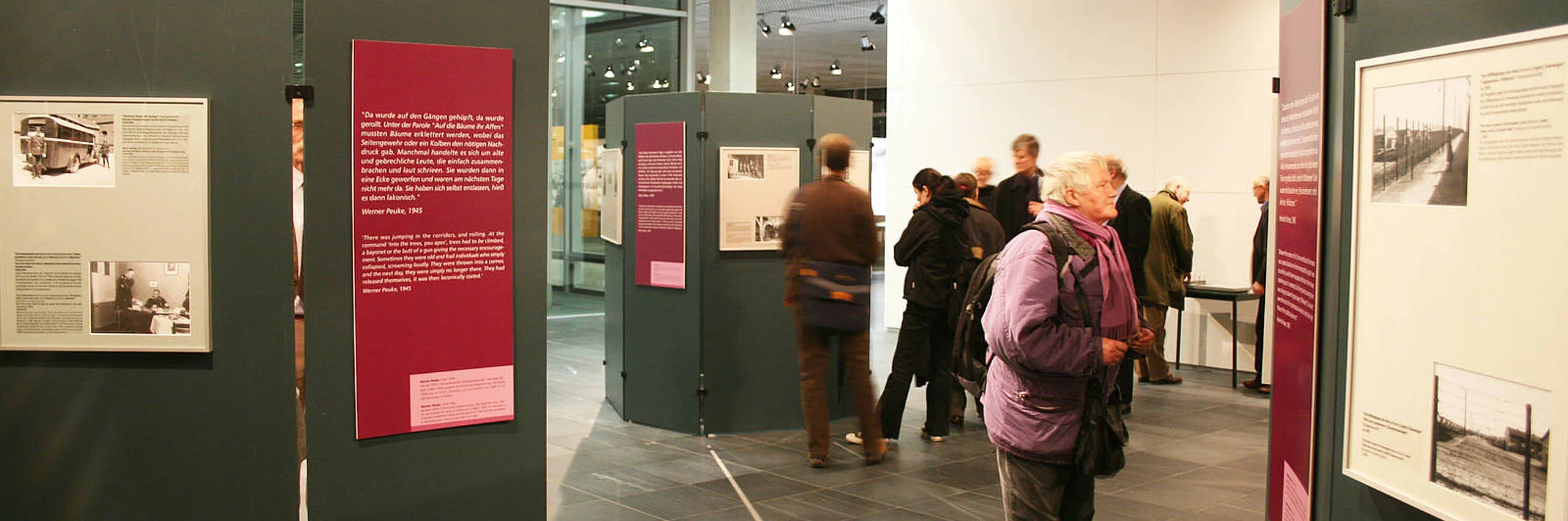
Spending time in the exhibitions can make your visit more educational and meaningful.
How long should I spend in the exhibitions?
You should allow at least one to two hours for the exhibitions if you want to understand the site properly. A full visit to Sachsenhausen often takes several hours.
Soviet Memorial and Post War History
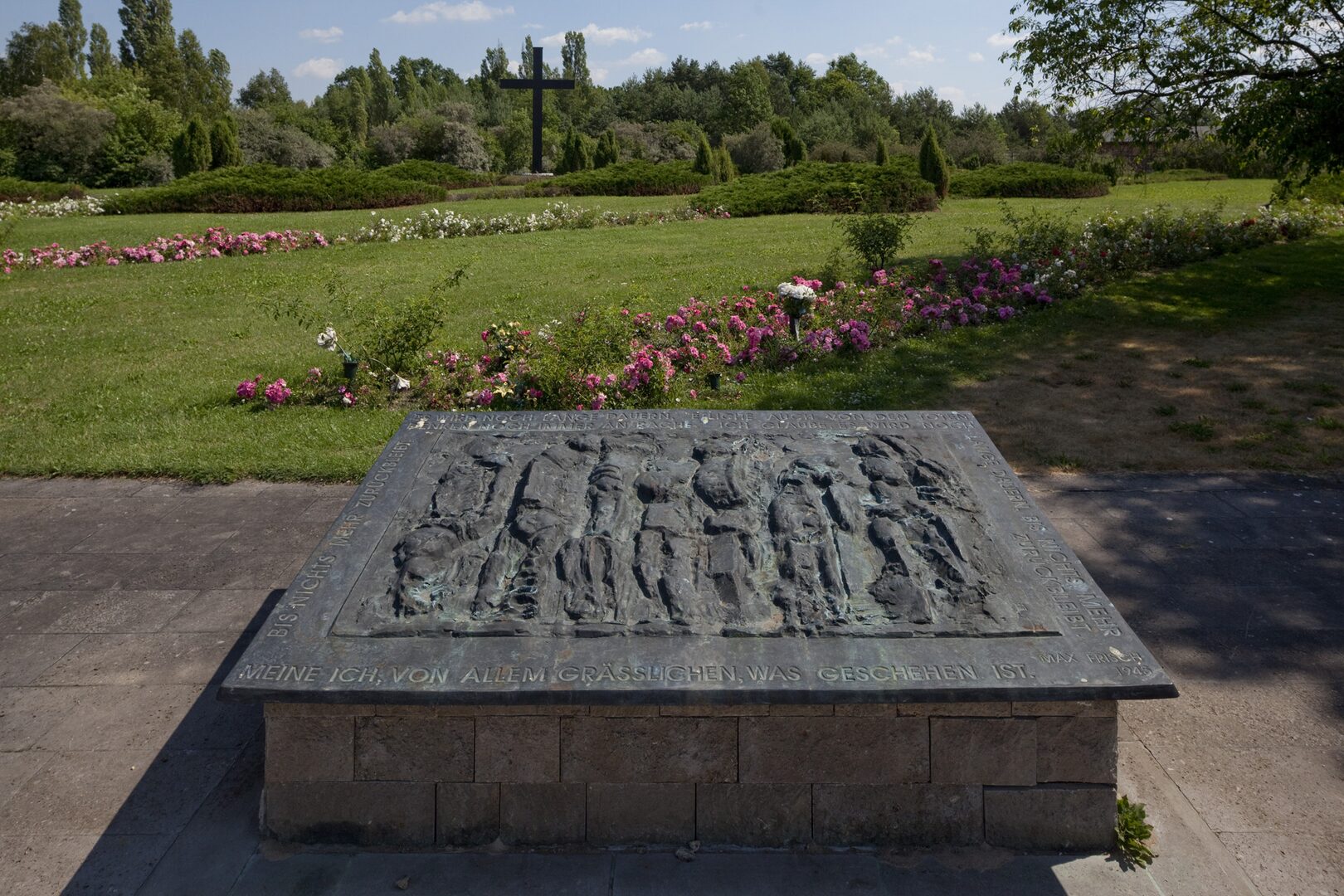
The Soviet Memorial is one of the most visible landmarks at Sachsenhausen. It is often easy to spot on the map because of its size and central position. This monument was built during the East German era and shows how people remembered the past after the war. For some, it stands for liberation from Nazi rule. For others, it raises questions about politics, propaganda, and how history was seen during the Cold War. Sachsenhausen’s history continued after 1945. After World War II, the Soviet NKVD used the site as a special camp until 1950. This gives Sachsenhausen several layers of history: Nazi persecution, liberation, post-war imprisonment, Cold War memory, and modern remembrance.
Was Sachsenhausen used after World War II?
Yes. After 1945, the Soviet NKVD used the site as a special camp until 1950. This post-war history is also part of the memorial’s story.
Tips for Visiting Sachsenhausen Memorial
Visiting Sachsenhausen can be emotionally difficult, so it helps to prepare in advance.
Wear comfortable shoes, as the memorial is large and requires a lot of walking. Bring water, especially if it is warm. Allow yourself enough time so you do not have to rush.
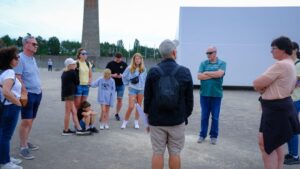
A guided tour can be very helpful because Sachsenhausen’s history is complex. A guide can explain the map, link the different places, and help you understand what happened in each area.
Remember that Sachsenhausen is a memorial, not a regular sightseeing spot. Keep your voice down, avoid taking disrespectful photos, and take time to reflect. For a more informative visit, you can book our Sachsenhausen guided tour
Is it better to visit Sachsenhausen with a guide?
Yes, many visitors find a guided tour more meaningful. A guide can explain the layout, history, prisoner experiences, and important locations on the Sachsenhausen map.
Frequently Asked Questions
How far is Sachsenhausen from Berlin?
Sachsenhausen Memorial is located in Oranienburg, about 35 km north of central Berlin. Many visitors travel there by train from Berlin.
How long does a Sachsenhausen visit take?
A visit usually takes several hours. If you are joining a guided tour from Berlin, the full experience often takes around half a day, including travel.
Can you visit Sachsenhausen without a guide?
Yes, you can visit independently. However, a guide or audio guide can make the experience much more informative, especially if you want to understand the Sachsenhausen map and historical context.
What are the must-see places on the Sachsenhausen map?
The most important places include the visitor center, Tower A, Appellplatz, the prisoner barracks, the watchtowers, the prison building, Station Z, the museum exhibitions, and the Soviet Memorial.
Is Sachsenhausen suitable for children?
Sachsenhausen is a serious memorial site with difficult historical content. It may be suitable for older teenagers, especially as part of an educational visit, but younger children may find the experience confusing or upsetting.
Can you take photos at Sachsenhausen?
Photography is allowed in many outdoor areas, but visitors should be respectful. Avoid posing for, smiling at, or taking casual photos in sensitive memorial areas such as Station Z or mass grave sites.
Why is Sachsenhausen important?
Sachsenhausen was one of the major concentration camps in Nazi Germany and served as a model camp for the SS. Its history helps visitors understand the Holocaust, Nazi persecution, forced labor, and the dangers of dictatorship and hatred.
Conclusion
Using the Sachsenhausen Berlin map is one of the best ways to understand the memorial, both before and during your visit. The map helps you find key places like Tower A, the Appellplatz, the prisoner barracks, the watchtowers, the punishment cells, Station Z, the museum exhibitions, and the Soviet Memorial.
Each place tells part of Sachsenhausen’s story. Together, they show how the camp worked as a place of surveillance, forced labor, punishment, suffering, and murder. Visiting Sachsenhausen Memorial is not easy, but it is very important. Taking time to learn the map, walk the grounds with respect, and hear the stories behind each area helps honor the victims and keep the lessons of history alive. For a deeper and more meaningful experience, book a guided Berlin concentration camp experience here: